wetland shrub
American Cranberry
Vaccinium macrocarpon
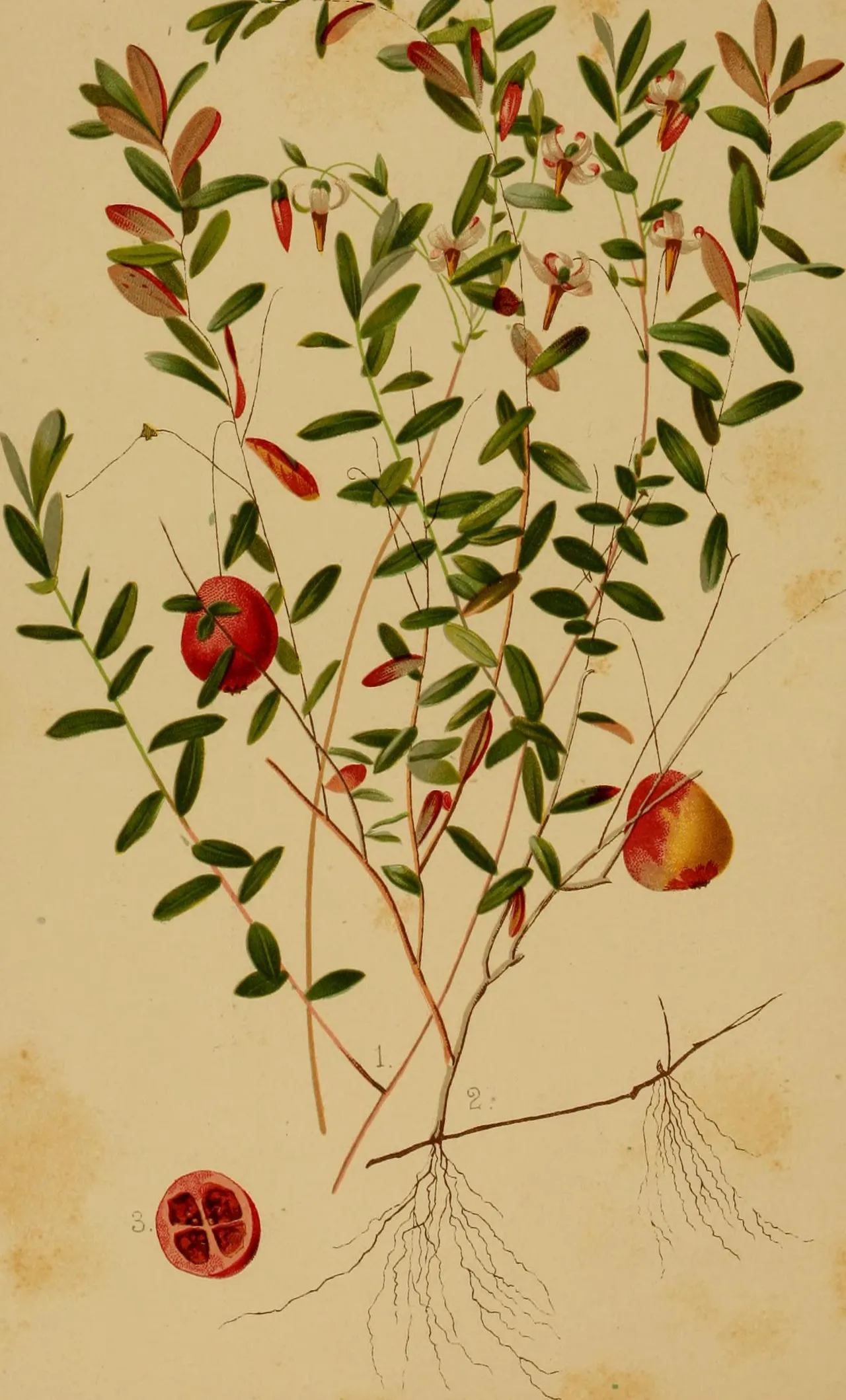 1 of 2
Native to much of the USA and southern Canada
Newfoundland to Manitoba, south to Virginia, Ohio, northern Illinois and mountains to North Carolina and Tennessee; escaped elsewhere
- Light Partial shade Sun tolerance
- Moisture Wet Moisture preference
- Zones 2–8 Cold to heat range
- Bloom Jun–Jul Flowering time
- Height up to 6 in to 15 cm
- Life cycle Perennial Annual to perennial
In the garden
A wetland shrub for partial shade and wet soil. Its white and pink flowers peak in July. At up to 6 in, it tucks into rain gardens, pond edges, and damp low spots. Hardy in USDA zones 2–8.
Growing conditions
Light
Full sun Partial shade Full shade
Moisture
Dry Moist Wet
Hardiness zones
Find your zone:
When it blooms
The American Cranberry's white and pink flowers bloom June to July, peaking in July. This midsummer display draws bees and beetles.
American Cranberry blooms white & pinkFoliage
Pollinators & wildlife
- Bees Common Eastern Bumble Bee
also Western Honey Bee, Eastern Carpenter Bee, Brown-belted Bumble Bee +88 more
Two-spotted Bumble Bee, Tricolored Bumble Bee, Pure Green Sweat bee, Red-belted Bumble Bee, Perplexing Bumble Bee, Half-black Bumble Bee, Orange-legged Furrow Bee, Agapostemon texanus, Lemon Cuckoo Bumble Bee, Brown-winged Striped Sweat Bee, Yellow-banded Bumble Bee, Flat-tailed Leafcutter Bee, Sculptured Resin Bee, Golden Sweat Bee, Rusty-patched Bumble Bee, Confusing Furrow Bee, Spurred Ceratina, Western Leafcutter Bee, Alfalfa Leafcutter Bee, Augochloropsis metallica, Hawthorn Mining Bee, Carlin's Mining Bee, Dark-winged Sweat Bee, Neighborly Mining Bee, Rufous-backed Cellophane Bee, Texas Leafcutter Bee, Silky Striped Sweat Bee, Northeastern Sweat Bee, Sanderson's Bumble Bee, Cresson's Mining Bee, Frigid Leafcutter Bee, Say's Cuckoo Leafcutter Bee, Deep-blue Sweat Bee, Small-handed Leaf-cutter Bee, Nude Mining Bee, Ceratina dupla, Snowy Mining Bee, Carolina Miner Bee, Carinate Armored-Resin bee, Imitator Miner Bee, Experienced Sweat Bee, Osmia pumila, Colletes consors, Maine Blueberry Bee, Sphecodes aroniae, Pointed Sweat Bee, Blueberry Blunt-horn, Lasioglossum subviridatum, Truncate Small-Mason, Pygmy Nomad, Goatsbeard Miner Bee, Athabasca Sweat Bee, Buff-tailed Bumble Bee, Lasioglossum trigeminum, Osmia inspergens, Panurginus atramontensis, Coelioxys porterae, Lasioglossum apopkense, George Eickwort's Sweat Bee, Morrison's Miner Bee, minor cuckoo sweat bee, Osmia steinmanni, Lasioglossum subfulvicorne, Osmia alticola, Halictus leucaheneus, Heather Mining Bee, Sphecodes fattigi, Lasioglossum creberrimum, Coelioxys immaculata, Augochloropsis sumptuosa, twig mason bee, Nomada rodecki, Lasioglossum lineatulum, Flattened Sweat Bee, Oblong Sweat Bee, Lasioglossum pilosum, Heather Cellophane Bee, Bilberry Mining Bee, Admirable Sweat Bee, Bombus vagans vagans, Lasioglossum marinum, Lasioglossum coriaceum, Alpine Bumble Bee, Giant Bumble Bee, Bombus ruderatus, cranberry leafcutter bee, Augochlorella striata, Xylocopa virginica virginica - Beetles Seven-spotted Lady Beetle
also Convergent Lady Beetle, Spotted Cucumber Beetle, Oriental Beetle +2 more
Acmaeodera tubulus, Sand Chafer - Flower flies Margined Calligrapher also Oblique Streaktail, Long-tailed Aphideater, Thick-legged Hover Fly
- Also visited by
- Butterflies:
Eastern Tailed-Blue, American Silver-bordered Fritillary +2 more
Bog Copper, Cyaniris neglecta - Moths: Yellow-spotted Webworm Moth, Bog Glyph
- Butterflies:
Butterflies that use this plant
Documented host and nectar records. Each links to a planting guide for that butterfly.
- Eastern tailed-bluenectar
- Silver-bordered fritillarynectar
- Summer azurenectar
Full plant details
Where it grows
- Habitat
- WetlandThe wild plant community it grows in.
- Native range
- Much of the USA and southern CanadaUnited States (21): CT, DE, IL, IN, MA, MD, ME, MI, MN, NC, NH, NJ, NY, OH, PA, RI, TN, VA, VT, WI, WV. Canada (6): NB, NL, NS, ON, PE, QC. Where it grows wild on its own, by state and province.
- Native distribution
- Newfoundland to Manitoba, south to Virginia, Ohio, northern Illinois and mountains to North Carolina and Tennessee; escaped elsewhereThe same native range, usually more exact than the state list, and often noting where it has spread beyond it.
Growing conditions
- Light
- Partial shadeHow much sun it takes, from full sun to full shade.
- Moisture
- WetThe soil dampness it prefers, from dry to wet.
- Hardiness zones
- USDA 2–8 · Canadian 1–7The cold-to-heat climate range it survives.
- Soil
- Wet to moist, peaty soilsThe soils it grows in naturally.
- Soil texture
- Light to medium (sandy to loamy)The soil grade it prefers, from sand to clay.
- Soil pH
- AcidicThe acidity to alkalinity it tolerates (7 is neutral).
- Soil quality
- Low (tolerates poor soil)How rich a soil it needs. Many natives prefer lean soil and flop in rich beds.
Growth & form
- Height
- up to 6 in (to 15 cm)Typical mature height.
- Spread
- ~7 ft (2 m)How wide one plant gets, a guide to spacing.
- Life cycle
- PerennialWhether it lives a single season (annual), two (biennial), or returns for years (perennial).
- Growth rate
- ModerateA relative ranking versus other plants of the same type (USDA), not an absolute rate.
Flowers, foliage & fruit
- Type
- ShrubWhat kind of plant it is.
- Bloom
- Jun–JulWhen it flowers.
- Flower color
- White, PinkThe bloom color, or colors.
- Fruit/Seeds
- ripens Jul–OctThe seed or fruit it sets after flowering.
- Toxicity
- None knownWhether any part is poisonous to people or pets.