wetland wildflower
American white waterlily
Nymphaea odorata
Also known as American White Water-lily, Fragrant White Water-lily, Fragrant Water-lily, White Water-lily, Sweet-scented White Water-lily, Sweet-scented Water-lily, Beaver Root
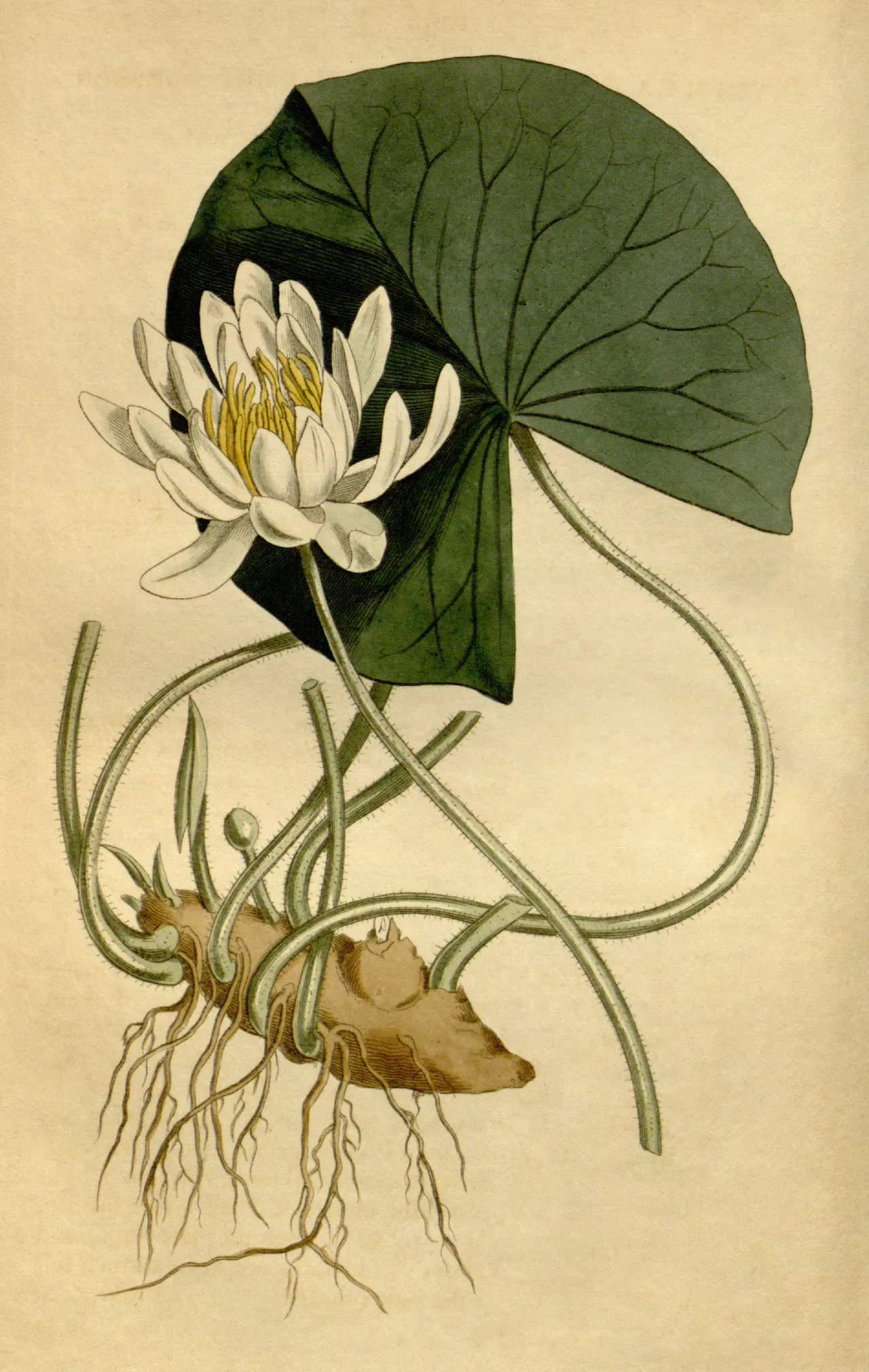 1 of 2
Native to much of the USA and southern Canada
Newfoundland to southern Man, south to Florida and Texas; naturalized westward
- Light Full sun to shade Sun tolerance
- Moisture Wet Moisture preference
- Zones 3–10 Cold to heat range
- Bloom Apr–Sep Flowering time
- Height
- Life cycle Perennial Annual to perennial
In the garden
A wetland wildflower for sun through shade and wet soil. Its white flowers peak in July. Hardy in USDA zones 3–10.
Growing conditions
Light
Full sun Partial shade Full shade
Moisture
Dry Moist Wet
Hardiness zones
Find your zone:
When it blooms
The American white waterlily's white flowers bloom April to September, peaking in July. This midsummer display draws bees and flower flies.
American white waterlily blooms whiteFoliage
Pollinators & wildlife
- Bees Common Eastern Bumble Bee
also Western Honey Bee, Bicolored Striped Sweat Bee, Perplexing Bumble Bee +12 more
Orange-legged Furrow Bee, Agapostemon texanus, Yellow-banded Bumble Bee, Silky Striped Sweat Bee, Parallel-striped Sweat Bee, Nelumbo Masked Bee, Triepeolus cressonii, Illinois Sweat Bee, water-lily sweat bee, Virginia Mining Bee, Schwarz's Masked Bee, Agapostemon viridulus - Flower flies Eastern Calligrapher
also Broad-headed Marsh Fly, Orange-backed Calligrapher, Yellow-legged Bog Fly +1 more
Sphaerophoria cylindricus - Beetles Pubescent Tumbling Flower Beetle also Typocerus badius, Donacia rufescens
- Also visited by
- Moths: Fall Webworm Moth, Boneset Borer Moth
Full plant details
Where it grows
- Habitat
- WetlandThe wild plant community it grows in.
- Native range
- Much of the USA and southern CanadaUnited States (37): AL, AR, CT, DC, DE, FL, GA, IA, IL, IN, KS, KY, LA, MA, MD, ME, MI, MN, MO, MS, NC, NE, NH, NJ, NY, OH, OK, PA, RI, SC, SD, TN, TX, VA, VT, WI, WV. Canada (6): MB, NB, NS, ON, PE, QC. Where it grows wild on its own, by state and province.
- Native distribution
- Newfoundland to southern Man, south to Florida and Texas; naturalized westwardThe same native range, usually more exact than the state list, and often noting where it has spread beyond it.
Growing conditions
- Light
- Full sun to shadeHow much sun it takes, from full sun to full shade.
- Moisture
- WetThe soil dampness it prefers, from dry to wet.
- Hardiness zones
- USDA 3–10 · Canadian 2–9The cold-to-heat climate range it survives.
- Soil
- Any pond bottom, Shallow waterThe soils it grows in naturally.
- Soil texture
- Light to heavy (sandy to clay)The soil grade it prefers, from sand to clay.
- Soil pH
- Mildly acid to mildly alkalineThe acidity to alkalinity it tolerates (7 is neutral).
- Water use
- HighHow thirsty it is, a rough guide to how often to water.
Growth & form
- Life cycle
- PerennialWhether it lives a single season (annual), two (biennial), or returns for years (perennial).
Flowers, foliage & fruit
- Type
- WildflowerWhat kind of plant it is.
- Bloom
- Apr–SepWhen it flowers.
- Flower color
- WhiteThe bloom color, or colors.
- Toxicity
- None knownWhether any part is poisonous to people or pets.