woodland wildflower
Aniseroot
Osmorhiza longistylis
Also known as Longstyle Sweetroot, Sweet-cicely, Wild Licorice
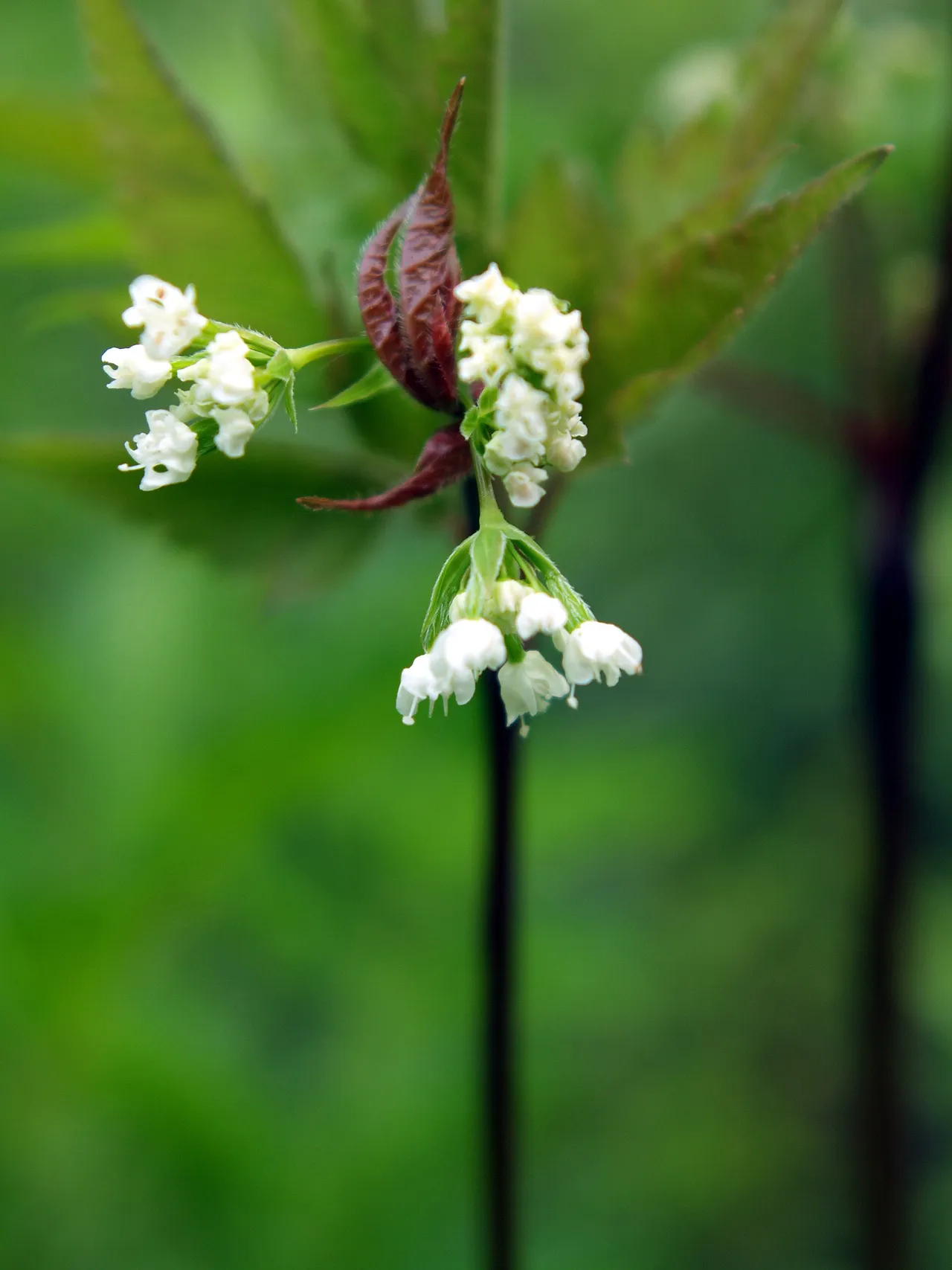 1 of 3
Native to most of the USA and Canada
Quebec, south to Georgia, Texas and Colorado (more abundant southward)
- Light Full shade Sun tolerance
- Moisture Moist Moisture preference
- Zones 3–9 Cold to heat range
- Bloom Apr–May Flowering time
- Height up to 3 ft to 0.9 m
- Life cycle Perennial Annual to perennial
In the garden
A woodland wildflower for full shade and evenly moist soil. Its white flowers peak in May. At up to 3 ft, it suits shade gardens and woodland edges. Hardy in USDA zones 3–9.
Growing conditions
Light
Full sun Partial shade Full shade
Moisture
Dry Moist Wet
Hardiness zones
Find your zone:
When it blooms
The Aniseroot's white flowers bloom April to May, peaking in May. This early-spring ephemeral draws bees and flower flies.
Aniseroot blooms whiteFoliage
Pollinators & wildlife
- Bees Common Eastern Bumble Bee
also Western Honey Bee, Pure Green Sweat bee, Orange-legged Furrow Bee +39 more
Brown-winged Striped Sweat Bee, Golden Sweat Bee, Modest Masked Bee, Confusing Furrow Bee, Spurred Ceratina, Blue Orchard Bee, Silky Striped Sweat Bee, Bristle Sweat Bee, Rugose-chested Sweat Bee, Deep-blue Sweat Bee, Sphecodes ranunculi, Cherry Mining Bee, Ceratina dupla, Hylaeus affinis, Snowy Mining Bee, Imitator Miner Bee, Experienced Sweat Bee, Nelumbo Masked Bee, Fragile Miner Bee, Osmia conjuncta, Broad-faced Masked Bee, Nomada affabilis, Goatsbeard Miner Bee, Illinois Cuckoo Sweat Bee, Obscure Sweat Bee, Box-headed Furrow Bee, Nason's Mining Bee, Andrena miserabilis, Forbes's Sweat Bee, Dilated-horned Small-Mason, Sunflower Cuckoo Nomad Bee, Andrena sayi, Cuneate Nomad Bee, Augochlora nominata, Nomada sayi, Short-horned Yellow-face Bee, Nomada parva, Hylaeus illinoisensis, Waterleaf Mining Bee - Flower flies Margined Calligrapher
also Oblique Streaktail, Thick-legged Hover Fly, Greater Bee Fly +11 more
American Snout Fly, Common Flower Fly, Orange-banded Spineleg, Paragus bicolor, Paragus tibialis, Sphaerophoria cylindricus, Cobalt Deltawing, Black-horned Pufftail, White-haired Pithead, Mount Hood Blacklet, Orange-horned Hammertail - Beetles Spotted Pink Lady Beetle also Mordellistena biplagiata, Chlorophorus glaucus, Yellow-shouldered Tumbling Flower Beetle
- Also visited by
- Butterflies: Question Mark, Thorybes daunus
- Wasps: Fraternal Potter Wasp
Butterflies that use this plant
Documented host and nectar records. Each links to a planting guide for that butterfly.
- American snoutnectar
- Question marknectar
Full plant details
Where it grows
- Habitat
- WoodlandThe wild plant community it grows in.
- Native range
- Most of the USA and CanadaUnited States (40): AL, AR, CO, CT, DC, DE, GA, IA, IL, IN, KS, KY, MA, MD, ME, MI, MN, MO, MS, MT, NC, ND, NE, NH, NJ, NM, NY, OH, OK, PA, RI, SC, SD, TN, TX, VA, VT, WI, WV, WY. Canada (8): AB, MB, NB, NS, ON, PE, QC, SK. Where it grows wild on its own, by state and province.
- Native distribution
- Quebec, south to Georgia, Texas and Colorado (more abundant southward)The same native range, usually more exact than the state list, and often noting where it has spread beyond it.
Growing conditions
- Light
- Full shadeHow much sun it takes, from full sun to full shade.
- Moisture
- MoistThe soil dampness it prefers, from dry to wet.
- Hardiness zones
- USDA 3–9 · Canadian 3–7The cold-to-heat climate range it survives.
- Soil
- Moist, rich soilsThe soils it grows in naturally.
- Soil texture
- Light to heavy (sandy to clay)The soil grade it prefers, from sand to clay.
- Soil pH
- Mildly acid to mildly alkalineThe acidity to alkalinity it tolerates (7 is neutral).
Growth & form
- Height
- up to 3 ft (to 0.9 m)Typical mature height.
- Life cycle
- PerennialWhether it lives a single season (annual), two (biennial), or returns for years (perennial).
Flowers, foliage & fruit
- Type
- WildflowerWhat kind of plant it is.
- Bloom
- Apr–MayWhen it flowers.
- Flower color
- WhiteThe bloom color, or colors.
- Fruit/Seeds
- Schizocarp; ripens Apr–JulThe seed or fruit it sets after flowering.
- Toxicity
- None knownWhether any part is poisonous to people or pets.