desert cactus
Beavertail Pricklypear
Opuntia basilaris
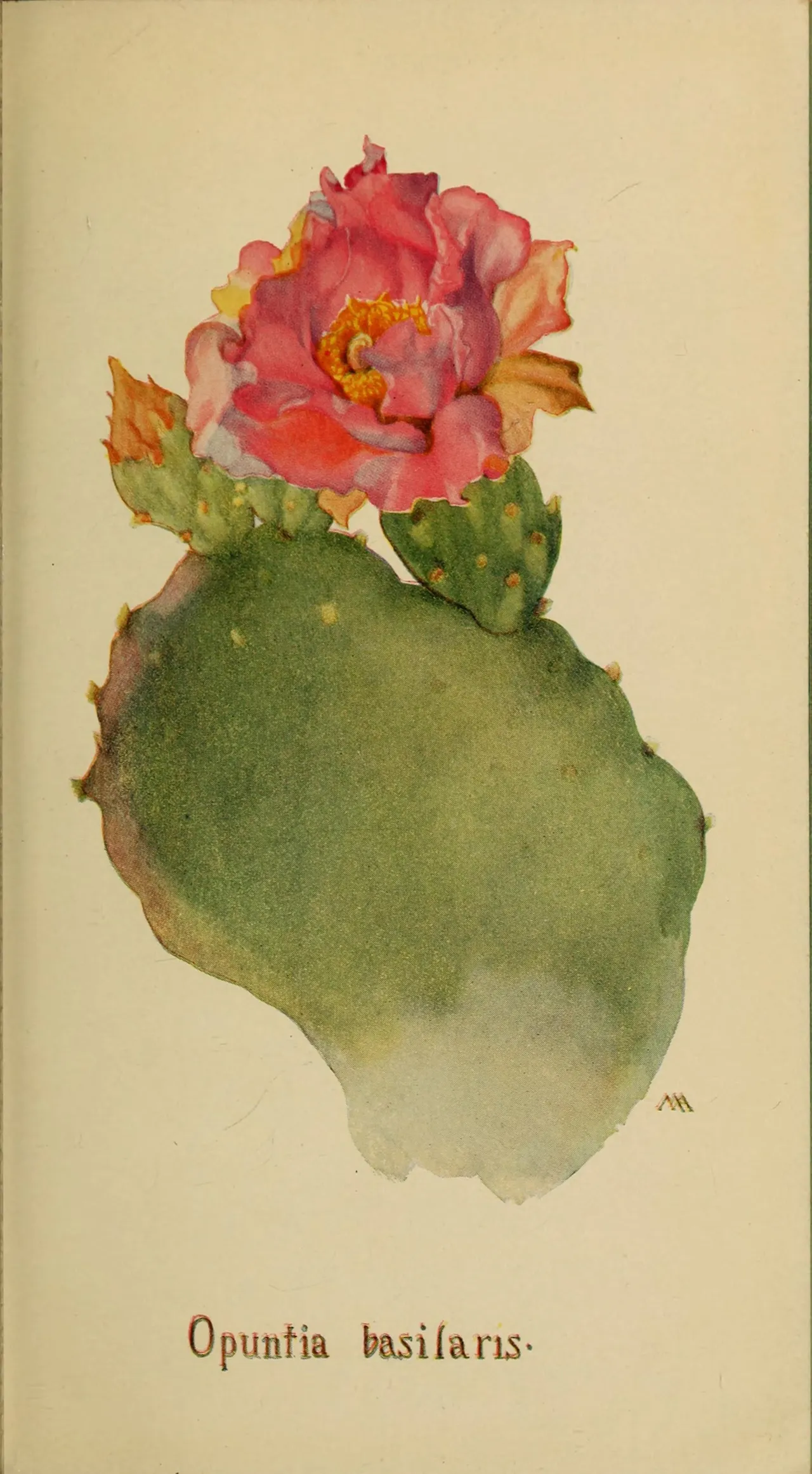 1 of 2
Native to Arizona, California, Nevada, and Utah
Southwestern Utah to southern California, south to northern Mexico
- Light Full sun Sun tolerance
- Moisture Dry Moisture preference
- Zones 5–10 Cold to heat range
- Bloom Feb–Jun Flowering time
- Height up to 16 in to 41 cm
- Life cycle Perennial Annual to perennial
In the garden
A desert cactus for full sun and lean, dry soil. At up to 16 in, it tucks into rock gardens, gravel beds, and hot, dry spots. Hardy in USDA zones 5–10.
Growing conditions
Light
Full sun Partial shade Full shade
Moisture
Dry Moist Wet
Hardiness zones
Find your zone:
Pollinators & wildlife
- Bees Orange-tipped Woodborer
also Western Honey Bee, Angeles Striped Sweat Bee, Megandrena enceliae +3 more
Cactus chimney bees, Barrel Cactus Shortface, Peridot Sweat Bee - Beetles Seven-spotted Lady Beetle also Acmaeodera labyrinthica
- Moths White-lined Sphinx
- Also visited by
- Butterflies: Pale Swallowtail
Butterflies that use this plant
Documented host and nectar records. Each links to a planting guide for that butterfly.
- Pale swallowtailnectar
Full plant details
Where it grows
- Habitat
- DesertThe wild plant community it grows in.
- Native range
- Arizona, California, Nevada, and UtahUnited States (4): AZ, CA, NV, UT. Where it grows wild on its own, by state and province.
- Native distribution
- Southwestern Utah to southern California, south to northern MexicoThe same native range, usually more exact than the state list, and often noting where it has spread beyond it.
Growing conditions
- Light
- Full sunHow much sun it takes, from full sun to full shade.
- Moisture
- DryThe soil dampness it prefers, from dry to wet.
- Hardiness zones
- USDA 5–10 · Canadian 4–7The cold-to-heat climate range it survives.
- Soil
- Sandy or gravelly soilsThe soils it grows in naturally.
- Water use
- LowHow thirsty it is, a rough guide to how often to water.
Growth & form
- Height
- up to 16 in (to 41 cm)Typical mature height.
- Life cycle
- PerennialWhether it lives a single season (annual), two (biennial), or returns for years (perennial).
Flowers, foliage & fruit
- Type
- CactusWhat kind of plant it is.
- Bloom
- Feb–JunWhen it flowers.
- Flower color
- Red, Pink, PurpleThe bloom color, or colors.
- Toxicity
- None knownWhether any part is poisonous to people or pets.