woodland wildflower
Bloodroot
Sanguinaria canadensis
Also known as Canada Puccoon, Bloodwort, Redroot, Red Puccoon, Black Paste, Indian Paint
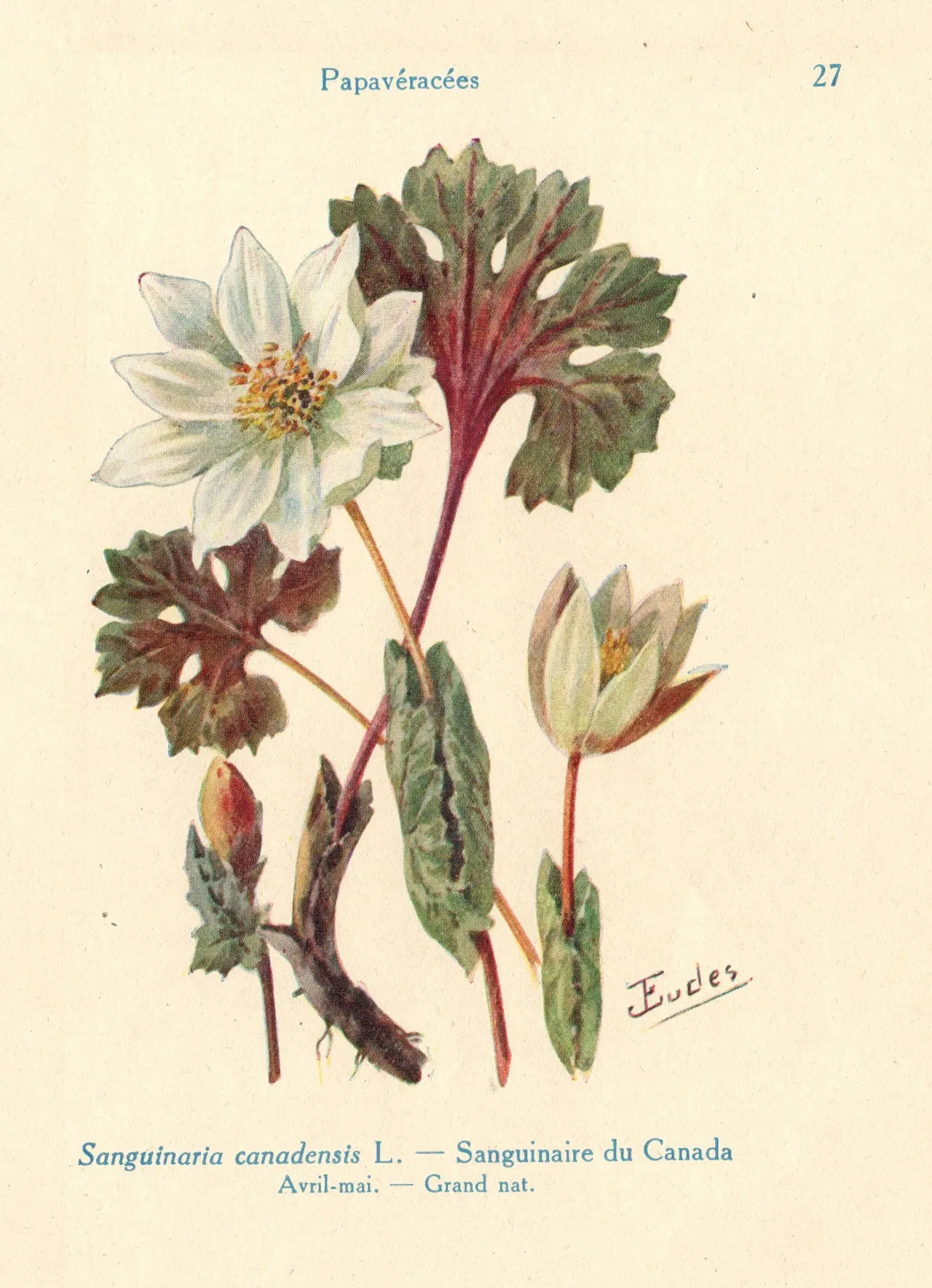 1 of 2
Native to much of the USA and southern Canada
Eastern Quebec to Manitoba, south to Florida, Alabama and Texas
- Light Part shade to shade Sun tolerance
- Moisture Moist to wet Moisture preference
- Zones 3–9 Cold to heat range
- Bloom Mar–Apr Flowering time
- Height up to 2 ft to 0.6 m
- Life cycle Perennial Annual to perennial
In the garden
A woodland wildflower for part to full shade and consistently moist to wet soil. At up to 2 ft, it suits shade gardens and woodland edges. Hardy in USDA zones 3–9.
Growing conditions
Light
Full sun Partial shade Full shade
Moisture
Dry Moist Wet
Hardiness zones
Find your zone:
Pollinators & wildlife
- Bees Common Eastern Bumble Bee
also Western Honey Bee, Two-spotted Bumble Bee, Tricolored Bumble Bee +25 more
Pure Green Sweat bee, Colletes inaequalis, Golden Sweat Bee, Confusing Furrow Bee, Spurred Ceratina, Blue Orchard Bee, Horn-faced Mason Bee, Carlin's Mining Bee, Taurus Mason Bee, Bristle Sweat Bee, Deep-blue Sweat Bee, Cherry Mining Bee, Cresson's Sweat Bee, Spot-fronted Wool-carder Bee, Fox's Sweat Bee, Nomada affabilis, Dilated-horned Small-Mason, Pseudopanurgus labrosiformis, Denticulate Nomad, Osmia lignaria lignaria, Dunning's Miner, Nason's Mining Bee, Trout-lily Mining Bee, Xylocopa virginica virginica, Zephyr Sweat Bee - Flower flies Margined Calligrapher
also Eastern Calligrapher, Oblique Streaktail, Long-tailed Aphideater +6 more
Narrow-headed Marsh Fly, Greater Bee Fly, Variable Duskyface Fly, Tufted Globetail, Eastern Catkin Fly, Toxomeris marginatus - Beetles Spotted Pink Lady Beetle also Two-lined Leatherwing, Slender Flower Longhorn Beetle, Mordellistena comata
- Also visited by
- Wasps: Fraternal Potter Wasp
- Moths: Tersa Sphinx
- Butterflies: Northern Azure
Full plant details
Where it grows
- Habitat
- WoodlandThe wild plant community it grows in.
- Native range
- Much of the USA and southern CanadaUnited States (38): AL, AR, CT, DC, DE, FL, GA, IA, IL, IN, KS, KY, LA, MA, MD, ME, MI, MN, MO, MS, NC, ND, NE, NH, NJ, NY, OH, OK, PA, RI, SC, SD, TN, TX, VA, VT, WI, WV. Canada (5): MB, NB, NS, ON, QC. Where it grows wild on its own, by state and province.
- Native distribution
- Eastern Quebec to Manitoba, south to Florida, Alabama and TexasThe same native range, usually more exact than the state list, and often noting where it has spread beyond it.
Growing conditions
- Light
- Part shade to shadeHow much sun it takes, from full sun to full shade.
- Moisture
- Moist to wetThe soil dampness it prefers, from dry to wet.
- Hardiness zones
- USDA 3–9 · Canadian 3–7The cold-to-heat climate range it survives.
- Soil
- Moist to mesic, well-drained, humus-rich soilsThe soils it grows in naturally.
- Soil texture
- Light to medium (sandy to loamy)The soil grade it prefers, from sand to clay.
- Soil pH
- Mildly acid to mildly alkalineThe acidity to alkalinity it tolerates (7 is neutral).
Growth & form
- Height
- up to 2 ft (to 0.6 m)Typical mature height.
- Spread
- ~1 ft (0.3 m)How wide one plant gets, a guide to spacing.
- Life cycle
- PerennialWhether it lives a single season (annual), two (biennial), or returns for years (perennial).
- Growth rate
- SlowA relative ranking versus other plants of the same type (USDA), not an absolute rate.
Flowers, foliage & fruit
- Type
- WildflowerWhat kind of plant it is.
- Bloom
- Mar–AprWhen it flowers.
- Flower color
- WhiteThe bloom color, or colors.
- Fruit/Seeds
- CapsuleThe seed or fruit it sets after flowering.
- Toxicity
- Poisonous if eatenWhether any part is poisonous to people or pets.