woodland succulent
Canyon liveforever
Dudleya cymosa
Also known as Canyon Live-forever, Dudleya
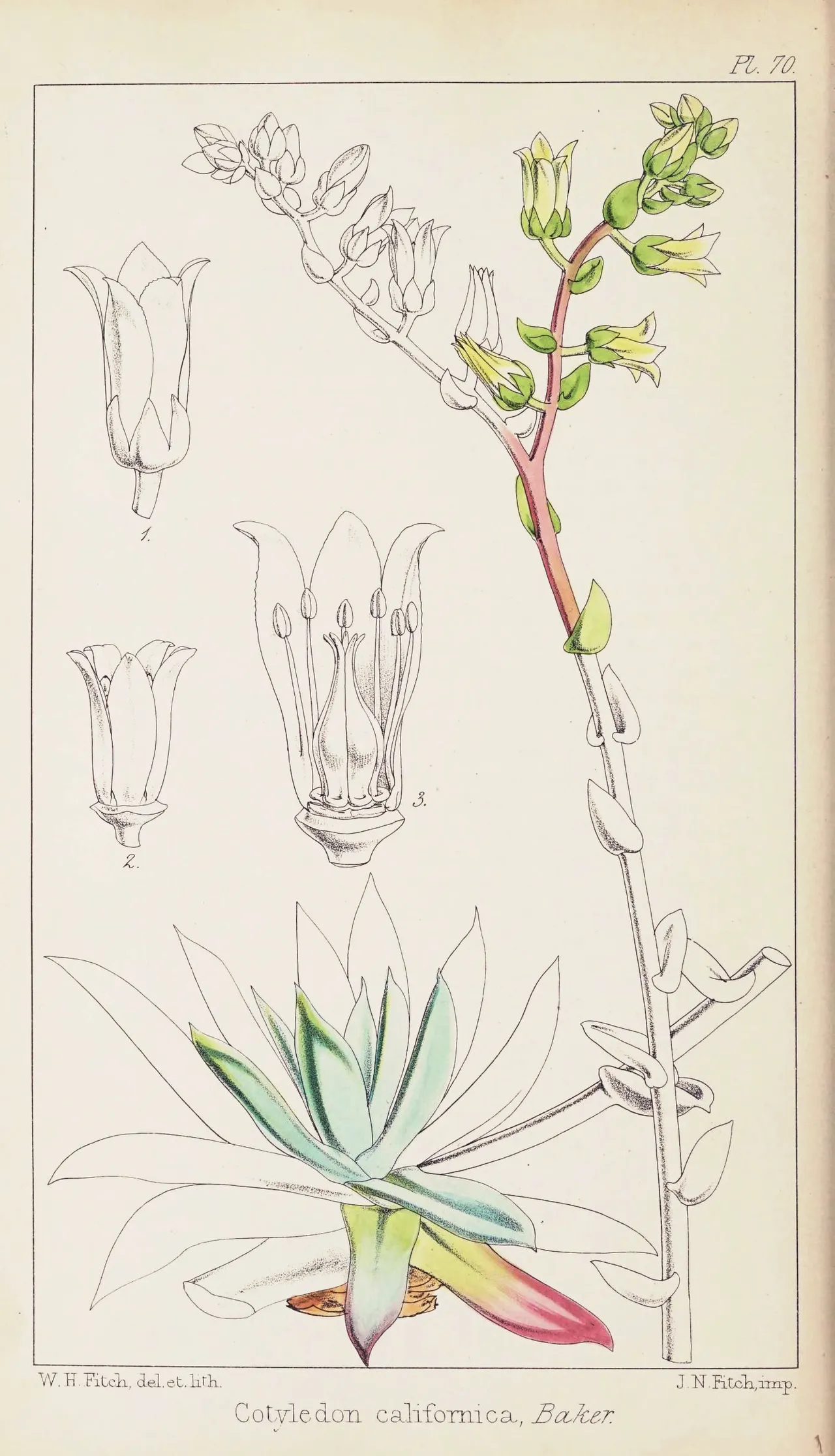 1 of 2
Native to California
Northern and central California
- Light Partial shade Sun tolerance
- Moisture Dry Moisture preference
- Zones n/a Cold to heat range
- Bloom Apr–Jul Flowering time
- Height up to 20 in to 51 cm
- Life cycle Perennial Annual to perennial
In the garden
A woodland succulent for partial shade and lean, dry soil. Its red and yellow flowers peak in May. At up to 20 in, it suits shade gardens and woodland edges.
Growing conditions
Light
Full sun Partial shade Full shade
Moisture
Dry Moist Wet
When it blooms
The Canyon liveforever's red and yellow flowers bloom April to July, peaking in May. This late-spring display draws bees and butterflies.
Canyon liveforever blooms red & yellowFoliage
Pollinators & wildlife
- Bees Yellow-fronted Bumble Bee also Heriades spiniscutis
- Butterflies Variable Checkerspot
Full plant details
Where it grows
- Habitat
- WoodlandThe wild plant community it grows in.
- Native range
- CaliforniaUnited States (1): CA. Where it grows wild on its own, by state and province.
- Native distribution
- Northern and central CaliforniaThe same native range, usually more exact than the state list, and often noting where it has spread beyond it.
Growing conditions
- Light
- Partial shadeHow much sun it takes, from full sun to full shade.
- Moisture
- DryThe soil dampness it prefers, from dry to wet.
- Soil
- Rocky soilThe soils it grows in naturally.
Growth & form
- Height
- up to 20 in (to 51 cm)Typical mature height.
- Life cycle
- PerennialWhether it lives a single season (annual), two (biennial), or returns for years (perennial).
Flowers, foliage & fruit
- Type
- SucculentWhat kind of plant it is.
- Bloom
- Apr–JulWhen it flowers.
- Flower color
- Red, YellowThe bloom color, or colors.
- Fruit/Seeds
- ripens Feb–JulThe seed or fruit it sets after flowering.
- Toxicity
- None knownWhether any part is poisonous to people or pets.