woodland wildflower
Carolina ruellia
Ruellia caroliniensis
Also known as Carolina Wild Petunia
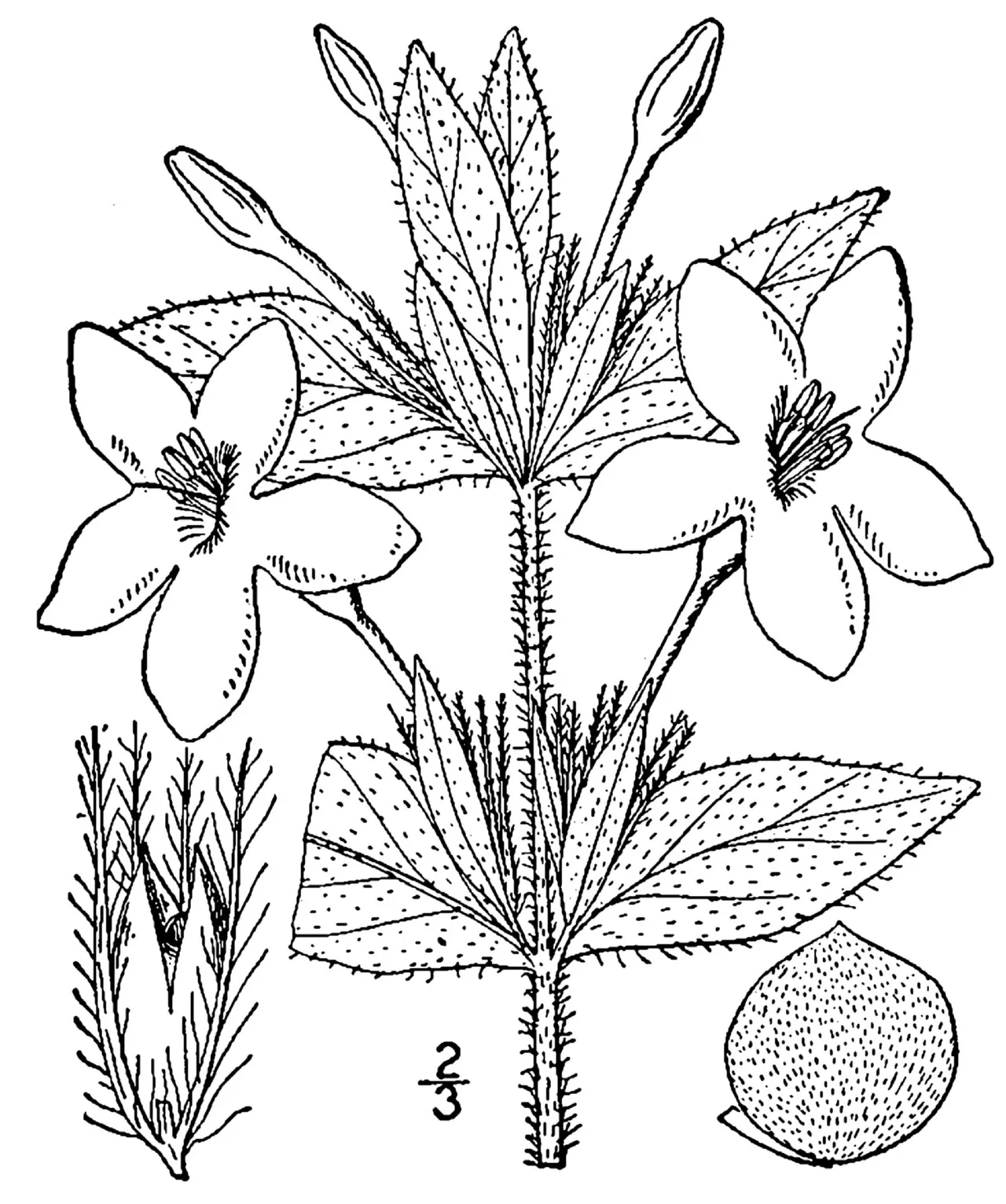 1 of 2
Native to the Southeast and the Northeast
Florida to New Jersey, west to eastern Arkansas
- Light Partial shade Sun tolerance
- Moisture Moist Moisture preference
- Zones 6–10 Cold to heat range
- Bloom Apr–Aug Flowering time
- Height up to 3 ft to 0.9 m
- Life cycle Perennial Annual to perennial
In the garden
A woodland wildflower for partial shade and evenly moist soil. Its purple flowers peak in June. At up to 3 ft, it suits shade gardens and woodland edges. Hardy in USDA zones 6–10.
Growing conditions
Light
Full sun Partial shade Full shade
Moisture
Dry Moist Wet
Hardiness zones
Find your zone:
When it blooms
The Carolina ruellia's purple flowers bloom April to August, peaking in June. This early-summer display draws bees and butterflies.
Carolina ruellia blooms purpleFoliage
Pollinators & wildlife
- Bees Common Eastern Bumble Bee
also American Bumble Bee, Southern Carpenter Bee, Spurred Ceratina +11 more
broad-handed leafcutter bee, Black-and-yellow Nomad Bee, Dilemma Orchid Bee, Anthophora walshii, Megachile brevis, Broad-faced Masked Bee, Pseudopanurgus labrosiformis, Andrena miserabilis, Federal Cuckoo Carder Bee, Agapostemon viridulus, Tetragona dissecta - Butterflies Whirlabout also Twin-spot Skipper, Asbolis capucinus
- Beetles Slender Flower Longhorn Beetle also Acmaeodera tubulus, Ornate Yellow-marked Buprestid
- Also visited by
- Flower flies: Oblique Streaktail, Hemipenthes sinuosus
Full plant details
Where it grows
- Habitat
- WoodlandThe wild plant community it grows in.
- Native range
- The Southeast and the NortheastUnited States (16): AL, AR, DC, DE, FL, GA, KY, LA, MD, MS, NC, NJ, SC, TN, VA, WV. Where it grows wild on its own, by state and province.
- Native distribution
- Florida to New Jersey, west to eastern ArkansasThe same native range, usually more exact than the state list, and often noting where it has spread beyond it.
Growing conditions
- Light
- Partial shadeHow much sun it takes, from full sun to full shade.
- Moisture
- MoistThe soil dampness it prefers, from dry to wet.
- Hardiness zones
- USDA 6–10The cold-to-heat climate range it survives.
- Soil
- Dry, sandy soilsThe soils it grows in naturally.
Growth & form
- Height
- up to 3 ft (to 0.9 m)Typical mature height.
- Life cycle
- PerennialWhether it lives a single season (annual), two (biennial), or returns for years (perennial).
Flowers, foliage & fruit
- Type
- WildflowerWhat kind of plant it is.
- Bloom
- Apr–AugWhen it flowers.
- Flower color
- PurpleThe bloom color, or colors.
- Fruit/Seeds
- ripens May–NovThe seed or fruit it sets after flowering.
- Toxicity
- None knownWhether any part is poisonous to people or pets.