woodland wildflower
Coastal inkberry
Scaevola plumieri
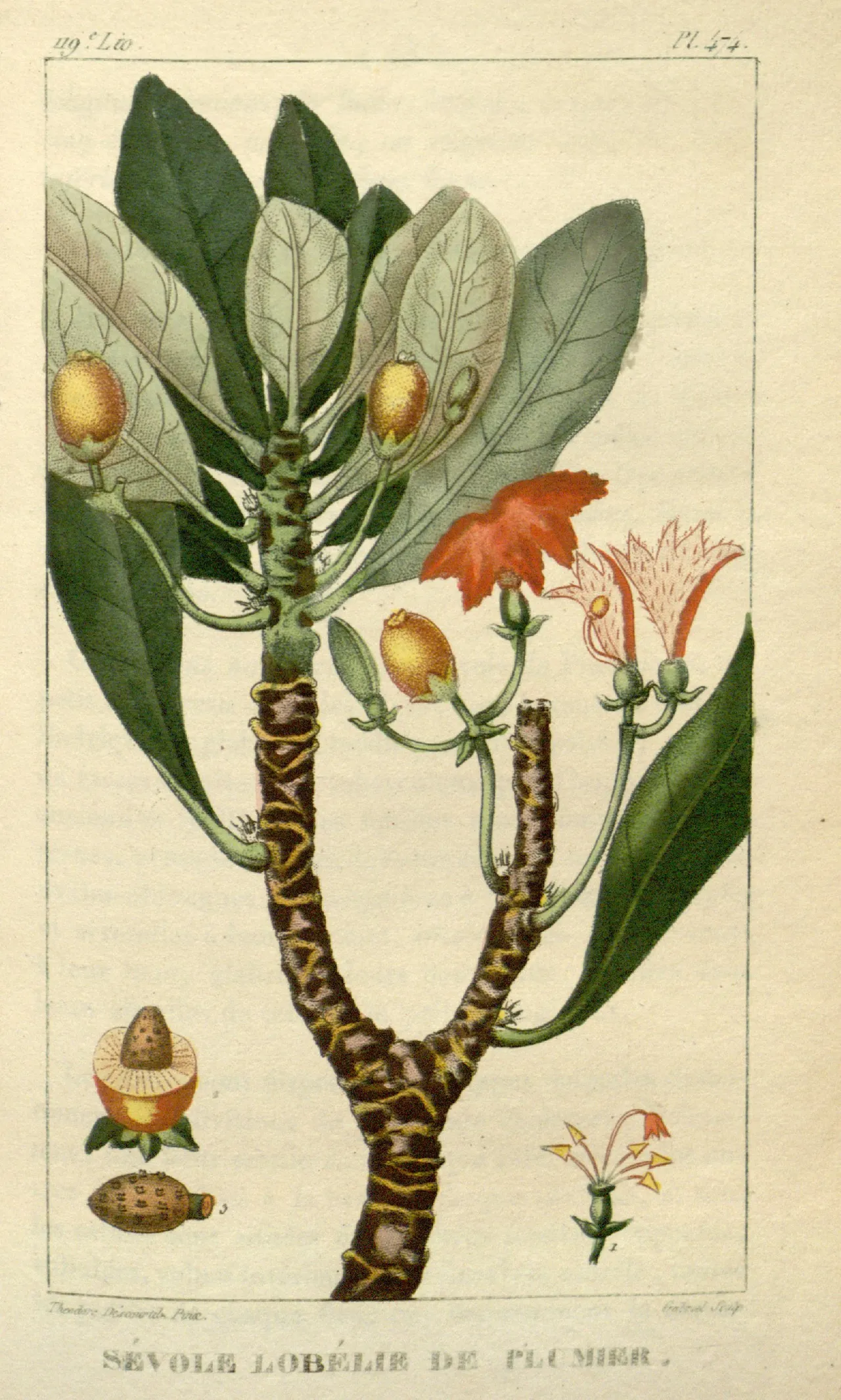
Native to Florida
Southern Florida coast; also the coasts of Bermuda, West Indies, Yucatan and Baja California
- Light Partial shade Sun tolerance
- Moisture Moisture preference
- Zones n/a Cold to heat range
- Bloom Jan–Dec Flowering time
- Height up to 6 ft to 1.8 m
- Life cycle Perennial Annual to perennial
In the garden
A woodland wildflower for partial shade. Its white flowers peak in August. At up to 6 ft, it needs room in shade gardens and woodland edges.
Growing conditions
Light
Full sun Partial shade Full shade
Moisture
Dry Moist Wet
When it blooms
The Coastal inkberry's white flowers bloom January to December, peaking in August. This late-summer display draws bees and wasps.
Coastal inkberry blooms whiteFoliage
Pollinators & wildlife
- Bees Brown-winged Striped Sweat Bee
- Wasps Brachygastra lecheguana
Full plant details
Where it grows
- Habitat
- WoodlandThe wild plant community it grows in.
- Native range
- FloridaUnited States (1): FL. Where it grows wild on its own, by state and province.
- Native distribution
- Southern Florida coast; also the coasts of Bermuda, West Indies, Yucatan and Baja CaliforniaThe same native range, usually more exact than the state list, and often noting where it has spread beyond it.
Growing conditions
- Light
- Partial shadeHow much sun it takes, from full sun to full shade.
- Soil
- Sandy soilThe soils it grows in naturally.
Growth & form
- Height
- up to 6 ft (to 1.8 m)Typical mature height.
- Life cycle
- PerennialWhether it lives a single season (annual), two (biennial), or returns for years (perennial).
Flowers, foliage & fruit
- Type
- WildflowerWhat kind of plant it is.
- Bloom
- Jan–DecWhen it flowers.
- Flower color
- WhiteThe bloom color, or colors.
- Fruit/Seeds
- ripens Jan–DecThe seed or fruit it sets after flowering.
- Toxicity
- None knownWhether any part is poisonous to people or pets.