prairie succulent
Common yucca
Yucca filamentosa
Also known as Adam's Needle
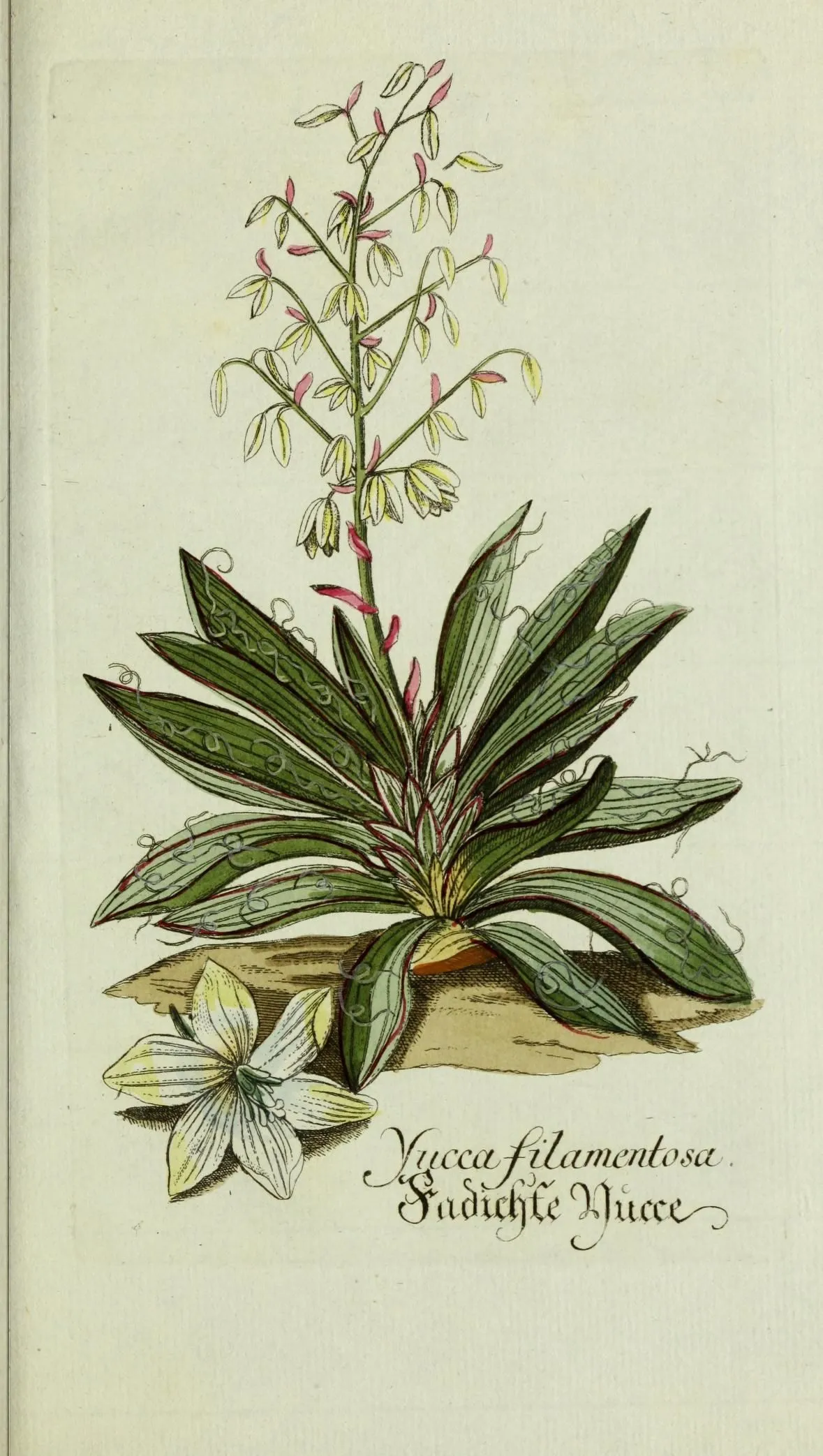 1 of 2
Native to the Southeast and the Northeast
Long Island and Pennsylvania, south to Florida and Louisiana
- Light Full sun Sun tolerance
- Moisture Dry Moisture preference
- Zones 5–10 Cold to heat range
- Bloom May–Jul Flowering time
- Height up to 9 ft to 2.7 m
- Life cycle Perennial Annual to perennial
In the garden
A prairie succulent for full sun and lean, dry soil. Its white flowers peak in June. At up to 9 ft, it needs room in meadows and sunny borders. Hardy in USDA zones 5–10.
Growing conditions
Light
Full sun Partial shade Full shade
Moisture
Dry Moist Wet
Hardiness zones
Find your zone:
When it blooms
The Common yucca's white flowers bloom May to July, peaking in June. This early-summer display draws bees and beetles.
Common yucca blooms whiteFoliage
Pollinators & wildlife
- Bees Sculptured Resin Bee also Lasioglossum podolicum
- Beetles Margined Leatherwing Beetle also Redbud Seed Weevil
- Butterflies Megathymus yuccae yuccae
Full plant details
Where it grows
- Habitat
- PrairieThe wild plant community it grows in.
- Native range
- The Southeast and the NortheastUnited States (15): AL, DE, FL, GA, KY, LA, MD, MS, NC, NJ, PA, SC, TN, VA, WV. Where it grows wild on its own, by state and province.
- Native distribution
- Long Island and Pennsylvania, south to Florida and LouisianaThe same native range, usually more exact than the state list, and often noting where it has spread beyond it.
Growing conditions
- Light
- Full sunHow much sun it takes, from full sun to full shade.
- Moisture
- DryThe soil dampness it prefers, from dry to wet.
- Hardiness zones
- USDA 5–10 · Canadian 6–7The cold-to-heat climate range it survives.
- Soil
- Coarse, dry sandsThe soils it grows in naturally.
- Soil texture
- Light to heavy (sandy to clay)The soil grade it prefers, from sand to clay.
- Soil pH
- Mildly acid to mildly alkalineThe acidity to alkalinity it tolerates (7 is neutral).
- Soil quality
- Low (tolerates poor soil)How rich a soil it needs. Many natives prefer lean soil and flop in rich beds.
Growth & form
- Height
- up to 9 ft (to 2.7 m)Typical mature height.
- Spread
- ~2 ft (0.6 m)How wide one plant gets, a guide to spacing.
- Life cycle
- PerennialWhether it lives a single season (annual), two (biennial), or returns for years (perennial).
- Growth rate
- ModerateA relative ranking versus other plants of the same type (USDA), not an absolute rate.
Flowers, foliage & fruit
- Type
- SucculentWhat kind of plant it is.
- Bloom
- May–JulWhen it flowers.
- Flower color
- WhiteThe bloom color, or colors.
- Fruit/Seeds
- ripens Mar–DecThe seed or fruit it sets after flowering.
- Toxicity
- None knownWhether any part is poisonous to people or pets.