prairie wildflower
Desert Prince's Plume
Stanleya pinnata
Also known as Desert Princes' Plume, Golden Princes' Plume, Golden Desert Plume, Sentinel Of The Plains, desert princesplume
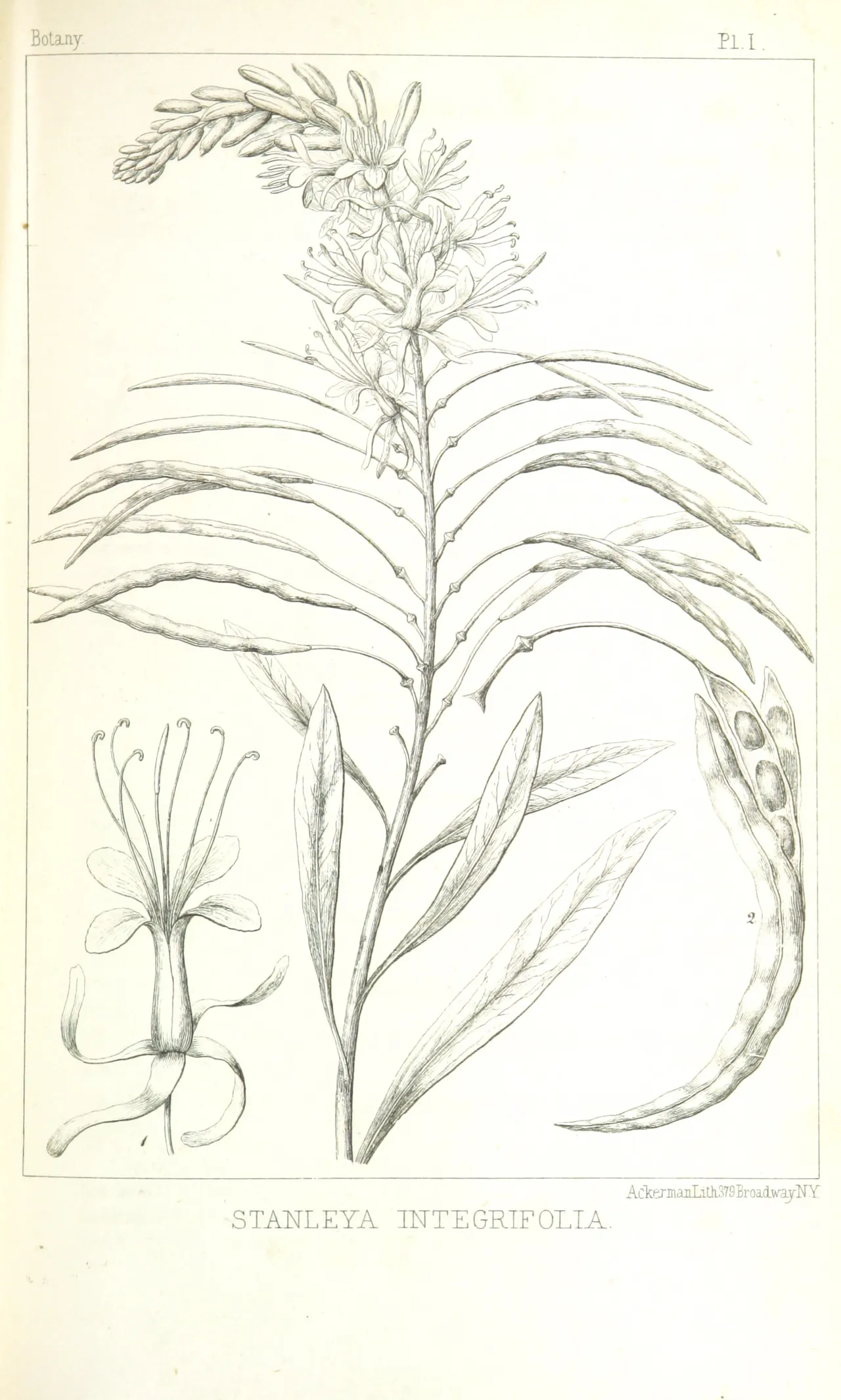 1 of 2
Native to the Southwest, the Rockies, and the Great Plains
North Dakota to Idaho, south to western Texas, southeastern California, and Chihuahua in Mexico
- Light Full sun Sun tolerance
- Moisture Moisture preference
- Zones 3–9 Cold to heat range
- Bloom Apr–Sep Flowering time
- Height up to 6 ft to 1.8 m
- Life cycle Perennial Annual to perennial
In the garden
A prairie wildflower for full sun. At up to 6 ft, it needs room in meadows and sunny borders. Hardy in USDA zones 3–9.
Growing conditions
Light
Full sun Partial shade Full shade
Moisture
Dry Moist Wet
Hardiness zones
Find your zone:
Pollinators & wildlife
- Bees Red-belted Bumble Bee
also Western Honey Bee, Hunt's Bumble Bee, Two-form Bumble Bee +6 more
Western Carpenter Bee, Crotch's Bumble Bee, Neighborly Mining Bee, Arizona Carpenter Bee, Morrison's Bumble Bee, Colorado Striped Sweat Bee - Flower flies Yellow-shouldered Drone Fly also Copestylum satur
- Beetles Convergent Lady Beetle also Ashy Gray Lady Beetle
- Also visited by
- Butterflies: Becker's White, Incisalia eryphon
- Hummingbirds: Costa's Hummingbird, Black-chinned Hummingbird
- Moths: Cyclophora nanaria
- Birds: Orange-crowned Warbler
Butterflies that use this plant
Documented host and nectar records. Each links to a planting guide for that butterfly.
- Eastern pine elfinnectar
Full plant details
Where it grows
- Habitat
- PrairieThe wild plant community it grows in.
- Native range
- The Southwest, the Rockies, and the Great PlainsUnited States (15): AZ, CA, CO, ID, KS, MT, ND, NE, NM, NV, OR, SD, TX, UT, WY. Where it grows wild on its own, by state and province.
- Native distribution
- North Dakota to Idaho, south to western Texas, southeastern California, and Chihuahua in MexicoThe same native range, usually more exact than the state list, and often noting where it has spread beyond it.
Growing conditions
- Light
- Full sunHow much sun it takes, from full sun to full shade.
- Hardiness zones
- USDA 3–9 · Canadian 3–7The cold-to-heat climate range it survives.
- Soil
- Stony or sandy soilsThe soils it grows in naturally.
- Soil texture
- Light to medium (sandy to loamy)The soil grade it prefers, from sand to clay.
- Soil pH
- Mildly acid to mildly alkalineThe acidity to alkalinity it tolerates (7 is neutral).
- Soil quality
- Low (tolerates poor soil)How rich a soil it needs. Many natives prefer lean soil and flop in rich beds.
Growth & form
- Height
- up to 6 ft (to 1.8 m)Typical mature height.
- Spread
- ~2 ft (0.5 m)How wide one plant gets, a guide to spacing.
- Life cycle
- PerennialWhether it lives a single season (annual), two (biennial), or returns for years (perennial).
Flowers, foliage & fruit
- Type
- WildflowerWhat kind of plant it is.
- Bloom
- Apr–SepWhen it flowers.
- Flower color
- YellowThe bloom color, or colors.
- Fruit/Seeds
- SiliqueThe seed or fruit it sets after flowering.
- Toxicity
- None knownWhether any part is poisonous to people or pets.