woodland succulent
Eastern False Aloe
Manfreda virginica
Also known as False Aloe, Rattlesnake Master
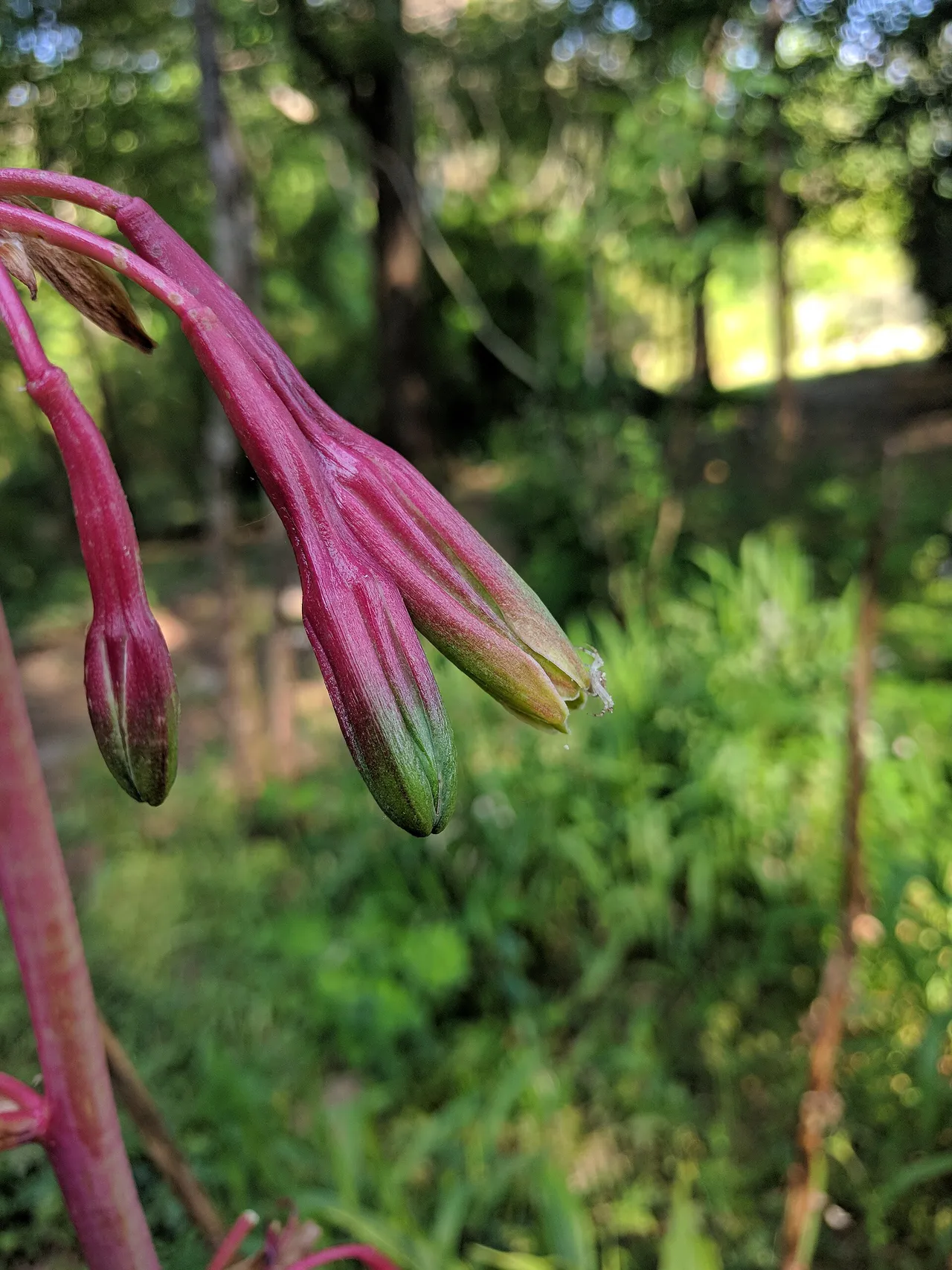
Native to the Southeast and the Midwest
Maryland to southern Ohio and southern Missouri, south to Florida and Texas
- Light Full sun Sun tolerance
- Moisture Dry Moisture preference
- Zones n/a Cold to heat range
- Bloom Jun–Aug Flowering time
- Height
- Life cycle Perennial Annual to perennial
In the garden
A woodland succulent for full sun and lean, dry soil. Its green flowers peak in July.
Growing conditions
Light
Full sun Partial shade Full shade
Moisture
Dry Moist Wet
When it blooms
The Eastern False Aloe's green flowers bloom June to August, peaking in July. This midsummer display draws bees and moths.
Eastern False Aloe blooms greenFoliage
Pollinators & wildlife
- Bees Common Eastern Bumble Bee also American Bumble Bee
- Moths Snowberry Clearwing
Full plant details
Where it grows
- Habitat
- WoodlandThe wild plant community it grows in.
- Native range
- The Southeast and the MidwestUnited States (19): AL, AR, FL, GA, IL, IN, KY, LA, MD, MO, MS, NC, OH, OK, SC, TN, TX, VA, WV. Where it grows wild on its own, by state and province.
- Native distribution
- Maryland to southern Ohio and southern Missouri, south to Florida and TexasThe same native range, usually more exact than the state list, and often noting where it has spread beyond it.
Growing conditions
- Light
- Full sunHow much sun it takes, from full sun to full shade.
- Moisture
- DryThe soil dampness it prefers, from dry to wet.
- Soil
- Dry, sterile, sometime alkaline soilsThe soils it grows in naturally.
Growth & form
- Life cycle
- PerennialWhether it lives a single season (annual), two (biennial), or returns for years (perennial).
Flowers, foliage & fruit
- Type
- SucculentWhat kind of plant it is.
- Bloom
- Jun–AugWhen it flowers.
- Flower color
- GreenThe bloom color, or colors.
- Fruit/Seeds
- ripens Jul–OctThe seed or fruit it sets after flowering.
- Toxicity
- None knownWhether any part is poisonous to people or pets.