woodland shrub
Eastern leatherwood
Dirca palustris
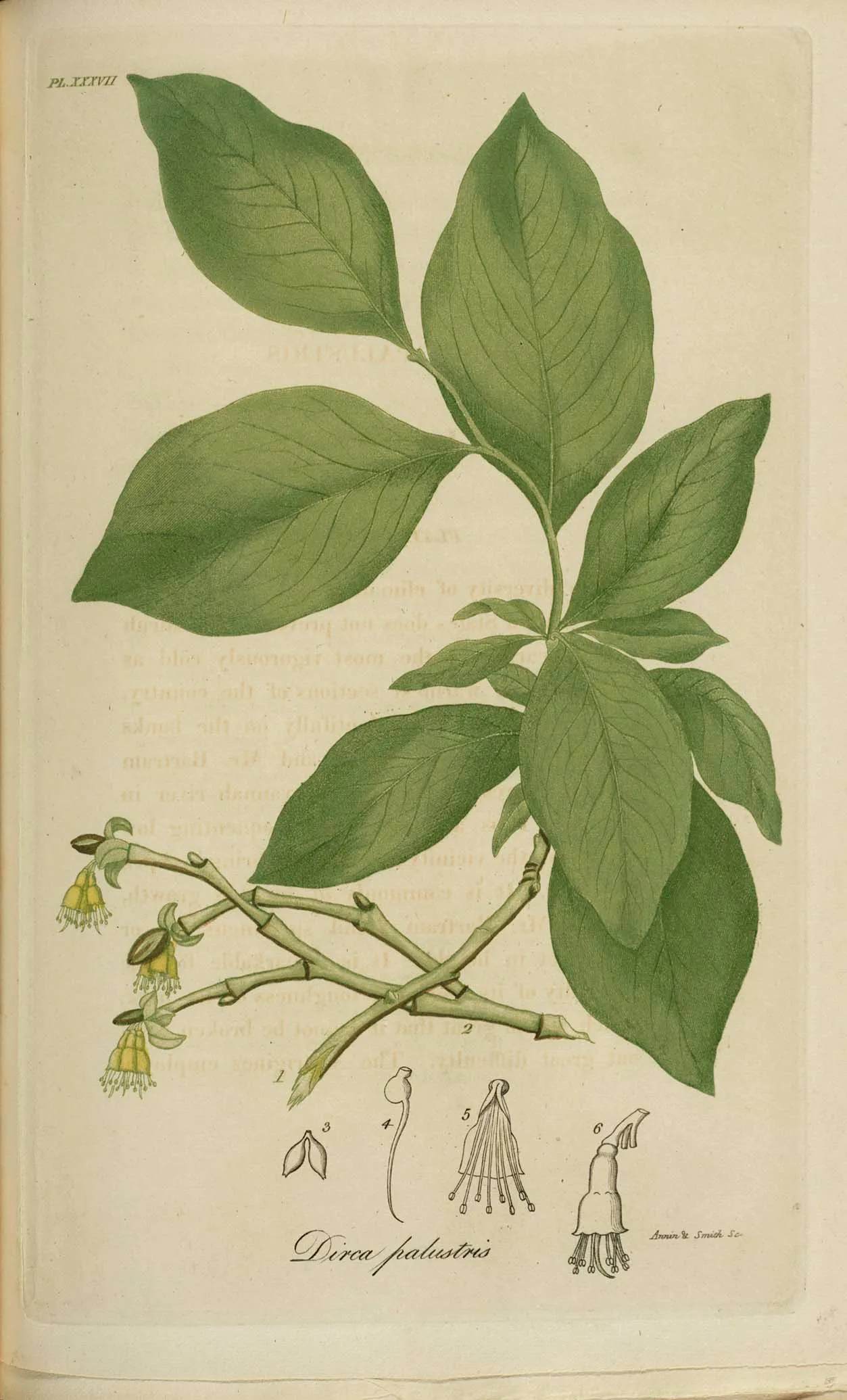 1 of 2
Native to much of the USA and southern Canada
Southern Quebec to Minnesota, south to Florida, Alabama and Oklahoma
- Light Part shade to shade Sun tolerance
- Moisture Dry to moist Moisture preference
- Zones 3–9 Cold to heat range
- Bloom Mar–May Flowering time
- Height up to 10 ft to 3.0 m
- Life cycle Perennial Annual to perennial
In the garden
A woodland shrub for part to full shade and dry to moist soil. Its yellow flowers peak in April. At up to 10 ft, it needs room in shade gardens and woodland edges. Hardy in USDA zones 3–9.
Growing conditions
Light
Full sun Partial shade Full shade
Moisture
Dry Moist Wet
Hardiness zones
Find your zone:
When it blooms
The Eastern leatherwood's yellow flowers bloom March to May, peaking in April. This spring display draws bees and flower flies.
Eastern leatherwood blooms yellowFoliage
Pollinators & wildlife
- Bees Pure Green Sweat bee
also Colletes inaequalis, Spurred Ceratina, Blue Orchard Bee +6 more
Ceratina dupla, Experienced Sweat Bee, white-winged sweat bee, Pseudopanurgus labrosiformis, Cuneate Nomad Bee, Zephyr Sweat Bee - Flower flies Band-winged Bee Fly
also Dusky-banded Leafwalker, Yellow-legged Bog Fly, grasshopper bee fly +1 more
Ocyptamus costatus - Beetles Mournful Long-horned Beetle also Mordellistena comata
- Also visited by
- Butterflies: Mourning Cloak, Least Skipper
Butterflies that use this plant
Documented host and nectar records. Each links to a planting guide for that butterfly.
- Mourning cloaknectar
Full plant details
Where it grows
- Habitat
- WoodlandThe wild plant community it grows in.
- Native range
- Much of the USA and southern CanadaUnited States (32): AL, AR, CT, DC, DE, FL, GA, IA, IL, IN, KY, LA, MA, MD, ME, MI, MN, MO, MS, NC, NH, NJ, NY, OH, OK, PA, SC, TN, VA, VT, WI, WV. Canada (3): NB, NS, ON. Where it grows wild on its own, by state and province.
- Native distribution
- Southern Quebec to Minnesota, south to Florida, Alabama and OklahomaThe same native range, usually more exact than the state list, and often noting where it has spread beyond it.
Growing conditions
- Light
- Part shade to shadeHow much sun it takes, from full sun to full shade.
- Moisture
- Dry to moistThe soil dampness it prefers, from dry to wet.
- Hardiness zones
- USDA 3–9 · Canadian 3–7The cold-to-heat climate range it survives.
- Soil
- Moist, well-drained, organic soilsThe soils it grows in naturally.
- Soil texture
- Light to heavy (sandy to clay)The soil grade it prefers, from sand to clay.
- Soil pH
- Mildly acid to mildly alkalineThe acidity to alkalinity it tolerates (7 is neutral).
Growth & form
- Height
- up to 10 ft (to 3.0 m)Typical mature height.
- Life cycle
- PerennialWhether it lives a single season (annual), two (biennial), or returns for years (perennial).
Flowers, foliage & fruit
- Type
- ShrubWhat kind of plant it is.
- Bloom
- Mar–MayWhen it flowers.
- Flower color
- YellowThe bloom color, or colors.
- Fruit/Seeds
- ripens Apr–JunThe seed or fruit it sets after flowering.
- Toxicity
- Poisonous if eatenWhether any part is poisonous to people or pets.