prairie cactus
Eastern pricklypear complex
Opuntia humifusa
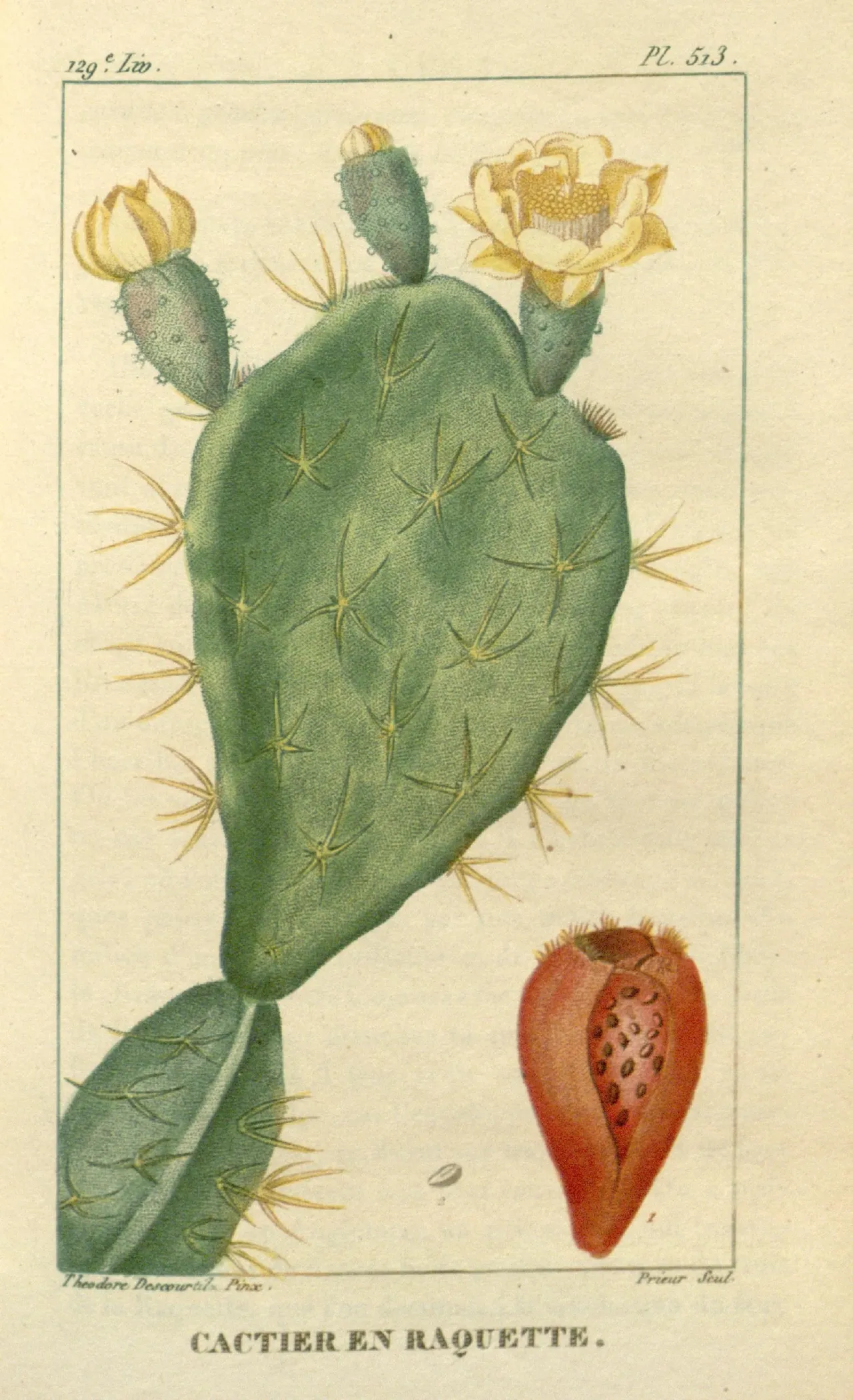
Native to much of the USA and southern Canada
Massachusetts to Minnesota, south to Florida, Alabama and Oklahoma
- Light Full sun Sun tolerance
- Moisture Dry Moisture preference
- Zones 5–10 Cold to heat range
- Bloom May–Jul Flowering time
- Height
- Life cycle Perennial Annual to perennial
In the garden
A prairie cactus for full sun and lean, dry soil. It shrugs off drought once established. Hardy in USDA zones 5–10.
Growing conditions
Light
Full sun Partial shade Full shade
Moisture
Dry Moist Wet
Hardiness zones
Find your zone:
Pollinators & wildlife
- Bees Common Eastern Bumble Bee
also Western Honey Bee, Eastern Carpenter Bee, Brown-belted Bumble Bee +26 more
Two-spotted Bumble Bee, American Bumble Bee, Ligated Furrow Bee, Bicolored Striped Sweat Bee, Bombus fervidus, Hunt's Bumble Bee, Brown-winged Striped Sweat Bee, Golden Sweat Bee, Texas Leafcutter Bee, Common Longhorn Bee, Southeastern Woodborer, Florida Pebble Bee, Melissodes mitchelli, Common Masked Bee, Lasioglossum longifrons, Lasioglossum nymphale, Leavitt's Armored-Resin bee, Melissodes communis communis, Xylocopa virginica virginica, Augochlorella persimilis, Lithurgus gibbosus, Lasioglossum tegulare, Megachile policaris, South Florida Eastern Carpenter Bee, Megachile pseudobrevis, Augochloropsis sumptuosa - Flower flies The Merodon equestris Group also Marmalade Hover Fly
- Beetles Sand Chafer also Euphoria kernii
- Also visited by
- Butterflies: Gulf Fritillary
Butterflies that use this plant
Documented host and nectar records. Each links to a planting guide for that butterfly.
- Gulf fritillarynectar
Full plant details
Where it grows
- Habitat
- PrairieThe wild plant community it grows in.
- Native range
- Much of the USA and southern CanadaUnited States (33): AL, AR, CT, DE, FL, GA, IA, IL, IN, KS, KY, LA, MA, MD, MI, MN, MO, MS, NC, NE, NJ, NY, OH, OK, PA, RI, SC, SD, TN, TX, VA, WI, WV. Canada (1): ON. Where it grows wild on its own, by state and province.
- Native distribution
- Massachusetts to Minnesota, south to Florida, Alabama and OklahomaThe same native range, usually more exact than the state list, and often noting where it has spread beyond it.
Growing conditions
- Light
- Full sunHow much sun it takes, from full sun to full shade.
- Moisture
- DryThe soil dampness it prefers, from dry to wet.
- Hardiness zones
- USDA 5–10 · Canadian 5–7The cold-to-heat climate range it survives.
- Soil
- Sandy or rocky soilsThe soils it grows in naturally.
- Soil texture
- Light to medium (sandy to loamy)The soil grade it prefers, from sand to clay.
- Soil pH
- Mildly acid to mildly alkalineThe acidity to alkalinity it tolerates (7 is neutral).
- Soil quality
- Low (tolerates poor soil)How rich a soil it needs. Many natives prefer lean soil and flop in rich beds.
- Water use
- LowHow thirsty it is, a rough guide to how often to water.
- Drought tolerance
- HighRelative to plants of the same type and region, inferred from where it grows, not a days-without-water figure.
Growth & form
- Spread
- ~3 ft (1 m)How wide one plant gets, a guide to spacing.
- Life cycle
- PerennialWhether it lives a single season (annual), two (biennial), or returns for years (perennial).
- Growth rate
- ModerateA relative ranking versus other plants of the same type (USDA), not an absolute rate.
Flowers, foliage & fruit
- Type
- CactusWhat kind of plant it is.
- Bloom
- May–JulWhen it flowers.
- Flower color
- YellowThe bloom color, or colors.
- Toxicity
- Poisonous if eatenWhether any part is poisonous to people or pets.