prairie shrub
Lapland Azalea
Rhododendron lapponicum
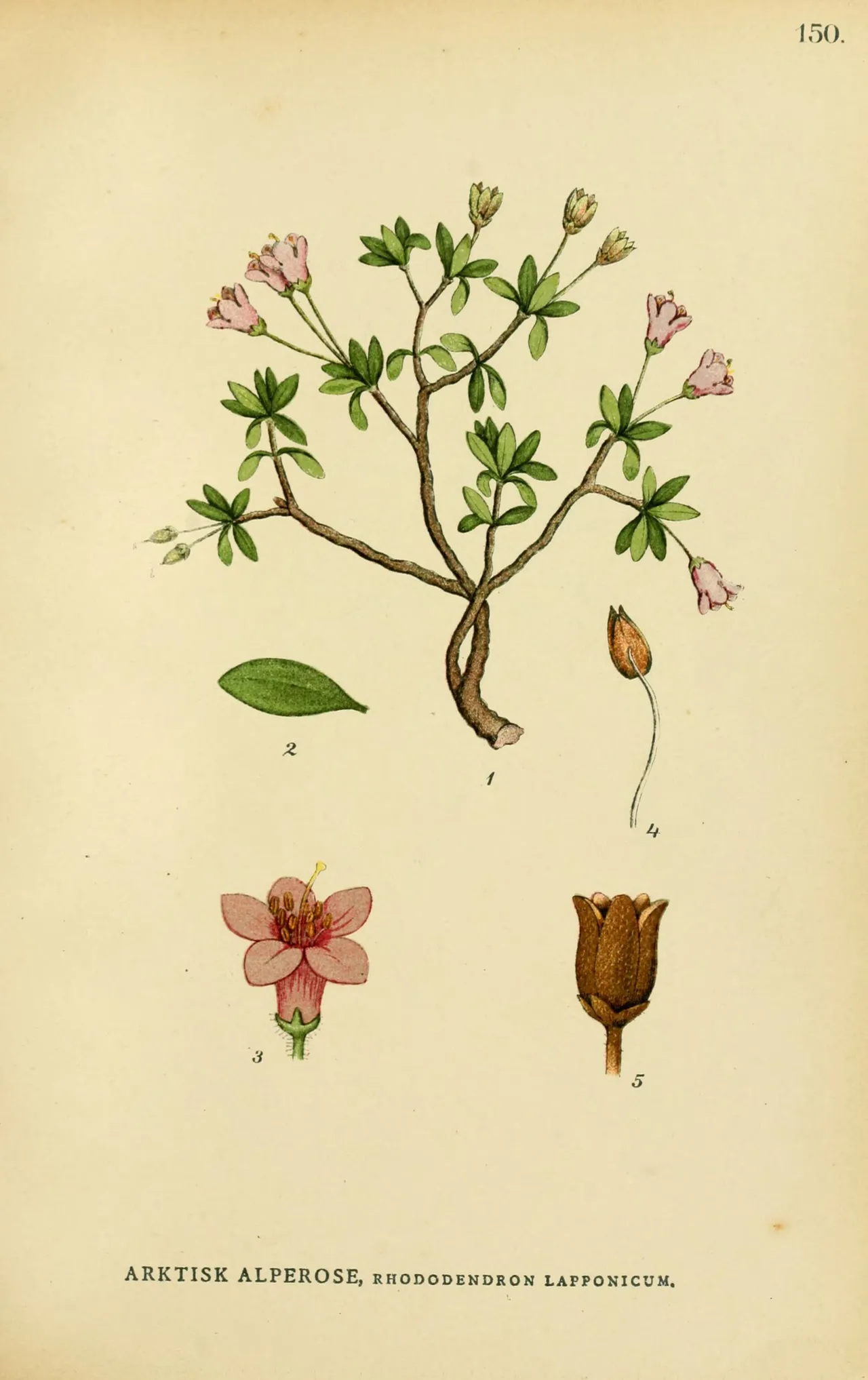
Native to Alaska, Maine, New Hampshire, New York, and Wisconsin and southern Canada
Arctic and sub-arctic North America, south to Mount Katahdin, Maine; Presidential Range, New Hampshire; Adirondacks, New York; and the Wisconsin Dells
- Light Partial shade Sun tolerance
- Moisture Dry Moisture preference
- Zones 1–6 Cold to heat range
- Bloom May–Sep Flowering time
- Height up to 2 ft to 0.6 m
- Life cycle Perennial Annual to perennial
In the garden
A prairie shrub for partial shade and lean, dry soil. At up to 2 ft, it suits meadows and sunny borders. Hardy in USDA zones 1–6.
Growing conditions
Light
Full sun Partial shade Full shade
Moisture
Dry Moist Wet
Hardiness zones
Find your zone:
Pollinators & wildlife
- Bees frigid bumble bee also Bombus hyperboreus, Alpine Bumble Bee
- Flower flies Holarctic Bristleside
- Moths Alpine Arches
Full plant details
Where it grows
- Habitat
- PrairieThe wild plant community it grows in.
- Native range
- Alaska, Maine, New Hampshire, New York, and Wisconsin and southern CanadaUnited States (5): AK, ME, NH, NY, WI. Canada (4): NL, NS, ON, QC. Where it grows wild on its own, by state and province.
- Native distribution
- Arctic and sub-arctic North America, south to Mount Katahdin, Maine; Presidential Range, New Hampshire; Adirondacks, New York; and the Wisconsin DellsThe same native range, usually more exact than the state list, and often noting where it has spread beyond it.
Growing conditions
- Light
- Partial shadeHow much sun it takes, from full sun to full shade.
- Moisture
- DryThe soil dampness it prefers, from dry to wet.
- Hardiness zones
- USDA 1–6 · Canadian 0–5The cold-to-heat climate range it survives.
- Soil
- Dry, limey soilThe soils it grows in naturally.
- Soil texture
- Light to medium (sandy to loamy)The soil grade it prefers, from sand to clay.
- Soil pH
- 4.4–6.1The acidity to alkalinity it tolerates (7 is neutral).
- Soil quality
- MediumHow rich a soil it needs. Many natives prefer lean soil and flop in rich beds.
- Lime (CaCO₃) tolerance
- HighHow well it copes with chalky, lime-rich soil.
Growth & form
- Height
- up to 2 ft (to 0.6 m)Typical mature height.
- Spread
- ~3 ft (1 m)How wide one plant gets, a guide to spacing.
- Life cycle
- PerennialWhether it lives a single season (annual), two (biennial), or returns for years (perennial).
- Growth rate
- ModerateA relative ranking versus other plants of the same type (USDA), not an absolute rate.
- Shape
- ProstrateIts overall silhouette.
- Root depth
- 24+ in (61+ cm)How far the roots reach, a guide to drought resilience and transplanting.
Flowers, foliage & fruit
- Type
- ShrubWhat kind of plant it is.
- Bloom
- May–SepWhen it flowers.
- Flower color
- PurpleThe bloom color, or colors.
- Toxicity
- Poisonous if eatenWhether any part is poisonous to people or pets.
Propagation & seed
- Cold stratification
- Required (cold, moist)Whether seed needs a cold, moist spell before it will germinate.
- Propagation
- Corm, cuttings, seed, sprigsHow to start new plants.
- Vegetative spread
- ModerateWhether it creeps outward or stays put in a clump.