woodland wildflower
Pale-spiked lobelia
Lobelia spicata
Also known as Pale-spike Lobelia, palespike lobelia
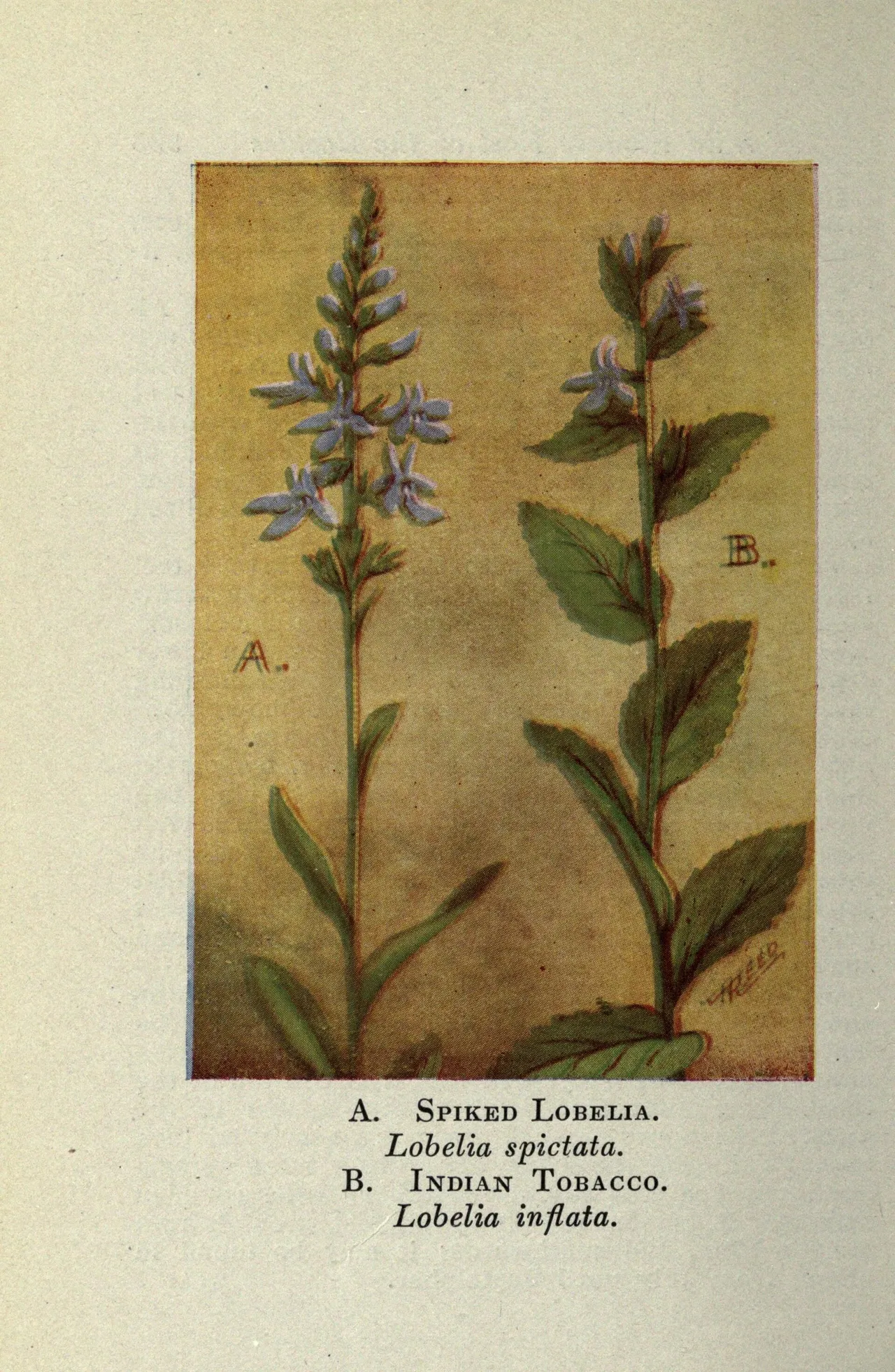 1 of 3
Native to much of the USA and southern Canada
Southeastern Canada to Saskatchewan and northeastern Montana, south to Georgia, Alabama, Mississippi, Louisiana and eastern Texas
- Light Full sun to shade Sun tolerance
- Moisture Dry to moist Moisture preference
- Zones 3–9 Cold to heat range
- Bloom Jun–Jul Flowering time
- Height up to 3 ft to 0.9 m
- Life cycle Perennial Annual to perennial
In the garden
A woodland wildflower for sun through shade and dry to moist soil. At up to 3 ft, it suits shade gardens and woodland edges. Hardy in USDA zones 3–9.
Growing conditions
Light
Full sun Partial shade Full shade
Moisture
Dry Moist Wet
Hardiness zones
Find your zone:
Pollinators & wildlife
- Bees Brown-belted Bumble Bee
also Western Honey Bee, American Bumble Bee, Pure Green Sweat bee +27 more
Bombus fervidus, Two-spotted Longhorn Bee, Golden Sweat Bee, Spurred Ceratina, Orange-tipped Wood-digger, Silver-tailed Petalcutter, Petulant Leafcutter Bee, Red-footed Cuckoo Leafcutter, Cherry Mining Bee, Agile Longhorn Bee, Megachile brevis, Ceratina dupla, Thistle Longhorn-Cuckoo, Osmia conjuncta, Nomada affabilis, Goatsbeard Miner Bee, Illinois Cuckoo Sweat Bee, Anthidium psoraleae, Small Willow Miner Bee, Hoplitis pilosifrons, Yellow-spotted Cuckoo Nomad Bee, Eastern Cuckoo Sweat Bee, Svastra obliqua, Agapostemon viridulus, Coelioxys brevis, Tetragona dissecta, Dilated-horned Small-Mason - Butterflies Zabulon Skipper
also Checkered White, Least Skipper, American Copper +4 more
Common Sootywing, Mulberry Wing, Polites coras, Elkalyce comyntas - Flower flies Black-haired Psyllid-killer
also Volucella vesiculosa, Eastern Orange-tailed Leafwalker, Hemipenthes sinuosus +2 more
Epistrophe emarginata, grasshopper bee fly - Also visited by
- Beetles:
Spotted Cucumber Beetle, Downy Long-horned Beetle +2 more
Emerald Euphoria, Chlorophorus glaucus - Wasps: Fraternal Potter Wasp
- Beetles:
Butterflies that use this plant
Documented host and nectar records. Each links to a planting guide for that butterfly.
- American coppernectar
- Checkered whitenectar
Full plant details
Where it grows
- Habitat
- WoodlandThe wild plant community it grows in.
- Native range
- Much of the USA and southern CanadaUnited States (38): AL, AR, CT, DC, DE, GA, IA, IL, IN, KS, KY, LA, MA, MD, ME, MI, MN, MO, MS, MT, NC, ND, NE, NH, NJ, NY, OH, OK, PA, RI, SC, SD, TN, TX, VA, VT, WI, WV. Canada (3): MB, ON, SK. Where it grows wild on its own, by state and province.
- Native distribution
- Southeastern Canada to Saskatchewan and northeastern Montana, south to Georgia, Alabama, Mississippi, Louisiana and eastern TexasThe same native range, usually more exact than the state list, and often noting where it has spread beyond it.
Growing conditions
- Light
- Full sun to shadeHow much sun it takes, from full sun to full shade.
- Moisture
- Dry to moistThe soil dampness it prefers, from dry to wet.
- Hardiness zones
- USDA 3–9 · Canadian 3–7The cold-to-heat climate range it survives.
- Soil
- Moist to dry soilsThe soils it grows in naturally.
- Soil texture
- Light to heavy (sandy to clay)The soil grade it prefers, from sand to clay.
- Soil pH
- Mildly acid to mildly alkalineThe acidity to alkalinity it tolerates (7 is neutral).
Growth & form
- Height
- up to 3 ft (to 0.9 m)Typical mature height.
- Spread
- ~1 ft (0.3 m)How wide one plant gets, a guide to spacing.
- Life cycle
- PerennialWhether it lives a single season (annual), two (biennial), or returns for years (perennial).
Flowers, foliage & fruit
- Type
- WildflowerWhat kind of plant it is.
- Bloom
- Jun–JulWhen it flowers.
- Flower color
- White, Blue, PurpleThe bloom color, or colors.
- Fruit/Seeds
- CapsuleThe seed or fruit it sets after flowering.
- Toxicity
- None knownWhether any part is poisonous to people or pets.