prairie wildflower
Plains coreopsis
Coreopsis tinctoria
Also known as Golden Tickseed, Goldenwave, Calliopsis
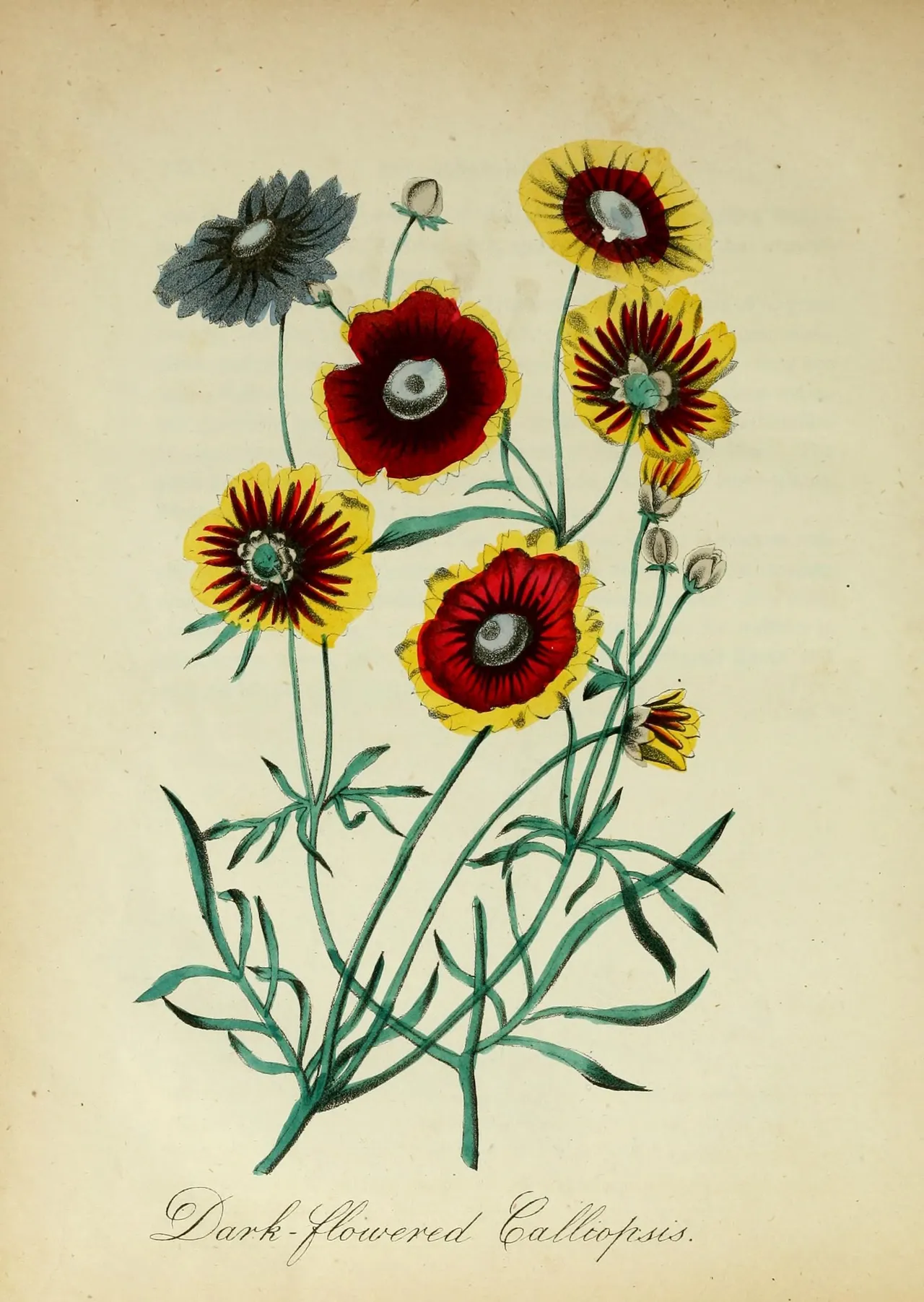 1 of 3
Native to the Great Plains, the Rockies, and the Midwest and southern Canada
Plains of central U.S.; naturalized elsewhere.
- Light Full sun to part shade Sun tolerance
- Moisture Moist Moisture preference
- Zones 3–10 Cold to heat range
- Bloom Mar–Nov Flowering time
- Height up to 5 ft to 1.5 m
- Life cycle Annual, Biennial, or perennial Annual to perennial
In the garden
A prairie wildflower for full sun to part shade and evenly moist soil. Its yellow and brown flowers peak in June. At up to 5 ft, it needs room in meadows and sunny borders. Hardy in USDA zones 3–10.
Growing conditions
Light
Full sun Partial shade Full shade
Moisture
Dry Moist Wet
Hardiness zones
Find your zone:
When it blooms
The Plains coreopsis's yellow and brown flowers bloom March to November, peaking in June. This early-summer display draws bees and butterflies.
Plains coreopsis blooms yellow & brownFoliage
Pollinators & wildlife
- Bees Common Eastern Bumble Bee
also Brown-belted Bumble Bee, Yellow-faced Bumble Bee, Ligated Furrow Bee +13 more
Bicolored Striped Sweat Bee, Perplexing Bumble Bee, Orange-legged Furrow Bee, Carpenter-mimic Leafcutter Bee, Poey's Furrow Bee, Dark-veined Longhorn Bee, Squash Longhorn-Cuckoo, Lasioglossum emirnense, Megachile albiscopa, Epimelissodes petulcus, Great Banded Furrow Bee, Exiled Longhorn, Sunflower Burrowing-Resin bee - Butterflies Red Admiral
also Pearl Crescent, Checkered White, Horace's Duskywing +9 more
Dainty Sulphur, Acmon Blue, Reakirt's Blue, Little Glassywing, Gorgone Checkerspot, Garita Skipperling, Euphydryas phaeton, Oak Hairstreak, Silvery Checkerspot - Moths Green Cloverworm Moth
also Large Yellow Underwing, Yellow-collared Scape Moth, Changeable Grass-veneer +7 more
Soybean Looper Moth, Smith's Dart, Inornate Pyrausta Moth, Checkered Apogeshna Moth, Wavy-lined Fan-foot, Agriphila ruricolella, Ithaca Clearwing Moth - Also visited by
- Flower flies:
Margined Calligrapher, Eastern Calligrapher +7 more
Common Drone Fly, Transverse-banded Flower Fly, Oblique Streaktail, Yellow-shouldered Drone Fly, Northern Plushback, Common Grass Skimmer, Copestylum marginatum - Beetles: Redbud Seed Weevil, Cryptocephalus cribripennis
- Wasps: Red-marked Pachodynerus Wasp, Hidalgo Mason Wasp
- Flower flies:
Butterflies that use this plant
Documented host and nectar records. Each links to a planting guide for that butterfly.
- Acmon bluenectar
- Checkered whitenectar
- Dainty sulphurnectar
- Gorgone checkerspotnectar
- Pearl crescentnectar
- Reakirt's bluenectar
- Red admiralnectar
- Silvery checkerspotnectar
Full plant details
Where it grows
- Habitat
- PrairieThe wild plant community it grows in.
- Native range
- The Great Plains, the Rockies, and the Midwest and southern CanadaUnited States (15): AR, CO, IA, KS, LA, MN, MO, MT, ND, NE, NM, OK, SD, TX, WY. Canada (3): AB, MB, SK. Where it grows wild on its own, by state and province.
- Native distribution
- Plains of central U.S.; naturalized elsewhere.The same native range, usually more exact than the state list, and often noting where it has spread beyond it.
Growing conditions
- Light
- Full sun to part shadeHow much sun it takes, from full sun to full shade.
- Moisture
- MoistThe soil dampness it prefers, from dry to wet.
- Hardiness zones
- USDA 3–10 · Canadian 3–8The cold-to-heat climate range it survives.
- Soil
- Prefers moist, sandy soilThe soils it grows in naturally.
- Soil texture
- Light to medium (sandy to loamy)The soil grade it prefers, from sand to clay.
- Soil pH
- 5.2–7.8The acidity to alkalinity it tolerates (7 is neutral).
- Soil quality
- MediumHow rich a soil it needs. Many natives prefer lean soil and flop in rich beds.
- Water use
- HighHow thirsty it is, a rough guide to how often to water.
- Salinity tolerance
- NoneHow well it copes with salty soil, near roads or the coast.
- Lime (CaCO₃) tolerance
- MediumHow well it copes with chalky, lime-rich soil.
Growth & form
- Height
- up to 5 ft (to 1.5 m)Typical mature height.
- Spread
- ~1 ft (0.2 m)How wide one plant gets, a guide to spacing.
- Life cycle
- Annual, biennial, or perennialWhether it lives a single season (annual), two (biennial), or returns for years (perennial).
- Growth rate
- RapidA relative ranking versus other plants of the same type (USDA), not an absolute rate.
- Shape
- ErectIts overall silhouette.
- Root depth
- 8+ in (20+ cm)How far the roots reach, a guide to drought resilience and transplanting.
Flowers, foliage & fruit
- Type
- WildflowerWhat kind of plant it is.
- Bloom
- Mar–NovWhen it flowers.
- Flower color
- Yellow, BrownThe bloom color, or colors.
- Fruit/Seeds
- Achene; ripens Apr–OctThe seed or fruit it sets after flowering.
- Toxicity
- None knownWhether any part is poisonous to people or pets.
Propagation & seed
- Cold stratification
- Not requiredWhether seed needs a cold, moist spell before it will germinate.
- Propagation
- SeedHow to start new plants.
- Seed
- ~3 million seeds per poundNotes on the seed and how to sow it.
- Seed spread rate
- ModerateHow readily it self-sows. Slow or none means well-behaved, not a spreader.
- Seedling vigor
- HighHow strongly young seedlings establish.
- Vegetative spread
- NoneWhether it creeps outward or stays put in a clump.