woodland wildflower
Purple Saxifrage
Saxifraga oppositifolia
Also known as Purple Mountain Saxifrage
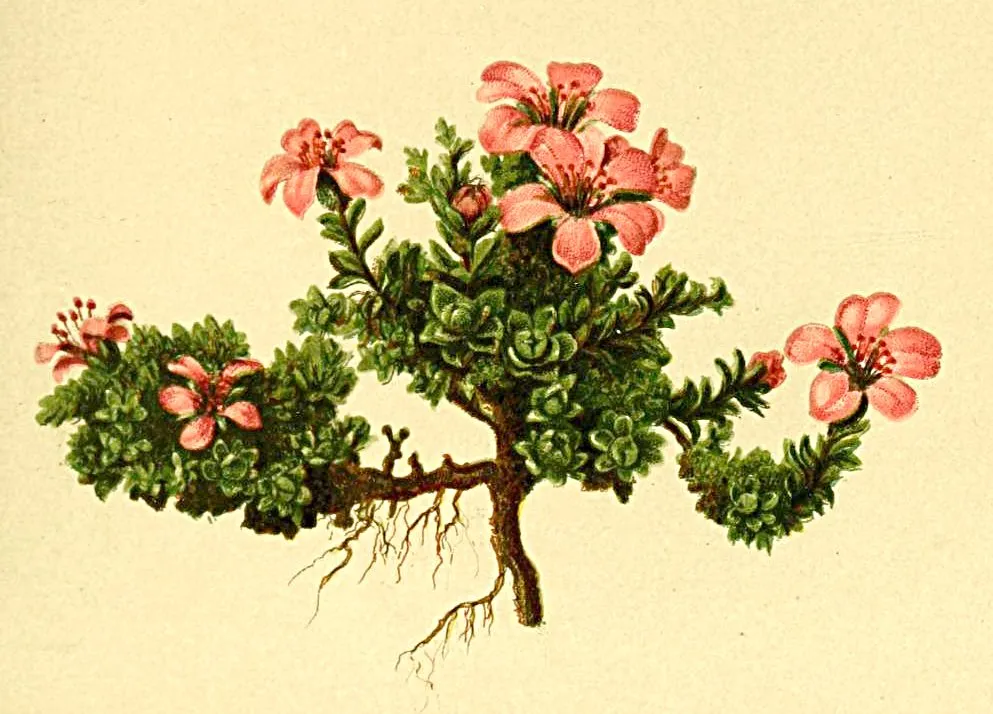 1 of 2
Native to Alaska, Idaho, Montana, New York, Oregon, Vermont, Washington, and Wyoming and Canada
Labrador to Alaska, south to Vermont, Rockies to northern Wyoming and mountains of Washington and Oregon
- Light Partial shade Sun tolerance
- Moisture Dry Moisture preference
- Zones 1–8 Cold to heat range
- Bloom Jun–Aug Flowering time
- Height up to 2 in to 5 cm
- Life cycle Perennial Annual to perennial
In the garden
A woodland wildflower for partial shade and lean, dry soil. At up to 2 in, it tucks into shade gardens and woodland edges. Hardy in USDA zones 1–8.
Growing conditions
Light
Full sun Partial shade Full shade
Moisture
Dry Moist Wet
Hardiness zones
Find your zone:
Pollinators & wildlife
- Flower flies Broad-banded Aphideater
also Holarctic Bristleside, Platycheirus carinatus, Black-tailed Aphideater +2 more
Comma-spot Aphideater, Black Aphideater - Butterflies Titania's Fritillary
also Clossiana polaris, Clossiana chariclea, Arctic Blue +1 more
Agriades aquilo - Bees Polar Bumble Bee also Western Honey Bee, Alpine Bumble Bee, Andrena rogenhoferi
Butterflies that use this plant
Documented host and nectar records. Each links to a planting guide for that butterfly.
Full plant details
Where it grows
- Habitat
- WoodlandThe wild plant community it grows in.
- Native range
- Alaska, Idaho, Montana, New York, Oregon, Vermont, Washington, and Wyoming and CanadaUnited States (8): AK, ID, MT, NY, OR, VT, WA, WY. Canada (10): AB, BC, MB, NL, NS, NT, NU, ON, QC, YT. Where it grows wild on its own, by state and province.
- Native distribution
- Labrador to Alaska, south to Vermont, Rockies to northern Wyoming and mountains of Washington and OregonThe same native range, usually more exact than the state list, and often noting where it has spread beyond it.
Growing conditions
- Light
- Partial shadeHow much sun it takes, from full sun to full shade.
- Moisture
- DryThe soil dampness it prefers, from dry to wet.
- Hardiness zones
- USDA 1–8 · Canadian 0–8The cold-to-heat climate range it survives.
- Soil
- Rocky soilsThe soils it grows in naturally.
Growth & form
- Height
- up to 2 in (to 5 cm)Typical mature height.
- Life cycle
- PerennialWhether it lives a single season (annual), two (biennial), or returns for years (perennial).
Flowers, foliage & fruit
- Type
- WildflowerWhat kind of plant it is.
- Bloom
- Jun–AugWhen it flowers.
- Flower color
- Red, Pink, PurpleThe bloom color, or colors.
- Toxicity
- None knownWhether any part is poisonous to people or pets.