wetland wildflower
Rose Coreopsis
Coreopsis rosea
Also known as Pink Tickseed, Pink Coreopsis
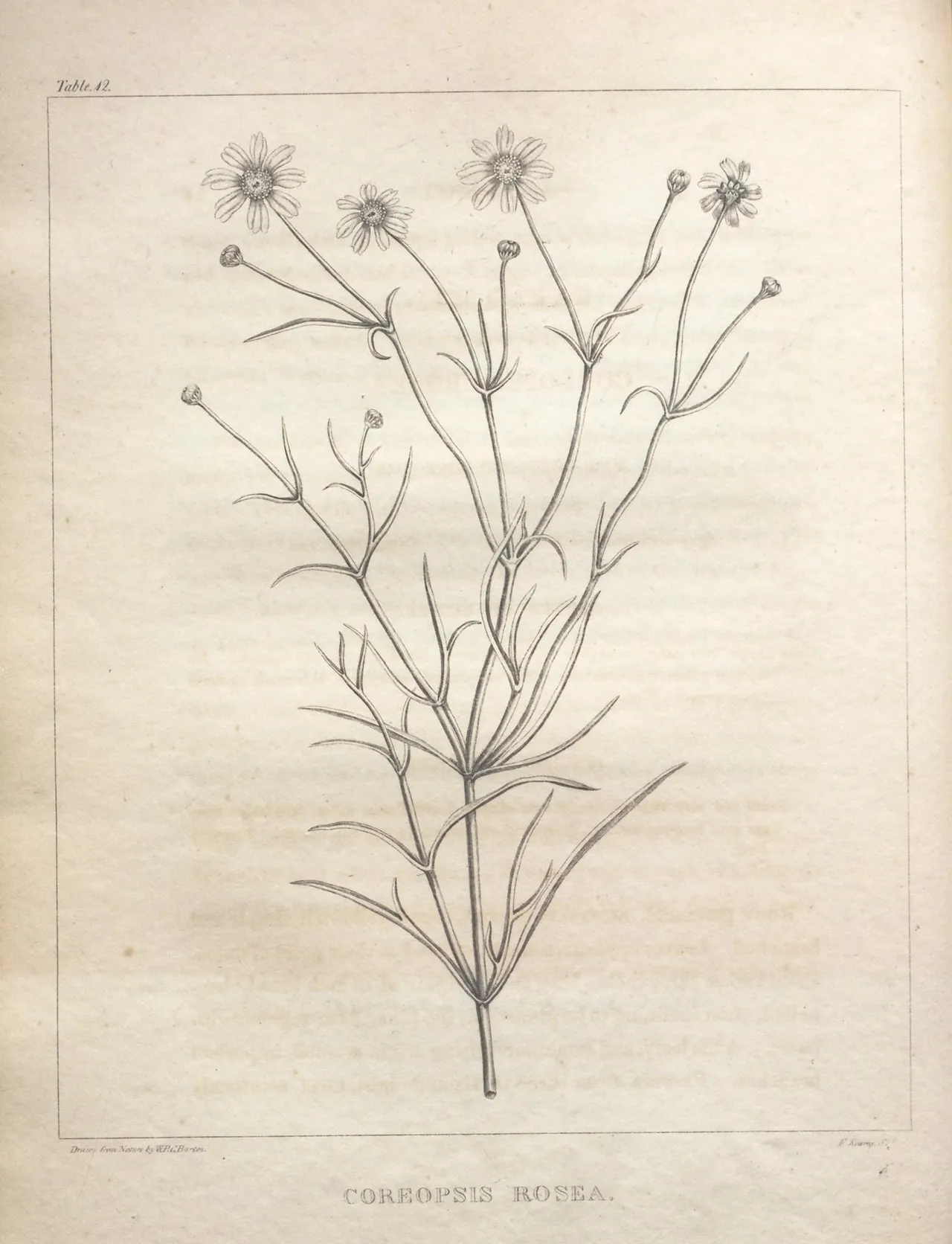 1 of 2
Native to Massachusetts, New Jersey, New York, and Rhode Island and southern Canada
Nova Scotia and eastern Massachusetts to Long Island and New Jersey
- Light Full sun to part shade Sun tolerance
- Moisture Moist to wet Moisture preference
- Zones 5–8 Cold to heat range
- Bloom Jul–Sep Flowering time
- Height
- Life cycle Perennial Annual to perennial
In the garden
A wetland wildflower for full sun to part shade and consistently moist to wet soil. Its white and pink flowers peak in August. Hardy in USDA zones 5–8.
Growing conditions
Light
Full sun Partial shade Full shade
Moisture
Dry Moist Wet
Hardiness zones
Find your zone:
When it blooms
The Rose Coreopsis's white and pink flowers bloom July to September, peaking in August. This late-summer display draws bees and butterflies.
Rose Coreopsis blooms white & pinkFoliage
Pollinators & wildlife
- Bees Common Eastern Bumble Bee
also Ligated Furrow Bee, Bicolored Striped Sweat Bee, Lemon Cuckoo Bumble Bee +2 more
Northern Amber Bumble Bee, Dark-veined Longhorn Bee - Butterflies Eastern Tailed-Blue also Peck's Skipper, Red-banded Hairstreak, Least Skipper
- Flower flies Margined Calligrapher also Transverse-banded Flower Fly
- Also visited by
- Moths: Boneset Borer Moth
Butterflies that use this plant
Documented host and nectar records. Each links to a planting guide for that butterfly.
- Banded hairstreaknectar
- Eastern tailed-bluenectar
- Red-banded hairstreaknectar
Full plant details
Where it grows
- Habitat
- WetlandThe wild plant community it grows in.
- Native range
- Massachusetts, New Jersey, New York, and Rhode Island and southern CanadaUnited States (4): MA, NJ, NY, RI. Canada (1): NS. Where it grows wild on its own, by state and province.
- Native distribution
- Nova Scotia and eastern Massachusetts to Long Island and New JerseyThe same native range, usually more exact than the state list, and often noting where it has spread beyond it.
Growing conditions
- Light
- Full sun to part shadeHow much sun it takes, from full sun to full shade.
- Moisture
- Moist to wetThe soil dampness it prefers, from dry to wet.
- Hardiness zones
- USDA 5–8 · Canadian 6–7The cold-to-heat climate range it survives.
- Soil
- Moist, sandy, acid soilsThe soils it grows in naturally.
- Soil texture
- Light to medium (sandy to loamy)The soil grade it prefers, from sand to clay.
- Soil pH
- Acid to neutralThe acidity to alkalinity it tolerates (7 is neutral).
- Water use
- HighHow thirsty it is, a rough guide to how often to water.
- Drought tolerance
- LowRelative to plants of the same type and region, inferred from where it grows, not a days-without-water figure.
- Lime (CaCO₃) tolerance
- LowHow well it copes with chalky, lime-rich soil.
Growth & form
- Spread
- ~2 ft (0.6 m)How wide one plant gets, a guide to spacing.
- Life cycle
- PerennialWhether it lives a single season (annual), two (biennial), or returns for years (perennial).
- Growth rate
- RapidA relative ranking versus other plants of the same type (USDA), not an absolute rate.
Flowers, foliage & fruit
- Type
- WildflowerWhat kind of plant it is.
- Bloom
- Jul–SepWhen it flowers.
- Flower color
- White, PinkThe bloom color, or colors.
- Fruit/Seeds
- Achene; ripens Aug–SepThe seed or fruit it sets after flowering.
- Toxicity
- None knownWhether any part is poisonous to people or pets.