woodland wildflower
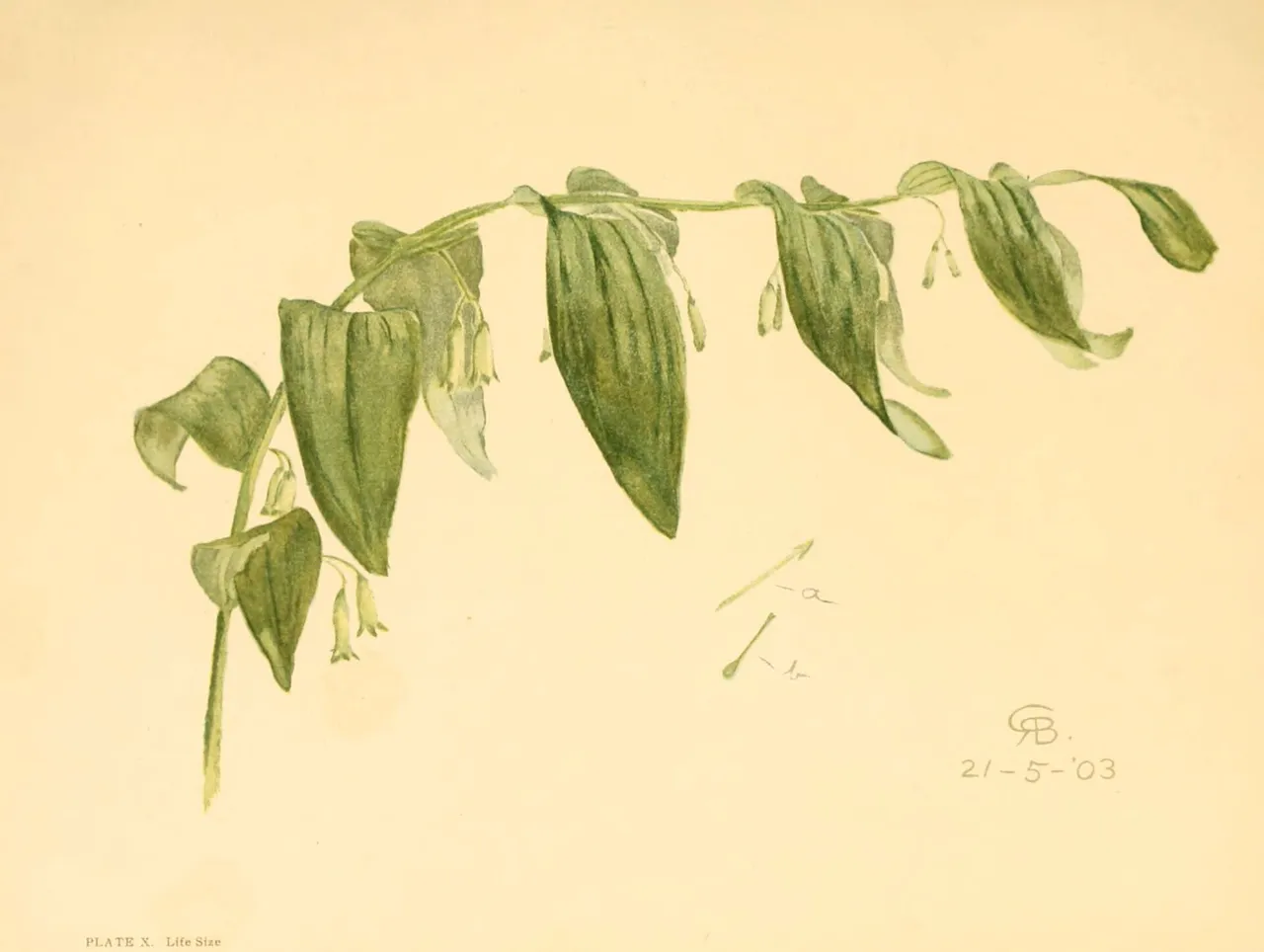
Smooth Solomon's seal
Polygonatum biflorum
Also known as Great Solomon's-seal, Sealwort
 1 of 2
Native to much of the USA and southern Canada
Southern Ontario, Nova Scotia, Manitoba, and Saskatchewan, south to Florida and Texas, up the Connecticut River valley, southern Michigan, Minnesota, and North Dakota
- Light Part shade to shade Sun tolerance
- Moisture Dry to moist Moisture preference
- Zones 3–9 Cold to heat range
- Bloom Apr–Jun Flowering time
- Height
- Life cycle Perennial Annual to perennial
In the garden
A woodland wildflower for part to full shade and dry to moist soil. Its white flowers peak in May. Hardy in USDA zones 3–9.
Growing conditions
Light
Full sun Partial shade Full shade
Moisture
Dry Moist Wet
Hardiness zones
Find your zone:
When it blooms
The Smooth Solomon's seal's white flowers bloom April to June, peaking in May. This late-spring display draws bees and flower flies.
Smooth Solomon's seal blooms white, yellow, green & brownFoliage
Pollinators & wildlife
- Bees Brown-belted Bumble Bee
also Two-spotted Bumble Bee, American Bumble Bee, Bombus fervidus +17 more
Half-black Bumble Bee, Golden Sweat Bee, Lucorum-group Bumble Bees, Cherry Mining Bee, Ceratina dupla, Anthophora ursina, Cresson's Sweat Bee, Cyclops Blood Bee, Thistle Longhorn-Cuckoo, Osmia conjuncta, Broad-faced Masked Bee, white-winged sweat bee, Pseudopanurgus labrosiformis, Yellow-spotted Cuckoo Nomad Bee, Macropis steironematis, Brown-banded Carder-Bumble bee, Early Bumble Bee - Flower flies Yellow-shouldered Blacklet also Mount Hood Blacklet
- Hummingbirds Ruby-throated Hummingbird
Full plant details
Where it grows
- Habitat
- WoodlandThe wild plant community it grows in.
- Native range
- Much of the USA and southern CanadaUnited States (38): AL, AR, CT, DC, DE, FL, GA, IA, IL, IN, KS, KY, LA, MA, MD, ME, MI, MN, MO, MS, NC, ND, NE, NH, NJ, NY, OH, OK, PA, RI, SC, SD, TN, TX, VA, VT, WI, WV. Canada (4): MB, NB, ON, QC. Where it grows wild on its own, by state and province.
- Native distribution
- Southern Ontario, Nova Scotia, Manitoba, and Saskatchewan, south to Florida and Texas, up the Connecticut River valley, southern Michigan, Minnesota, and North DakotaThe same native range, usually more exact than the state list, and often noting where it has spread beyond it.
Growing conditions
- Light
- Part shade to shadeHow much sun it takes, from full sun to full shade.
- Moisture
- Dry to moistThe soil dampness it prefers, from dry to wet.
- Hardiness zones
- USDA 3–9 · Canadian 3–7The cold-to-heat climate range it survives.
- Soil
- Moist, rich, acid soils, though also occurs in calcareous areas. Prefers high humus. Sandy, Sandy Loam, Medium Loam, Clay Loam, ClayThe soils it grows in naturally.
- Soil texture
- Light to heavy (sandy to clay)The soil grade it prefers, from sand to clay.
- Soil pH
- Mildly acid to mildly alkalineThe acidity to alkalinity it tolerates (7 is neutral).
- Water use
- MediumHow thirsty it is, a rough guide to how often to water.
Growth & form
- Life cycle
- PerennialWhether it lives a single season (annual), two (biennial), or returns for years (perennial).
Flowers, foliage & fruit
- Type
- WildflowerWhat kind of plant it is.
- Bloom
- Apr–JunWhen it flowers.
- Flower color
- White, Yellow, Green, BrownThe bloom color, or colors.
- Fruit/Seeds
- ripens May–OctThe seed or fruit it sets after flowering.
- Toxicity
- Poisonous if eatenWhether any part is poisonous to people or pets.