prairie wildflower
Snow Cinquefoil
Potentilla nivea
Also known as Snowy Cinquefoil, Villous Cinquefoil
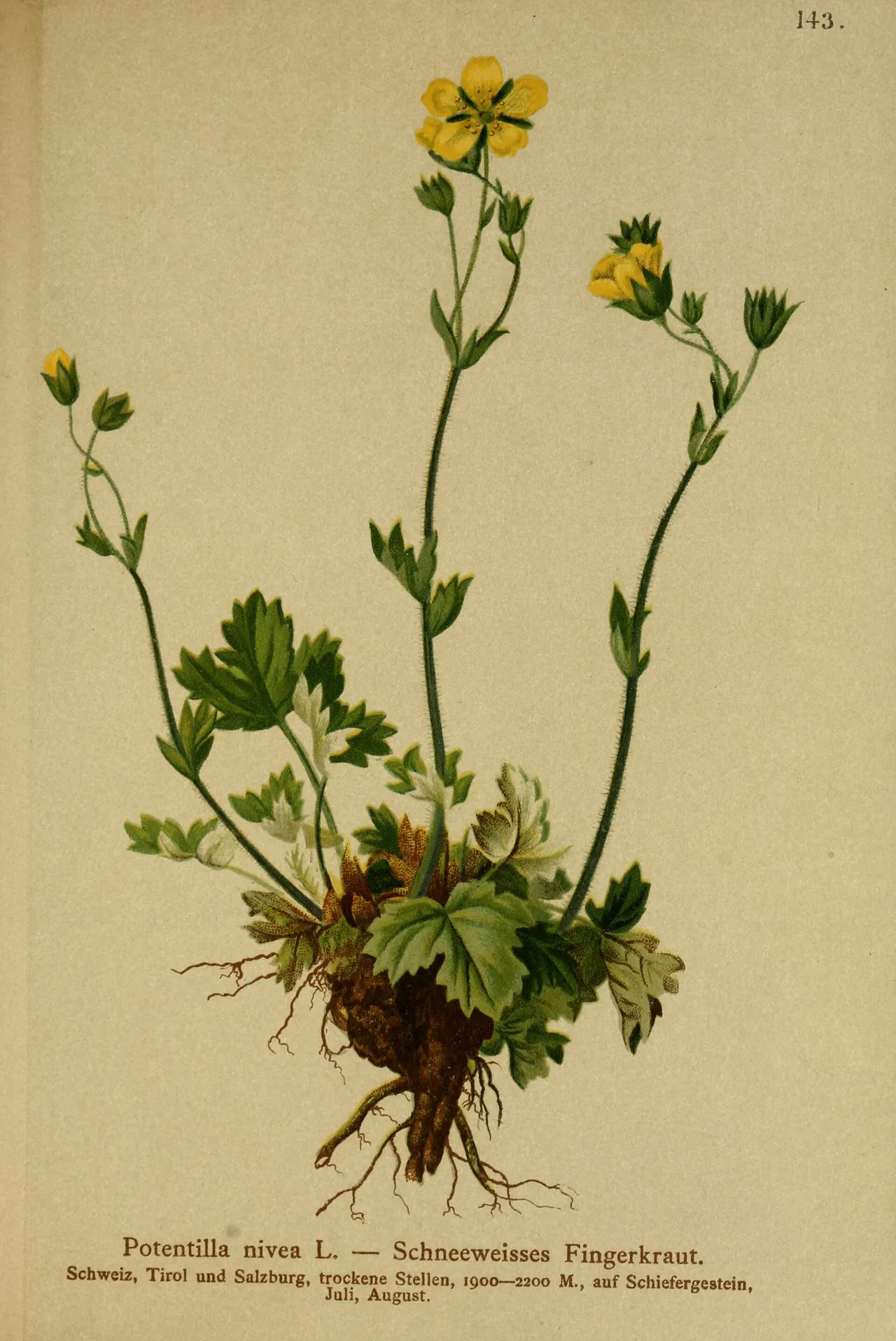 1 of 2
Native to the Southwest, the Rockies, and the Pacific Coast and southern Canada
Alaska, southern in the Rockies to Deer Lodge county, Montana and Colorado
- Light Full sun Sun tolerance
- Moisture Dry Moisture preference
- Zones 1–8 Cold to heat range
- Bloom Jun–Jul Flowering time
- Height up to 16 in to 41 cm
- Life cycle Perennial Annual to perennial
In the garden
A prairie wildflower for full sun and lean, dry soil. At up to 16 in, it tucks into meadows and sunny borders. Hardy in USDA zones 1–8.
Growing conditions
Light
Full sun Partial shade Full shade
Moisture
Dry Moist Wet
Hardiness zones
Find your zone:
Pollinators & wildlife
- Bees Orange-legged Furrow Bee
also Wilke's Mining Bee, Slender-faced Masked Bee, Punctate Masked Bee +66 more
Annulate Masked Bee, Hairy masked Bee, Red Mason Bee, Little Masked Bee, Common Masked Bee, Buff-tailed Bumble Bee, Nomada bifasciata, Robust Small-Mason, Black Masked Bee, Large Masked Bee, Golden Furrow Bee, Lasioglossum sabulosum, Lasioglossum podolicum, Hylaeus glacialis, Hylaeus pfankuchi, Snowy Masked Bee, Hylaeus moricei, Andrena allosa, Andrena amieti, Andrena afrensis, Hylaeus pilosulus, Panurginus herzi, Lasioglossum glabriusculum, Tormentil Mining Bee, Hylaeus kahri, Reed Yellow-face Bee, Variegated Masked Bee, Potentilla Miner, Gredler's Masked Bee, Hylaeus gibbus, Hylaeus difformis, Hylaeus crassanus, Lasioglossum lucidulum, Lasioglossum tricinctum, Dotted Masked Bee, Lasioglossum intermedium, Hylaeus imparilis, Flat-ridged Nomad Bee, Lasioglossum aeratum, Narrowed Masked Bee, Hylaeus tyrolensis, Forest Masked Bee, Halictus leucaheneus, White-lipped Yellow-face Bee, Fringed Furrow Bee, Lasioglossum interruptum, White-jawed Yellow-face Bee, Hylaeus alpinus, Hylaeus bifasciatus, Lasioglossum majus, Horned Masked Bee, Hylaeus paulus, Hylaeus duckei, Hylaeus euryscapus, Lasioglossum lineare, Onion Yellow-face Bee, Osmia mustelina, Lasioglossum marginatum, Chalk Yellow-face Bee, Short-horned Yellow-face Bee, Hylaeus taeniolatus, Small Shiny Furrow Bee, Hylaeus sinuatus, Hylaeus styriacus, Thick-margined Miniature Mining Bee, Lasioglossum subfasciatum - Flower flies Common Drone Fly also Thick-legged Hover Fly, Common Lagoon Fly, Holarctic Bristleside
- Butterflies Arctic Blue also Phoebus Apollo
- Also visited by
- Beetles: Asian Lady Beetle
- Moths: Alpine Arches
Full plant details
Where it grows
- Habitat
- PrairieThe wild plant community it grows in.
- Native range
- The Southwest, the Rockies, and the Pacific Coast and southern CanadaUnited States (11): AK, AZ, CO, ID, MT, NM, NV, OR, UT, WA, WY. Canada (3): AB, ON, SK. Where it grows wild on its own, by state and province.
- Native distribution
- Alaska, southern in the Rockies to Deer Lodge county, Montana and ColoradoThe same native range, usually more exact than the state list, and often noting where it has spread beyond it.
Growing conditions
- Light
- Full sunHow much sun it takes, from full sun to full shade.
- Moisture
- DryThe soil dampness it prefers, from dry to wet.
- Hardiness zones
- USDA 1–8 · Canadian 0–7The cold-to-heat climate range it survives.
- Soil
- Rocky or sandy soilsThe soils it grows in naturally.
Growth & form
- Height
- up to 16 in (to 41 cm)Typical mature height.
- Life cycle
- PerennialWhether it lives a single season (annual), two (biennial), or returns for years (perennial).
Flowers, foliage & fruit
- Type
- WildflowerWhat kind of plant it is.
- Bloom
- Jun–JulWhen it flowers.
- Flower color
- YellowThe bloom color, or colors.
- Toxicity
- None knownWhether any part is poisonous to people or pets.