woodland wildflower
Texas baby blue eyes
Nemophila phacelioides
Also known as Large-flower Baby-blue-eyes, Baby Blue-eyes, Flannel Breeches, largeflower baby blue eyes
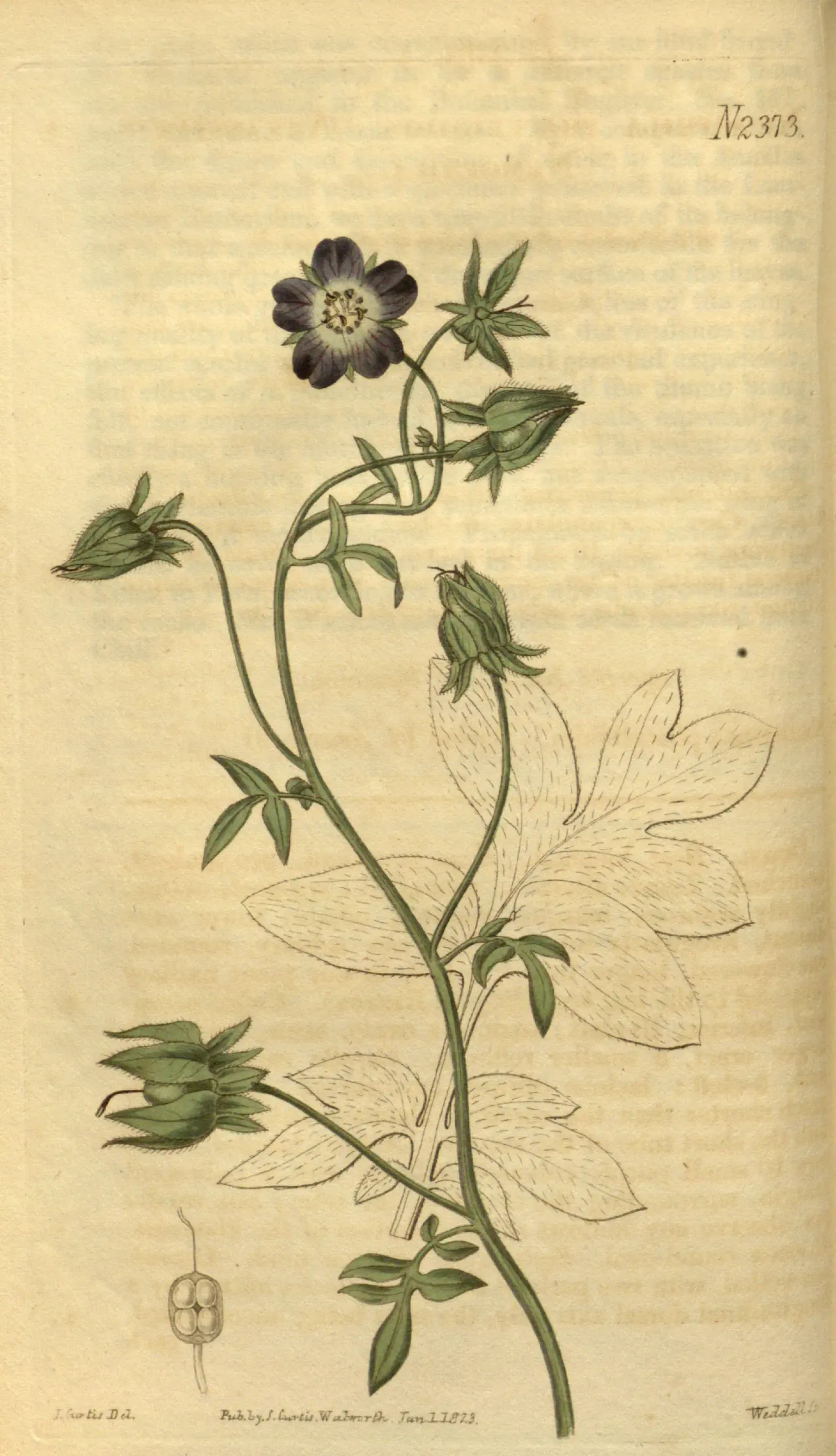 1 of 2
Native to Arkansas, Louisiana, Oklahoma, and Texas
Arkansas and Oklahoma to southeastern Texas
- Light Partial shade Sun tolerance
- Moisture Dry Moisture preference
- Zones n/a Cold to heat range
- Bloom Feb–May Flowering time
- Height up to 1 ft to 0.3 m
- Life cycle Annual Annual to perennial
In the garden
A woodland wildflower for partial shade and lean, dry soil. Its white and blue flowers peak in March. At up to 1 ft, it tucks into shade gardens and woodland edges.
Growing conditions
Light
Full sun Partial shade Full shade
Moisture
Dry Moist Wet
When it blooms
The Texas baby blue eyes's white and blue flowers bloom February to May, peaking in March. This early-spring display draws butterflies and bees.
Texas baby blue eyes blooms white & blueFoliage
Pollinators & wildlife
- Butterflies Variegated Fritillary also Eufala Skipper
- Bees Andrena sagittagalea also Panurginus polytrichus
- Moths Bilobed Looper Moth
Butterflies that use this plant
Documented host and nectar records. Each links to a planting guide for that butterfly.
- Variegated fritillarynectar
Full plant details
Where it grows
- Habitat
- WoodlandThe wild plant community it grows in.
- Native range
- Arkansas, Louisiana, Oklahoma, and TexasUnited States (4): AR, LA, OK, TX. Where it grows wild on its own, by state and province.
- Native distribution
- Arkansas and Oklahoma to southeastern TexasThe same native range, usually more exact than the state list, and often noting where it has spread beyond it.
Growing conditions
- Light
- Partial shadeHow much sun it takes, from full sun to full shade.
- Moisture
- DryThe soil dampness it prefers, from dry to wet.
- Soil
- Moist, well-drained, sandy soils. Sandy, Sandy Loam, Calcareous, Medium Loam, Clay Loam, ClayThe soils it grows in naturally.
- Water use
- MediumHow thirsty it is, a rough guide to how often to water.
Growth & form
- Height
- up to 1 ft (to 0.3 m)Typical mature height.
- Life cycle
- AnnualWhether it lives a single season (annual), two (biennial), or returns for years (perennial).
Flowers, foliage & fruit
- Type
- WildflowerWhat kind of plant it is.
- Bloom
- Feb–MayWhen it flowers.
- Flower color
- White, BlueThe bloom color, or colors.
- Toxicity
- None knownWhether any part is poisonous to people or pets.