woodland wildflower
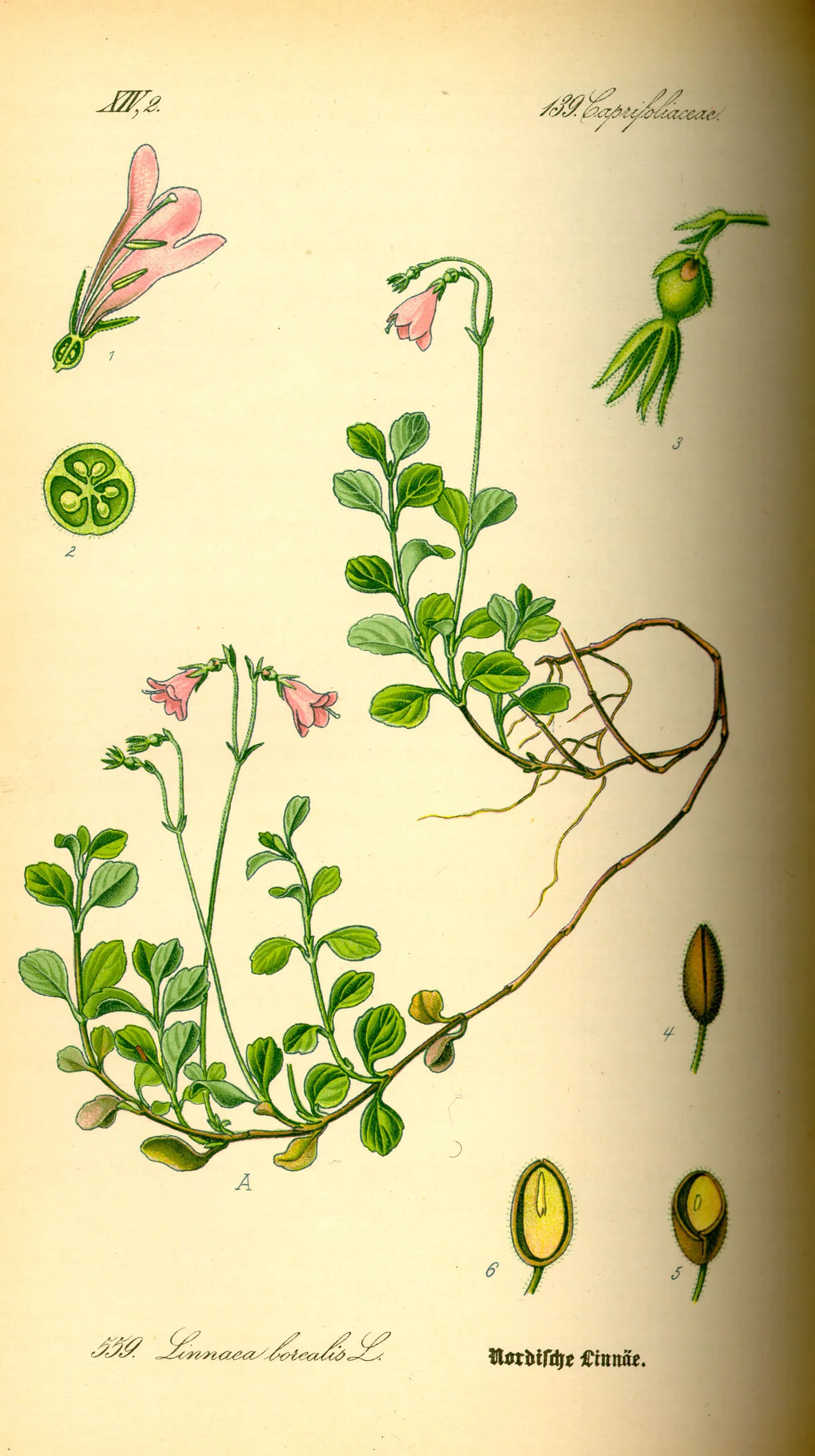
Twinflower
Linnaea borealis
Also known as American Twinflower
 1 of 2
Native to much of the USA and Canada
Canada and Alaska, southern in the northern 1/3 of the U.S. and through the western mountains (Pacific plants are usually considered subsp. longiflora; others are subsp. americana)
- Light Full sun to shade Sun tolerance
- Moisture Moist to wet Moisture preference
- Zones 1–9 Cold to heat range
- Bloom Jun–Sep Flowering time
- Height
- Life cycle Perennial Annual to perennial
In the garden
A woodland wildflower for sun through shade and consistently moist to wet soil. Hardy in USDA zones 1–9.
Growing conditions
Light
Full sun Partial shade Full shade
Moisture
Dry Moist Wet
Hardiness zones
Find your zone:
Pollinators & wildlife
- Bees Fuzzy-Horned Bumble Bee
also Two-form Bumble Bee, Half-black Bumble Bee, Yellow-fronted Bumble Bee +16 more
Sitka Bumble Bee, Slender-faced Masked Bee, Annulate Masked Bee, Cresson's Sweat Bee, Osmia pumila, Osmia proxima, Marin County Sweat Bee, Knerer's Sweat Bee, Osmia tristella, Lasioglossum pleurospeculum, Lasioglossum euboeense, Lasioglossum laeve, Great Banded Furrow Bee, Hylaeus ellipticus, Lasioglossum subfasciatum, Quebec Sweat Bee - Flower flies Common Loopwing Aphideater
also Hairy-eyed Halfband, Symmetric Globetail, Carposcalis confusa +3 more
Platycheirus rosarum, Platycheirus modestus, Eupeodes lapponicus - Butterflies Dun Skipper
- Also visited by
- Moths: Snowberry Clearwing
Full plant details
Where it grows
- Habitat
- WoodlandThe wild plant community it grows in.
- Native range
- Much of the USA and CanadaUnited States (32): AK, AZ, CA, CO, CT, IA, ID, IL, IN, MA, MD, ME, MI, MN, MT, ND, NH, NJ, NM, NY, OH, OR, PA, RI, SD, TN, UT, VT, WA, WI, WV, WY. Canada (10): AB, BC, MB, NB, NL, NS, ON, PE, QC, SK. Where it grows wild on its own, by state and province.
- Native distribution
- Canada and Alaska, southern in the northern 1/3 of the U.S. and through the western mountains (Pacific plants are usually considered subsp. longiflora; others are subsp. americana)The same native range, usually more exact than the state list, and often noting where it has spread beyond it.
Growing conditions
- Light
- Full sun to shadeHow much sun it takes, from full sun to full shade.
- Moisture
- Moist to wetThe soil dampness it prefers, from dry to wet.
- Hardiness zones
- USDA 1–9 · Canadian 0–9The cold-to-heat climate range it survives.
- Soil
- Cool, moist, acidic, humus-rich soilsThe soils it grows in naturally.
- Soil texture
- Light to heavy (sandy to clay)The soil grade it prefers, from sand to clay.
- Soil pH
- AcidicThe acidity to alkalinity it tolerates (7 is neutral).
- Drought tolerance
- LowRelative to plants of the same type and region, inferred from where it grows, not a days-without-water figure.
Growth & form
- Spread
- ~3 ft (1 m)How wide one plant gets, a guide to spacing.
- Life cycle
- PerennialWhether it lives a single season (annual), two (biennial), or returns for years (perennial).
Flowers, foliage & fruit
- Type
- WildflowerWhat kind of plant it is.
- Bloom
- Jun–SepWhen it flowers.
- Flower color
- White, PinkThe bloom color, or colors.
- Toxicity
- None knownWhether any part is poisonous to people or pets.