woodland wildflower
Whitemouth dayflower
Commelina erecta
Also known as Dayflower, Widow's Tears, White-mouth Dayflower
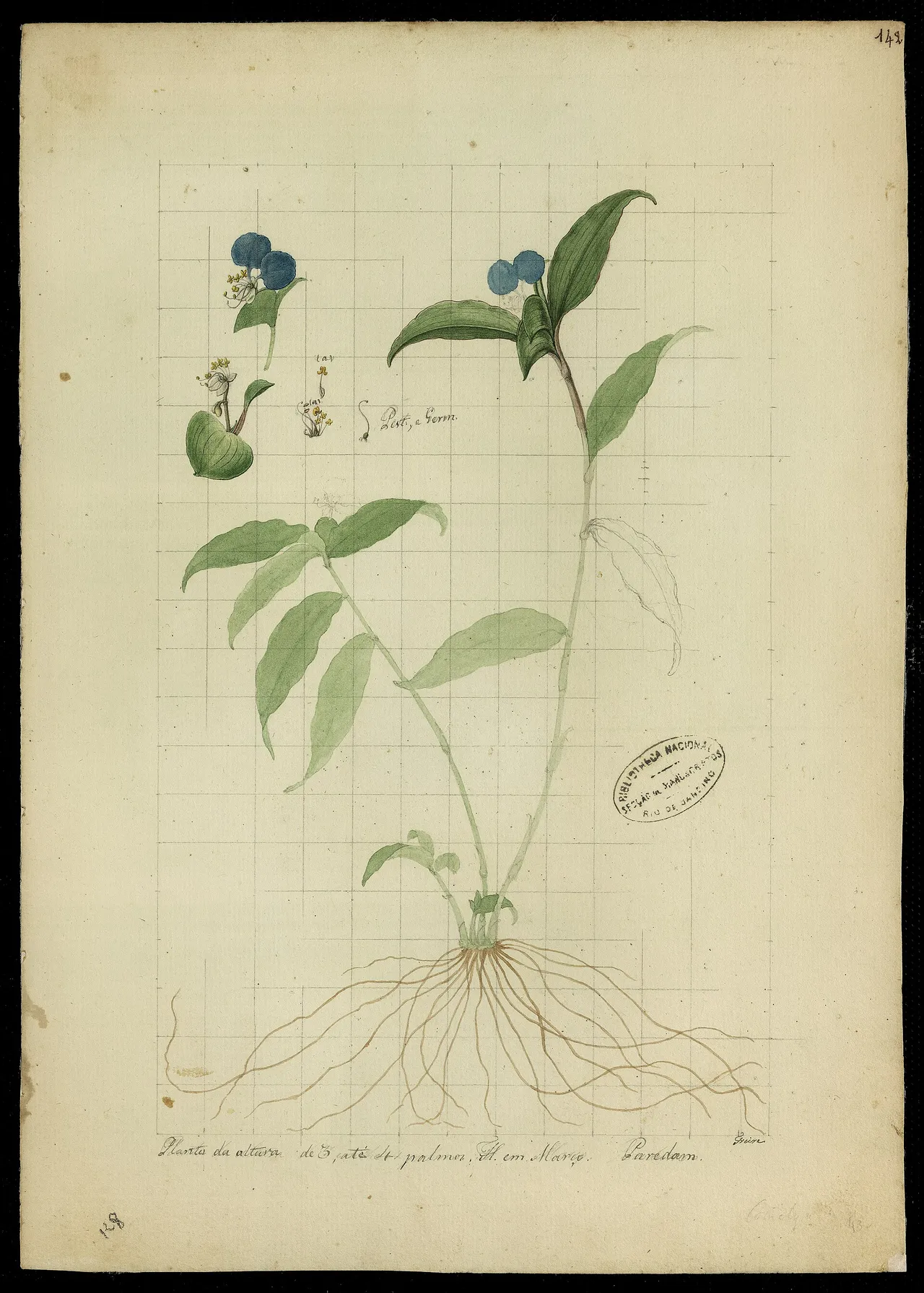 1 of 2
Native to much of the USA
Florida to New Mexico, north to New Jersey, Ohio, Illinois and southern South Dakota
- Light Partial shade Sun tolerance
- Moisture Dry Moisture preference
- Zones n/a Cold to heat range
- Bloom May–Oct Flowering time
- Height
- Life cycle Perennial Annual to perennial
In the garden
A woodland wildflower for partial shade and lean, dry soil.
Growing conditions
Light
Full sun Partial shade Full shade
Moisture
Dry Moist Wet
Pollinators & wildlife
- Bees American Bumble Bee
also Western Honey Bee, Pure Green Sweat bee, Two-spotted Longhorn Bee +8 more
Golden Sweat Bee, Augochloropsis metallica, Lasioglossum tarponense, Amegilla langi, Augochlora semiramis, Augochloropsis sumptuosa, Lasioglossum nymphale, Megachile pseudobrevis - Flower flies Margined Calligrapher
also Dusky-winged Hover Fly, Peg-legged Compost Fly, Epauletted Hover Fly +1 more
Pseudodoros clavatus - Butterflies Laviana White-Skipper also Hylephila phyleus phyleus
- Also visited by
- Beetles: Oulema variabilis
Full plant details
Where it grows
- Habitat
- WoodlandThe wild plant community it grows in.
- Native range
- Much of the USAUnited States (28): AL, AR, CO, DC, DE, FL, GA, IA, IL, IN, KS, KY, LA, MD, MO, MS, NC, NE, NJ, NM, OK, PA, SC, SD, TN, TX, VA, WV. Where it grows wild on its own, by state and province.
- Native distribution
- Florida to New Mexico, north to New Jersey, Ohio, Illinois and southern South DakotaThe same native range, usually more exact than the state list, and often noting where it has spread beyond it.
Growing conditions
- Light
- Partial shadeHow much sun it takes, from full sun to full shade.
- Moisture
- DryThe soil dampness it prefers, from dry to wet.
- Soil
- Dry, sandy soilsThe soils it grows in naturally.
- Soil texture
- Light to medium (sandy to loamy)The soil grade it prefers, from sand to clay.
- Soil pH
- Mildly acid to mildly alkalineThe acidity to alkalinity it tolerates (7 is neutral).
Growth & form
- Life cycle
- PerennialWhether it lives a single season (annual), two (biennial), or returns for years (perennial).
Flowers, foliage & fruit
- Type
- WildflowerWhat kind of plant it is.
- Bloom
- May–OctWhen it flowers.
- Flower color
- BlueThe bloom color, or colors.
- Toxicity
- None knownWhether any part is poisonous to people or pets.