prairie wildflower
Apricot globemallow
Sphaeralcea ambigua
Also known as Desert Globemallow, Apricot Globe-mallow, Desert Mallow, Globe Mallow, Apricot Mallow
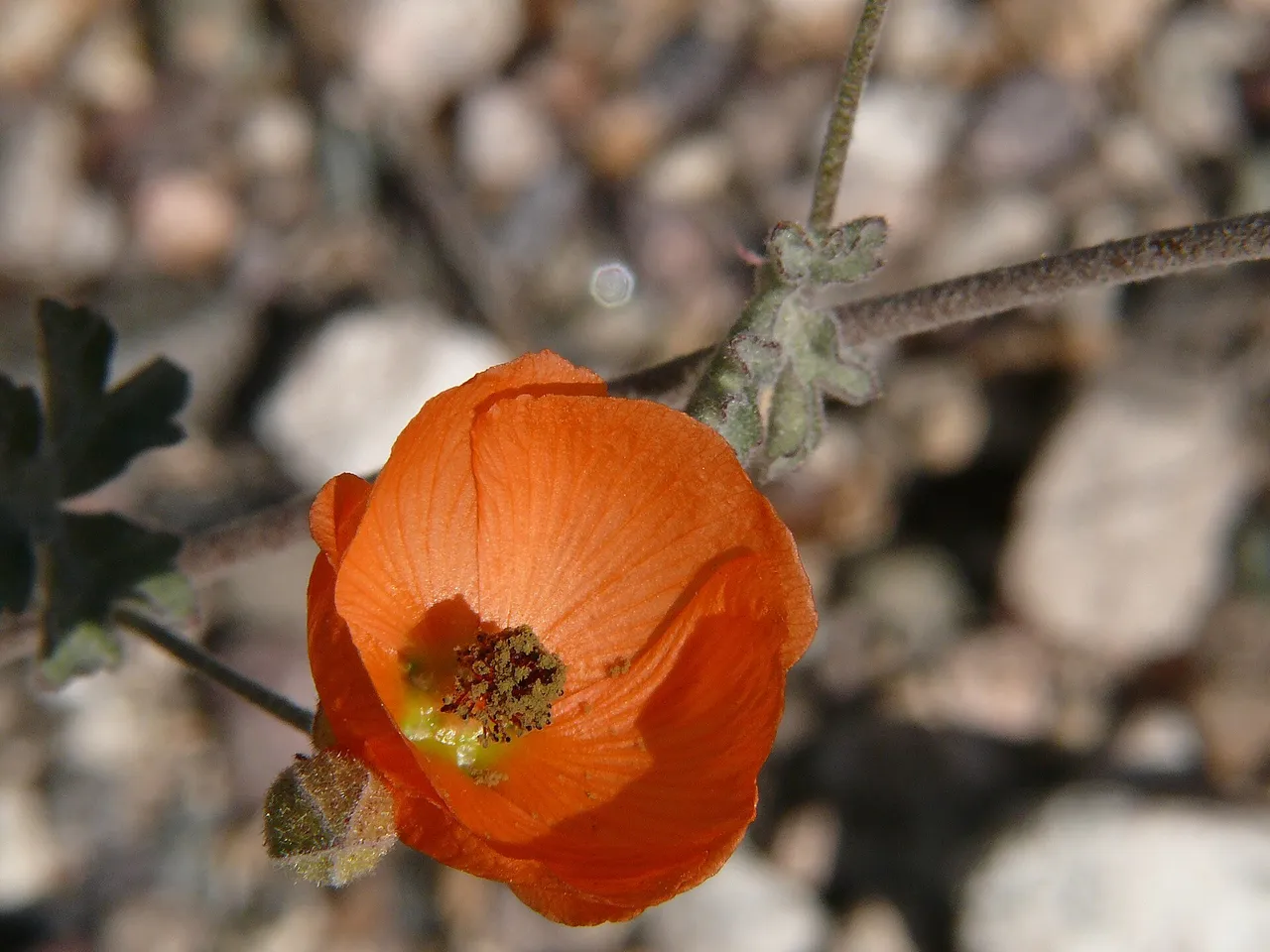
Native to Arizona, California, Nevada, and Utah
Southwestern Utah to southern California, south to Oaxaca in southern Mexico
- Light Full sun Sun tolerance
- Moisture Dry Moisture preference
- Zones n/a Cold to heat range
- Bloom Feb–Nov Flowering time
- Height up to 3 ft to 0.9 m
- Life cycle Perennial Annual to perennial
In the garden
A prairie wildflower for full sun and lean, dry soil. At up to 3 ft, it suits meadows and sunny borders.
Growing conditions
Light
Full sun Partial shade Full shade
Moisture
Dry Moist Wet
Pollinators & wildlife
- Butterflies Gulf Fritillary
also Fiery Skipper, Painted Lady, Gray Hairstreak +10 more
Marine Blue, Western Pygmy-Blue, Funereal Duskywing, Eufala Skipper, California Patch, Henne's Chalcedon Checkerspot, Euphilotes enoptes dammersi, Pyrgus scriptura, Heliopetes ericetorum, White Checkered-Skipper - Beetles Seven-spotted Lady Beetle
also Convergent Lady Beetle, Judolia sexspilota, Acmaeodera latiflava +10 more
Orange Stout-horned Luperine, Acmaeodera mojavei, Acmaeodera sphaeralceae, Anambodera gemina, Acmaeodera lupinae, Acmaeodera linsleyi, Acmaeodera latiflava latiflava, Acmaeodera pubiventris lanata, Acmaeodera connexa, Acmaeodera labyrinthica - Bees Ligated Furrow Bee
also Western Honey Bee, Two-spotted Longhorn Bee, Tripartite Sweat Bee +8 more
Agapostemon texanus, Xylocopa tabaniformis parkinsoniae, Tansy Mustard Sweat Bee, Calliopsis subalpina, Sonoran Bumble Bee, Valley Carpenter Bee, Peridot Sweat Bee, Globemallow chimney bees - Also visited by
- Flower flies:
Large-tailed Aphideater, Western Aphideater +1 more
Eurasian Smoothwing - Hummingbirds: Anna's Hummingbird, Costa's Hummingbird
- Wasps: Boll's Potter Wasp, Euodynerus pratensis
- Birds: Blue-gray Gnatcatcher
- Moths: White-lined Sphinx
- Flower flies:
Butterflies that use this plant
Documented host and nectar records. Each links to a planting guide for that butterfly.
- Fiery skippernectar
- Gray hairstreaknectar
- Gulf fritillarynectar
- Marine bluenectar
- Painted ladynectar
Full plant details
Where it grows
- Habitat
- PrairieThe wild plant community it grows in.
- Native range
- Arizona, California, Nevada, and UtahUnited States (4): AZ, CA, NV, UT. Where it grows wild on its own, by state and province.
- Native distribution
- Southwestern Utah to southern California, south to Oaxaca in southern MexicoThe same native range, usually more exact than the state list, and often noting where it has spread beyond it.
Growing conditions
- Light
- Full sunHow much sun it takes, from full sun to full shade.
- Moisture
- DryThe soil dampness it prefers, from dry to wet.
- Soil
- Dry, rocky or sandy soilsThe soils it grows in naturally.
- Soil texture
- Light to heavy (sandy to clay)The soil grade it prefers, from sand to clay.
- Soil pH
- 7.5–8.5The acidity to alkalinity it tolerates (7 is neutral).
- Soil quality
- LowHow rich a soil it needs. Many natives prefer lean soil and flop in rich beds.
- Water use
- LowHow thirsty it is, a rough guide to how often to water.
- Salinity tolerance
- MediumHow well it copes with salty soil, near roads or the coast.
- Lime (CaCO₃) tolerance
- HighHow well it copes with chalky, lime-rich soil.
Growth & form
- Height
- up to 3 ft (to 0.9 m)Typical mature height.
- Spread
- ~2 ft (0.5 m)How wide one plant gets, a guide to spacing.
- Life cycle
- PerennialWhether it lives a single season (annual), two (biennial), or returns for years (perennial).
- Growth rate
- RapidA relative ranking versus other plants of the same type (USDA), not an absolute rate.
- Shape
- ErectIts overall silhouette.
- Root depth
- 12+ in (30+ cm)How far the roots reach, a guide to drought resilience and transplanting.
Flowers, foliage & fruit
- Type
- WildflowerWhat kind of plant it is.
- Bloom
- Feb–NovWhen it flowers.
- Flower color
- OrangeThe bloom color, or colors.
- Fruit/Seeds
- SchizocarpThe seed or fruit it sets after flowering.
- Toxicity
- None knownWhether any part is poisonous to people or pets.
Propagation & seed
- Cold stratification
- Not requiredWhether seed needs a cold, moist spell before it will germinate.
- Propagation
- SeedHow to start new plants.
- Seed
- ~0.5 million seeds per poundNotes on the seed and how to sow it.
- Seed spread rate
- RapidHow readily it self-sows. Slow or none means well-behaved, not a spreader.
- Seedling vigor
- HighHow strongly young seedlings establish.
- Vegetative spread
- NoneWhether it creeps outward or stays put in a clump.