prairie wildflower
Bluehead gilia
Gilia capitata
Also known as Blue-head Gily-flower, Globe Gilia, Blue Gilia
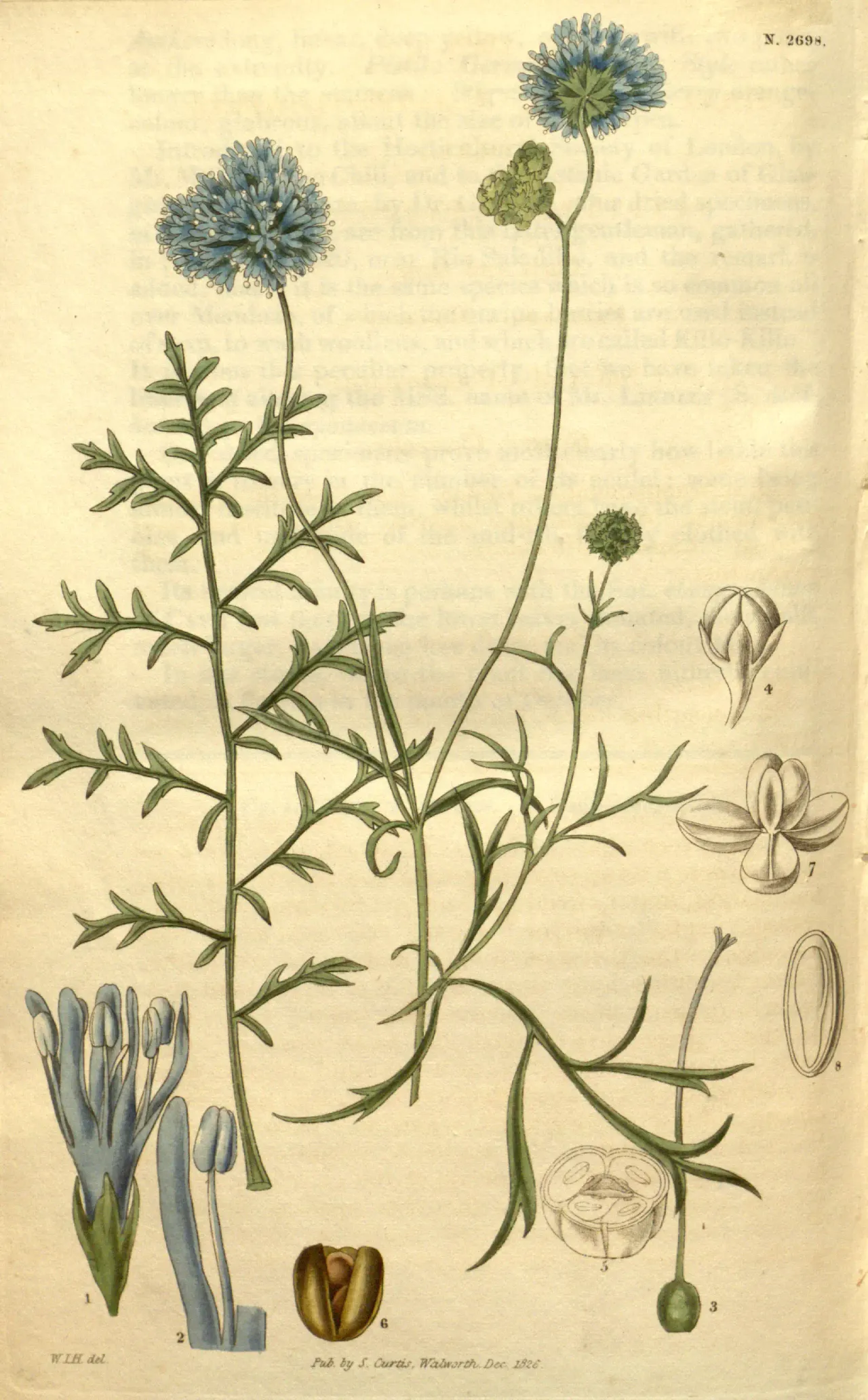 1 of 2
Native to California, Idaho, Oregon, and Washington
Coast Ranges from Marin county, California, north to British Columbia and Idaho; naturalized locally in Santa Cruz Mountains
- Light Full sun Sun tolerance
- Moisture Moisture preference
- Zones 5–11 Cold to heat range
- Bloom Apr–Jul Flowering time
- Height up to 3 ft to 0.9 m
- Life cycle Annual or perennial Annual to perennial
In the garden
A prairie wildflower for full sun. Its blue flowers peak in June. At up to 3 ft, it suits meadows and sunny borders. Hardy in USDA zones 5–11.
Growing conditions
Light
Full sun Partial shade Full shade
Moisture
Dry Moist Wet
Hardiness zones
Find your zone:
When it blooms
The Bluehead gilia's blue flowers bloom April to July, peaking in June. This early-summer display draws butterflies and bees.
Bluehead gilia blooms blueFoliage
Pollinators & wildlife
- Butterflies Pearl Crescent
also Fiery Skipper, Painted Lady, Orange Sulphur +21 more
Common Checkered-Skipper and Allies, Common Wood-Nymph, Gray Buckeye, Woodland Skipper, Variable Checkerspot, Acmon Blue, Umber Skipper, Boisduval's Blue, Mournful Duskywing, Northern Checkerspot, Behr's Metalmark, Dreamy Duskywing, Pacific Fritillary, Nelson's Hairstreak, Argynnis coronis simaetha, Plebejus podarce, Sara Orangetip, Cyaniris neglecta, Large Marble, Muir's Hairstreak, Eresia aveyrona mylitta - Bees Yellow-faced Bumble Bee
also Western Honey Bee, Ligated Furrow Bee, Black-tailed Bumble Bee +13 more
Pure Green Sweat bee, Fuzzy-Horned Bumble Bee, European Woolcarder Bee, Two-form Bumble Bee, Orange-legged Furrow Bee, Urbane Digger Bee, Yellowish Cuckoo Bumble bee, Indiscriminate Cuckoo Bumble Bee, Wide-striped Sweat Bee, Van Dyke's Bumble Bee, Narrow-legged Miner Bee, Micralictoides grossus, Bombus flavidus flavidus - Flower flies Common Drone Fly
also Eurasian Drone Fly, Western Aphideater, Black-margined Flower Fly +2 more
Yellow-legged Wood Fly, Eurasian Smoothwing - Also visited by
- Beetles: Banded Longhorn Beetle, Variegated Lady Beetle
- Moths: Rocky Mountain Clearwing
Butterflies that use this plant
Documented host and nectar records. Each links to a planting guide for that butterfly.
- Acmon bluenectar
- Boisduval's bluenectar
- Common buckeyenectar
- Common wood-nymphnectar
- Fiery skippernectar
- Orange sulphurnectar
- Painted ladynectar
- Pearl crescentnectar
- Summer azurenectar
Full plant details
Where it grows
- Habitat
- PrairieThe wild plant community it grows in.
- Native range
- California, Idaho, Oregon, and WashingtonUnited States (4): CA, ID, OR, WA. Where it grows wild on its own, by state and province.
- Native distribution
- Coast Ranges from Marin county, California, north to British Columbia and Idaho; naturalized locally in Santa Cruz MountainsThe same native range, usually more exact than the state list, and often noting where it has spread beyond it.
Growing conditions
- Light
- Full sunHow much sun it takes, from full sun to full shade.
- Hardiness zones
- USDA 5–11 · Canadian 3–9The cold-to-heat climate range it survives.
- Soil
- Well-drained soilsThe soils it grows in naturally.
Growth & form
- Height
- up to 3 ft (to 0.9 m)Typical mature height.
- Life cycle
- Annual or perennialWhether it lives a single season (annual), two (biennial), or returns for years (perennial).
Flowers, foliage & fruit
- Type
- WildflowerWhat kind of plant it is.
- Bloom
- Apr–JulWhen it flowers.
- Flower color
- BlueThe bloom color, or colors.
- Fruit/Seeds
- ripens May–AugThe seed or fruit it sets after flowering.
- Toxicity
- None knownWhether any part is poisonous to people or pets.