woodland wildflower
Bluestem goldenrod
Solidago caesia
Also known as Wreath Goldenrod, Blue-stemmed Goldenrod
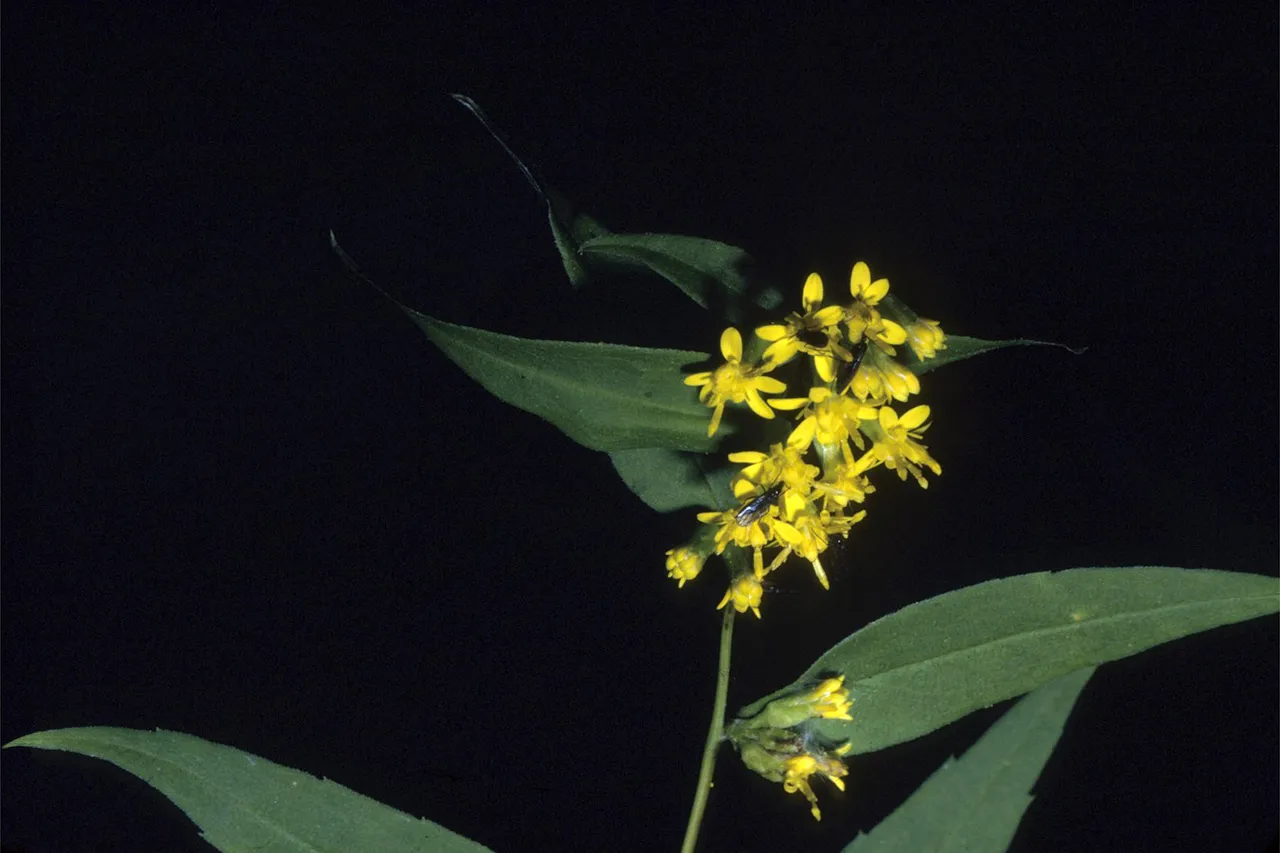
Native to much of the USA and southern Canada
- Light Full sun to part shade Sun tolerance
- Moisture Dry Moisture preference
- Zones 3–9 Cold to heat range
- Bloom Aug–Oct Flowering time
- Height up to 3 ft to 0.9 m
- Life cycle Perennial Annual to perennial
In the garden
A woodland wildflower for full sun to part shade and lean, dry soil. At up to 3 ft, it suits shade gardens and woodland edges. Hardy in USDA zones 3–9.
Growing conditions
Light
Full sun Partial shade Full shade
Moisture
Dry Moist Wet
Hardiness zones
Find your zone:
Pollinators & wildlife
- Bees Common Eastern Bumble Bee
also Western Honey Bee, Eastern Carpenter Bee, Ligated Furrow Bee +8 more
Tricolored Bumble Bee, Pure Green Sweat bee, Golden Sweat Bee, Dark-winged Sweat Bee, Hairy-banded Mining Bee, Northeastern Sweat Bee, Xylocopa virginica virginica, Lasioglossum coriaceum - Moths Yellow-collared Scape Moth
also Large Maple Spanworm Moth, Lucerne Moth, Dingy Cutworm Moth +8 more
False Hemlock Looper Moth, Black-and-yellow Lichen Moth, Goldenrod Flower Moth, Pale-banded Dart, Peridroma saucia, Hawaiian Beet Webworm Moth, Celery Leaftier Moth, Ornate Bella Moth - Wasps Bald-faced Hornet
also Eastern Yellowjacket, Fraternal Potter Wasp, Four-toothed Mason Wasp +10 more
Common Aerial Yellowjacket, Bramble Mason Wasp, Ancistrocerus capra, European tube wasp, Euodynerus megaera, Parancistrocerus leionotus, Fine-backed Red Paper Wasp, One-banded Mason Wasp, Ancistrocerus campestris, German Yellowjacket - Also visited by
- Flower flies:
Eastern Calligrapher, Common Drone Fly +8 more
Transverse-banded Flower Fly, Thick-legged Hover Fly, Black-shouldered Drone Fly, Common Grass Skimmer, Tufted Globetail, Eastern Hornet Fly, Oblique-banded Pond Fly, Black-horned Smoothtail - Butterflies:
Monarch, Fiery Skipper +2 more
Red-banded Hairstreak, American Copper - Beetles:
Margined Leatherwing Beetle, Locust Borer +1 more
Striped Cucumber Beetle
- Flower flies:
Butterflies that use this plant
Documented host and nectar records. Each links to a planting guide for that butterfly.
- American coppernectar
- Banded hairstreaknectar
- Fiery skippernectar
- Monarch butterflynectar
- Red-banded hairstreaknectar
Full plant details
Where it grows
- Habitat
- WoodlandThe wild plant community it grows in.
- Native range
- Much of the USA and southern CanadaUnited States (31): AL, AR, CT, DE, FL, GA, IL, IN, KY, LA, MA, MD, ME, MI, MO, MS, NC, NH, NJ, NY, OH, OK, PA, RI, SC, TN, TX, VA, VT, WI, WV. Canada (2): ON, QC. Where it grows wild on its own, by state and province.
Growing conditions
- Light
- Full sun to part shadeHow much sun it takes, from full sun to full shade.
- Moisture
- DryThe soil dampness it prefers, from dry to wet.
- Hardiness zones
- USDA 3–9 · Canadian 4–7The cold-to-heat climate range it survives.
- Soil
- Various soilsThe soils it grows in naturally.
- Soil pH
- 5.5–7.0The acidity to alkalinity it tolerates (7 is neutral).
- Soil quality
- LowHow rich a soil it needs. Many natives prefer lean soil and flop in rich beds.
- Water use
- MediumHow thirsty it is, a rough guide to how often to water.
- Salinity tolerance
- NoneHow well it copes with salty soil, near roads or the coast.
- Lime (CaCO₃) tolerance
- MediumHow well it copes with chalky, lime-rich soil.
Growth & form
- Height
- up to 3 ft (to 0.9 m)Typical mature height.
- Life cycle
- PerennialWhether it lives a single season (annual), two (biennial), or returns for years (perennial).
- Growth rate
- ModerateA relative ranking versus other plants of the same type (USDA), not an absolute rate.
- Shape
- ErectIts overall silhouette.
- Root depth
- 8+ in (20+ cm)How far the roots reach, a guide to drought resilience and transplanting.
Flowers, foliage & fruit
- Type
- WildflowerWhat kind of plant it is.
- Bloom
- Aug–OctWhen it flowers.
- Flower color
- YellowThe bloom color, or colors.
- Fruit/Seeds
- AcheneThe seed or fruit it sets after flowering.
- Toxicity
- None knownWhether any part is poisonous to people or pets.
Propagation & seed
- Cold stratification
- Not requiredWhether seed needs a cold, moist spell before it will germinate.
- Propagation
- Seed, sprigsHow to start new plants.
- Seed
- ~0.7 million seeds per poundNotes on the seed and how to sow it.
- Seed spread rate
- SlowHow readily it self-sows. Slow or none means well-behaved, not a spreader.
- Seedling vigor
- MediumHow strongly young seedlings establish.
- Vegetative spread
- SlowWhether it creeps outward or stays put in a clump.