prairie wildflower
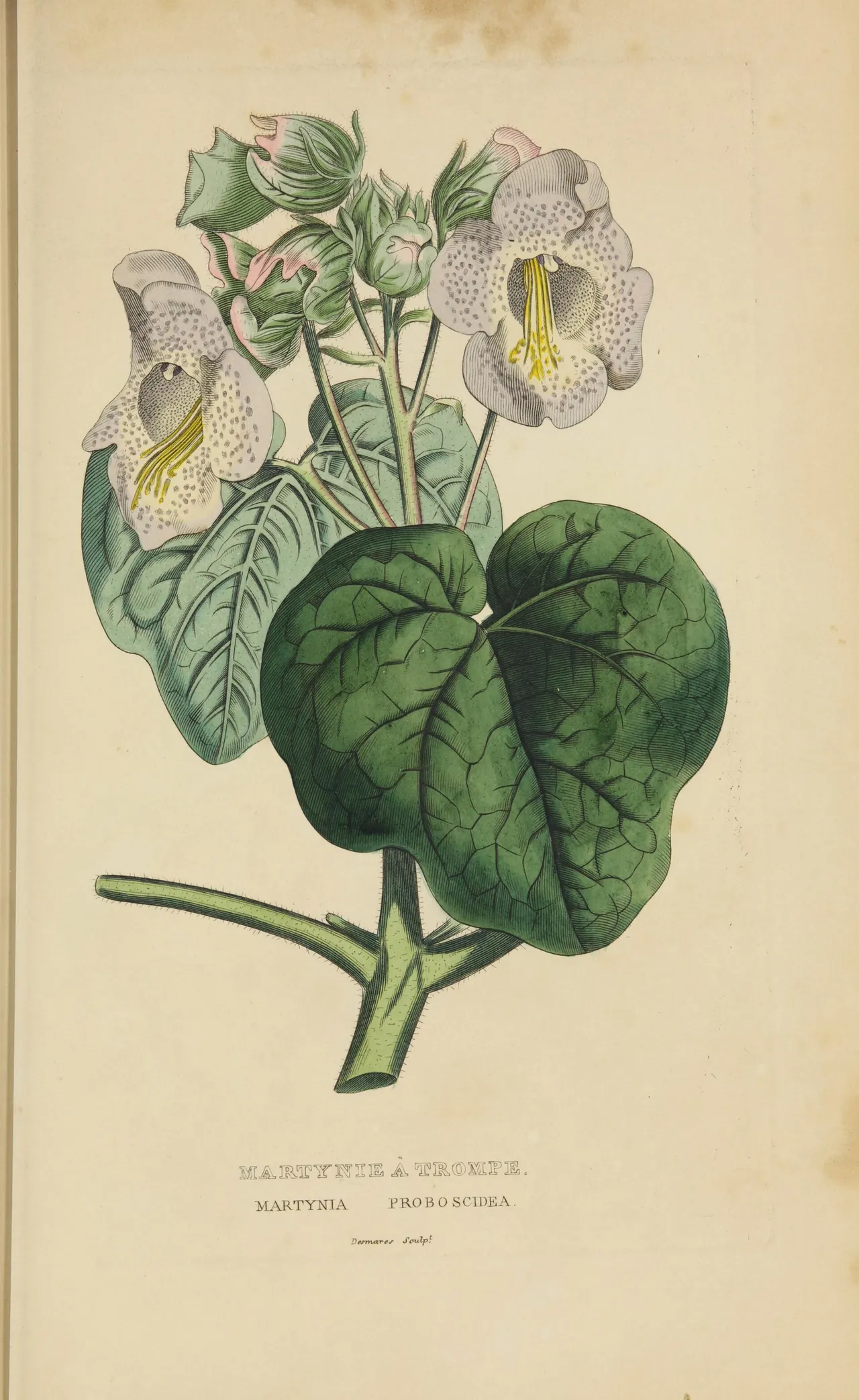
Common devil's-claw
Proboscidea louisianica
Also known as Louisiana Devil's-claw, Devil's claw, Ram's-horn, Unicorn Plant, Proboscis Flower, ram's horn
 1 of 3
Native to Louisiana and Texas
Native to Texas, Mexico and possibly Louisiana; naturalized in the southeastern and as far northern as Maine and Minnesota
- Light Full sun Sun tolerance
- Moisture Dry Moisture preference
- Zones 5–10 Cold to heat range
- Bloom May–Oct Flowering time
- Height up to 2 ft to 0.6 m
- Life cycle Annual Annual to perennial
In the garden
A prairie wildflower for full sun and lean, dry soil. Its white flowers peak in July. At up to 2 ft, it suits meadows and sunny borders. Hardy in USDA zones 5–10.
Growing conditions
Light
Full sun Partial shade Full shade
Moisture
Dry Moist Wet
Hardiness zones
Find your zone:
When it blooms
The Common devil's-claw's white flowers bloom May to October, peaking in July. This midsummer display draws bees and beetles.
Common devil's-claw blooms white, pink, yellow & purpleFoliage
Pollinators & wildlife
- Bees American Bumble Bee
also Sunflower Mining Bee, Agile Longhorn Bee, Ceratina dupla +6 more
Osmia conjuncta, Triepeolus cressonii, Big-cheeked Angled-Mason, Illinois Cuckoo Sweat Bee, Sonoran Bumble Bee, Andrena miserabilis - Beetles Downy Long-horned Beetle also Mordellistena biplagiata
- Butterflies Viceroy also Elymnias mimalon
- Also visited by
- Moths: Acontia candefacta
- Flower flies: Poecilanthrax alcyon
Butterflies that use this plant
Documented host and nectar records. Each links to a planting guide for that butterfly.
- Viceroynectar
Full plant details
Where it grows
- Habitat
- PrairieThe wild plant community it grows in.
- Native range
- Louisiana and TexasUnited States (2): LA, TX. Where it grows wild on its own, by state and province.
- Native distribution
- Native to Texas, Mexico and possibly Louisiana; naturalized in the southeastern and as far northern as Maine and MinnesotaThe same native range, usually more exact than the state list, and often noting where it has spread beyond it.
Growing conditions
- Light
- Full sunHow much sun it takes, from full sun to full shade.
- Moisture
- DryThe soil dampness it prefers, from dry to wet.
- Hardiness zones
- USDA 5–10The cold-to-heat climate range it survives.
- Soil
- Moist, sandy soils. Sandy, Sandy LoamThe soils it grows in naturally.
- Soil texture
- Light to heavy (sandy to clay)The soil grade it prefers, from sand to clay.
- Soil pH
- Mildly acid to mildly alkalineThe acidity to alkalinity it tolerates (7 is neutral).
- Water use
- LowHow thirsty it is, a rough guide to how often to water.
Growth & form
- Height
- up to 2 ft (to 0.6 m)Typical mature height.
- Life cycle
- AnnualWhether it lives a single season (annual), two (biennial), or returns for years (perennial).
Flowers, foliage & fruit
- Type
- WildflowerWhat kind of plant it is.
- Bloom
- May–OctWhen it flowers.
- Flower color
- White, Pink, Yellow, PurpleThe bloom color, or colors.
- Fruit/Seeds
- ripens Jun–NovThe seed or fruit it sets after flowering.
- Toxicity
- None knownWhether any part is poisonous to people or pets.