woodland wildflower
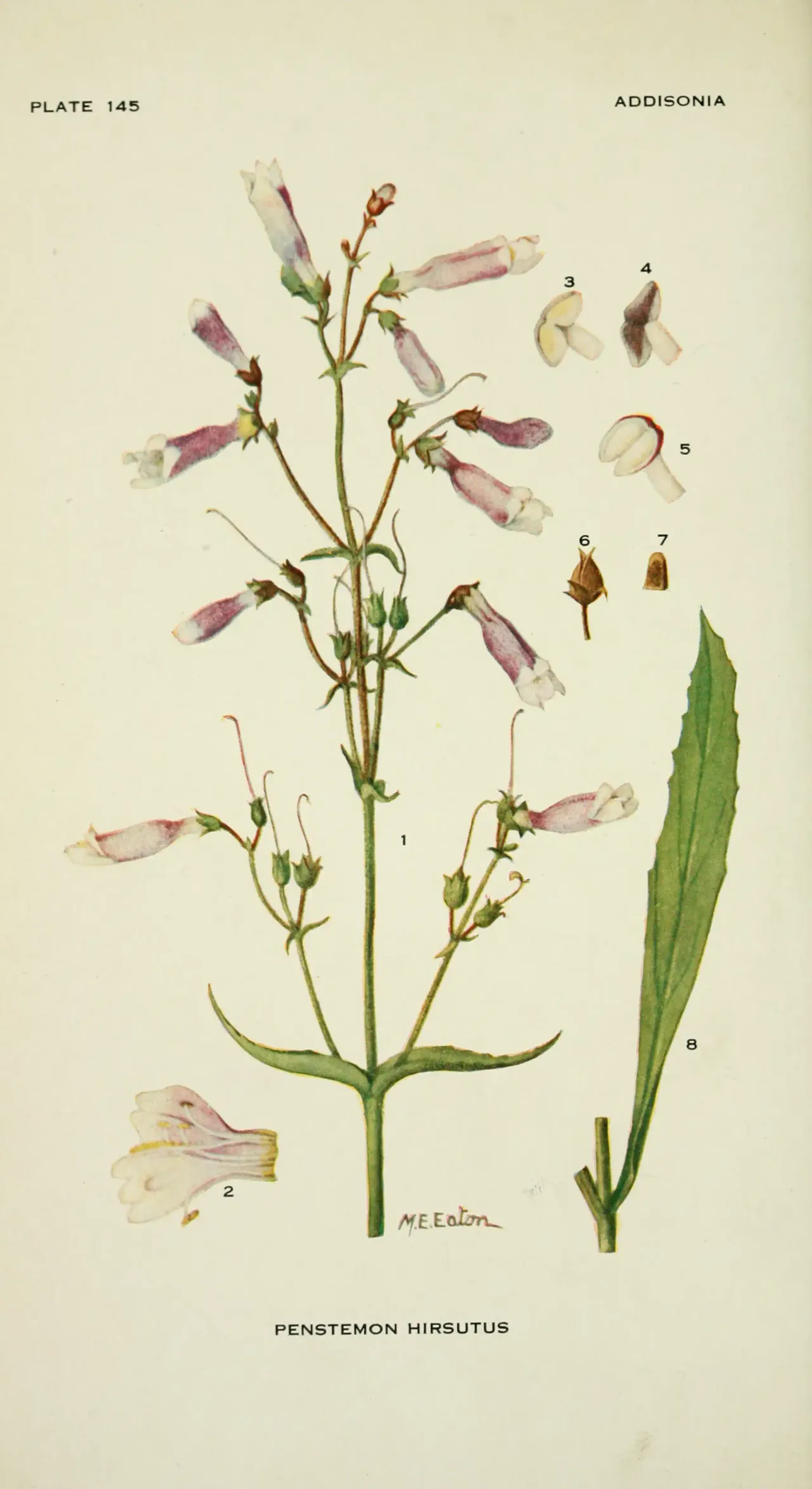
Hairy beardtongue
Penstemon hirsutus
Also known as Hairy Penstemon
 1 of 2
Native to much of the USA and southern Canada
Maine to Wisconsin, south to Virginia and Kentucky
- Light Full sun to shade Sun tolerance
- Moisture Dry Moisture preference
- Zones 3–7 Cold to heat range
- Bloom May–Jul Flowering time
- Height up to 32 in to 81 cm
- Life cycle Perennial Annual to perennial
In the garden
A woodland wildflower for sun through shade and lean, dry soil. Its pink and purple flowers peak in June. At up to 32 in, it suits shade gardens and woodland edges. Hardy in USDA zones 3–7.
Growing conditions
Light
Full sun Partial shade Full shade
Moisture
Dry Moist Wet
Hardiness zones
Find your zone:
When it blooms
The Hairy beardtongue's pink and purple flowers bloom May to July, peaking in June. This early-summer display draws bees and butterflies.
Hairy beardtongue blooms pink & purpleFoliage
Pollinators & wildlife
- Bees Common Eastern Bumble Bee
also Western Honey Bee, Eastern Carpenter Bee, Brown-belted Bumble Bee +35 more
Two-spotted Bumble Bee, American Bumble Bee, Bicolored Striped Sweat Bee, Bombus fervidus, Red-belted Bumble Bee, Two-spotted Longhorn Bee, European Woolcarder Bee, Black-and-gold Bumble Bee, Half-black Bumble Bee, Rusty-patched Bumble Bee, Spurred Ceratina, Blue Orchard Bee, Orange-tipped Wood-digger, Bufflehead Mason Bee, Cherry Mining Bee, Ceratina dupla, Anthophora ursina, Osmia pumila, Maine Blueberry Bee, Beardtongue scraper bee, Triepeolus cressonii, Eucera rosae, Osmia cordata, Osmia collinsiae, Nomada affabilis, Hoplitis pilosifrons, Dilated-horned Small-Mason, Coelioxys alternata, Pseudopanurgus passiflorae, Pseudopanurgus labrosiformis, Robertson's Miner Bee, Leioproctus clypeatus, Coelioxys germana, Eucera belfragei, Tetragona dissecta - Butterflies Eastern Black Swallowtail also Hobomok Skipper, Papilio cresphontes
- Flower flies Eastern Calligrapher also Bombylius atriceps, Maize Calligrapher
- Also visited by
- Beetles:
Acmaeodera tubulus, Mordellistena comata +1 more
Onthophagus pennsylvanicus - Wasps: Leptochilus republicanus
- Beetles:
Butterflies that use this plant
Documented host and nectar records. Each links to a planting guide for that butterfly.
- Baltimore checkerspotcaterpillar host
- Black swallowtailnectar
- Giant swallowtailnectar
Full plant details
Where it grows
- Habitat
- WoodlandThe wild plant community it grows in.
- Native range
- Much of the USA and southern CanadaUnited States (20): CT, DC, DE, IL, IN, KY, MA, MD, ME, MI, NH, NJ, NY, OH, PA, RI, VA, VT, WI, WV. Canada (2): ON, QC. Where it grows wild on its own, by state and province.
- Native distribution
- Maine to Wisconsin, south to Virginia and KentuckyThe same native range, usually more exact than the state list, and often noting where it has spread beyond it.
Growing conditions
- Light
- Full sun to shadeHow much sun it takes, from full sun to full shade.
- Moisture
- DryThe soil dampness it prefers, from dry to wet.
- Hardiness zones
- USDA 3–7 · Canadian 4–7The cold-to-heat climate range it survives.
- Soil
- Thin, well-drained soilsThe soils it grows in naturally.
Growth & form
- Height
- up to 32 in (to 81 cm)Typical mature height.
- Life cycle
- PerennialWhether it lives a single season (annual), two (biennial), or returns for years (perennial).
Flowers, foliage & fruit
- Type
- WildflowerWhat kind of plant it is.
- Bloom
- May–JulWhen it flowers.
- Flower color
- Pink, PurpleThe bloom color, or colors.
- Fruit/Seeds
- Capsule; ripens Jun–JulThe seed or fruit it sets after flowering.
- Toxicity
- None knownWhether any part is poisonous to people or pets.