prairie wildflower
Missouri goldenrod
Solidago missouriensis
Also known as Prairie Goldenrod, Missouri Basin Goldenrod
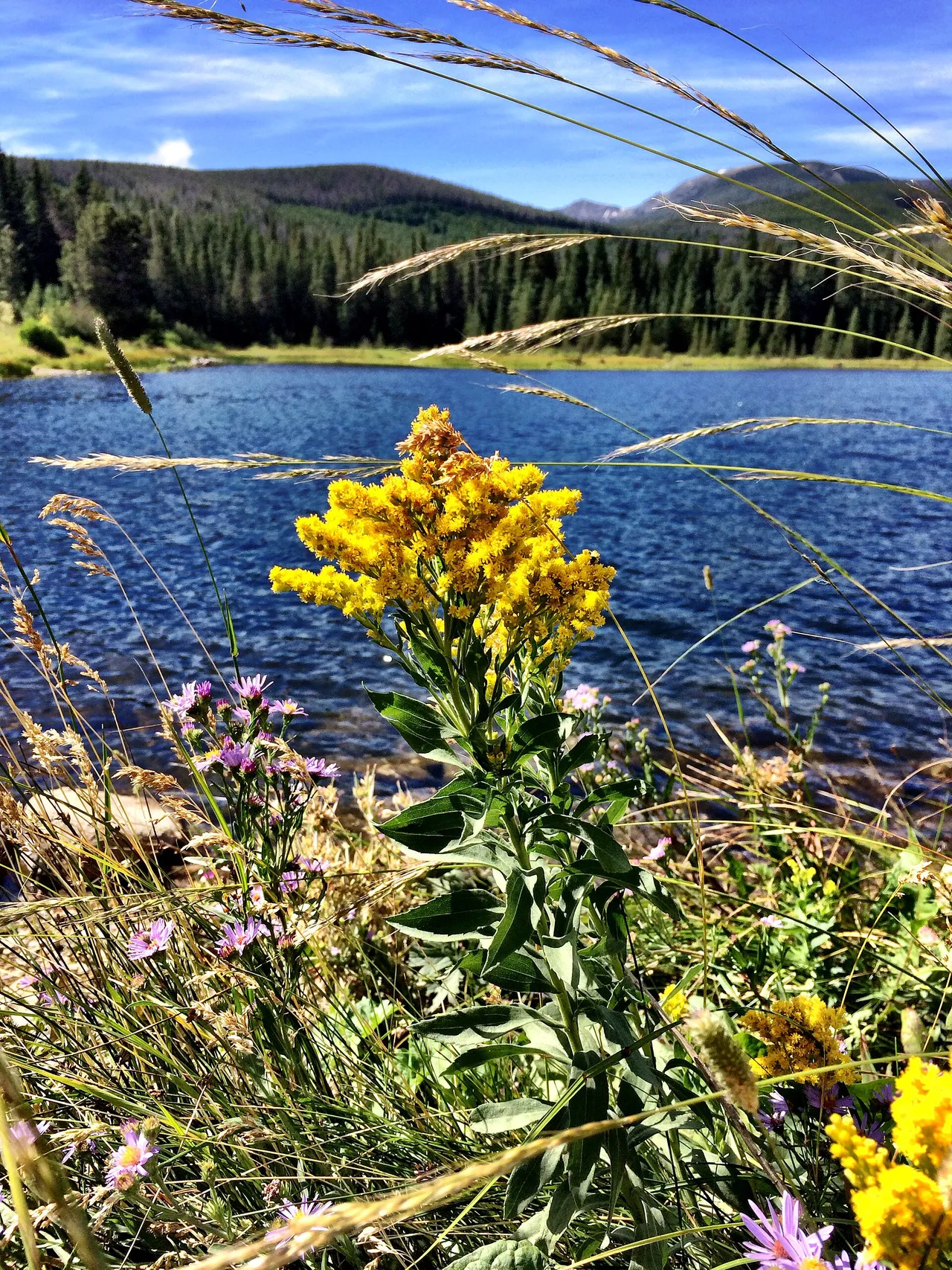
Native to much of the USA and southern Canada
Southern British Columbia and western Washington to Arizona, eastern, through Great Plains, to Wisconsin, Illinois and Oklahoma
- Light Full sun Sun tolerance
- Moisture Moisture preference
- Zones 2–9 Cold to heat range
- Bloom Jul–Sep Flowering time
- Height up to 32 in to 81 cm
- Life cycle Perennial Annual to perennial
In the garden
A prairie wildflower for full sun. At up to 32 in, it suits meadows and sunny borders. Hardy in USDA zones 2–9.
Growing conditions
Light
Full sun Partial shade Full shade
Moisture
Dry Moist Wet
Hardiness zones
Find your zone:
Pollinators & wildlife
- Bees Common Eastern Bumble Bee
also Western Honey Bee, Brown-belted Bumble Bee, American Bumble Bee +59 more
Ligated Furrow Bee, Tricolored Bumble Bee, Black-tailed Bumble Bee, Bombus fervidus, Red-belted Bumble Bee, Hunt's Bumble Bee, Two-form Bumble Bee, Half-black Bumble Bee, Orange-legged Furrow Bee, Yellow-fronted Bumble Bee, Great Basin Bumble Bee, Confusing Furrow Bee, Indiscriminate Cuckoo Bumble Bee, Southern Plains Bumble Bee, Wide-striped Sweat Bee, Carlin's Mining Bee, Pugnacious Leafcutter Bee, White-shouldered Bumble Bee, Western Bumble Bee, Bristle Sweat Bee, Rugose-chested Sweat Bee, Ceratina dupla, Experienced Sweat Bee, Dwarf Cellophane-cuckoo Bee, Nelumbo Masked Bee, Anthidium mormonum, Big-cheeked Angled-Mason, Heriades cressoni, Anthidium utahense, Melissodes boltoniae, Heriades variolosa, Coneflower Masked Bee, Glittering Cellophane Bee, Colletes phaceliae, Hylaeus wootoni, white-winged sweat bee, Tickseed Longhorn Bee, Foveolate Sweat Bee, Colletes paniscus, Colletes americanus, Eastern Cuckoo Sweat Bee, Colletes lutzi, Lasioglossum sp.M2, Ebmer's Sweat Bee, Ulke's Pebble Bee, Horn-faced Leafcutter Bee, Melissodes microsticta, Mesilla Masked Bee, Anthophora aeneiventris, Svastra obliqua, Coelioxys brevis, Short-horned Yellow-face Bee, Lasioglossum tegulare, Two-banded Cellophane-cuckoo Bee, Augochlorella persimilis, Andrena miserabilis, Megachile policaris, Drury's Long-horned Bee, Pseudopanurgus andrenoides - Butterflies Red Admiral
also Pearl Crescent, Gray Hairstreak, Orange Sulphur +29 more
Variegated Fritillary, Clouded Sulphur, Common Wood-Nymph, Dainty Sulphur, Woodland Skipper, Least Skipper, Reakirt's Blue, Banded Hairstreak, Melissa Blue, American Branded Skipper, Gorgone Checkerspot, Behr's Hairstreak, Zephyr Comma, Arogos Skipper, Painted Crescent, Mead’s Wood-Nymph, Camillus Crescent, Common Branded Skipper, Little Yellow, Speyeria atlantis hesperis, Pawnee Skipper, Siva Juniper Hairstreak, Cercyonis oetus, Harkenclenus titus, Strymon saepium, Polites sabuleti, Lycaena heteronea, Speyeria aphrodite, Pine White - Flower flies Margined Calligrapher
also Thick-legged Hover Fly, Common Grass Skimmer, Tufted Globetail +14 more
Black-footed Drone Fly, Band-winged Bee Fly, Dorcadion Bee Fly, Eastern Catkin Fly, Bombylius helvus, Paravilla sp.F1, Paravilla sp.F2, Villa nigropecta, Villa psammina, Villa lateralis, Villa alternata, Poecilanthrax alcyon, Hemipenthes sinuosus, Short-haired Wrinklehead - Also visited by
- Beetles:
Locust Borer, Notch-tipped Flower Longhorn Beetle +5 more
Ditemnus bidentatus, Onthophagus pennsylvanicus, Tumbling Nun, Sutured Longhorn Beetle, Chauliognathus pennsylvanicus - Moths:
Police Car Moth, Lycaena hyllus +1 more
Lycaena rubidus - Wasps: Fraternal Potter Wasp
- Beetles:
Butterflies that use this plant
Documented host and nectar records. Each links to a planting guide for that butterfly.
- Aphrodite fritillarynectar
- Banded hairstreaknectar
- Clouded sulphurnectar
- Common wood-nymphnectar
- Coral hairstreaknectar
- Dainty sulphurnectar
- Gorgone checkerspotnectar
- Gray hairstreaknectar
- Hedgerow hairstreaknectar
- Juniper hairstreaknectar
- Little yellownectar
- Melissa bluenectar
- Orange sulphurnectar
- Pearl crescentnectar
- Reakirt's bluenectar
- Red admiralnectar
- Variegated fritillarynectar
Full plant details
Where it grows
- Habitat
- PrairieThe wild plant community it grows in.
- Native range
- Much of the USA and southern CanadaUnited States (22): AR, AZ, CO, IA, ID, IL, KS, MN, MO, MT, ND, NE, NM, NV, OK, OR, SD, TX, UT, WA, WI, WY. Canada (4): AB, BC, MB, SK. Where it grows wild on its own, by state and province.
- Native distribution
- Southern British Columbia and western Washington to Arizona, eastern, through Great Plains, to Wisconsin, Illinois and OklahomaThe same native range, usually more exact than the state list, and often noting where it has spread beyond it.
Growing conditions
- Light
- Full sunHow much sun it takes, from full sun to full shade.
- Hardiness zones
- USDA 2–9 · Canadian 1–7The cold-to-heat climate range it survives.
- Soil
- Sandy or gravelly soilsThe soils it grows in naturally.
- Soil texture
- Light to heavy (sandy to clay)The soil grade it prefers, from sand to clay.
- Soil pH
- 5.5–7.5The acidity to alkalinity it tolerates (7 is neutral).
- Soil quality
- LowHow rich a soil it needs. Many natives prefer lean soil and flop in rich beds.
- Water use
- LowHow thirsty it is, a rough guide to how often to water.
- Salinity tolerance
- LowHow well it copes with salty soil, near roads or the coast.
- Lime (CaCO₃) tolerance
- MediumHow well it copes with chalky, lime-rich soil.
Growth & form
- Height
- up to 32 in (to 81 cm)Typical mature height.
- Spread
- ~2 ft (0.6 m)How wide one plant gets, a guide to spacing.
- Life cycle
- PerennialWhether it lives a single season (annual), two (biennial), or returns for years (perennial).
- Growth rate
- ModerateA relative ranking versus other plants of the same type (USDA), not an absolute rate.
- Shape
- ErectIts overall silhouette.
- Root depth
- 8+ in (20+ cm)How far the roots reach, a guide to drought resilience and transplanting.
Flowers, foliage & fruit
- Type
- WildflowerWhat kind of plant it is.
- Bloom
- Jul–SepWhen it flowers.
- Flower color
- YellowThe bloom color, or colors.
- Fruit/Seeds
- AcheneThe seed or fruit it sets after flowering.
- Toxicity
- None knownWhether any part is poisonous to people or pets.
Propagation & seed
- Cold stratification
- Not requiredWhether seed needs a cold, moist spell before it will germinate.
- Propagation
- Bare root, seed, sprigsHow to start new plants.
- Seed
- ~2 million seeds per poundNotes on the seed and how to sow it.
- Seed spread rate
- SlowHow readily it self-sows. Slow or none means well-behaved, not a spreader.
- Seedling vigor
- MediumHow strongly young seedlings establish.
- Vegetative spread
- ModerateWhether it creeps outward or stays put in a clump.