prairie wildflower
Narrow-leaved blue-eyed grass
Sisyrinchium angustifolium
Also known as Narrowleaf Blue-eyed Grass, Narrow-leaf Blue-eyed-grass, Bermuda Blue-eyed Grass, Blue-eyed Grass
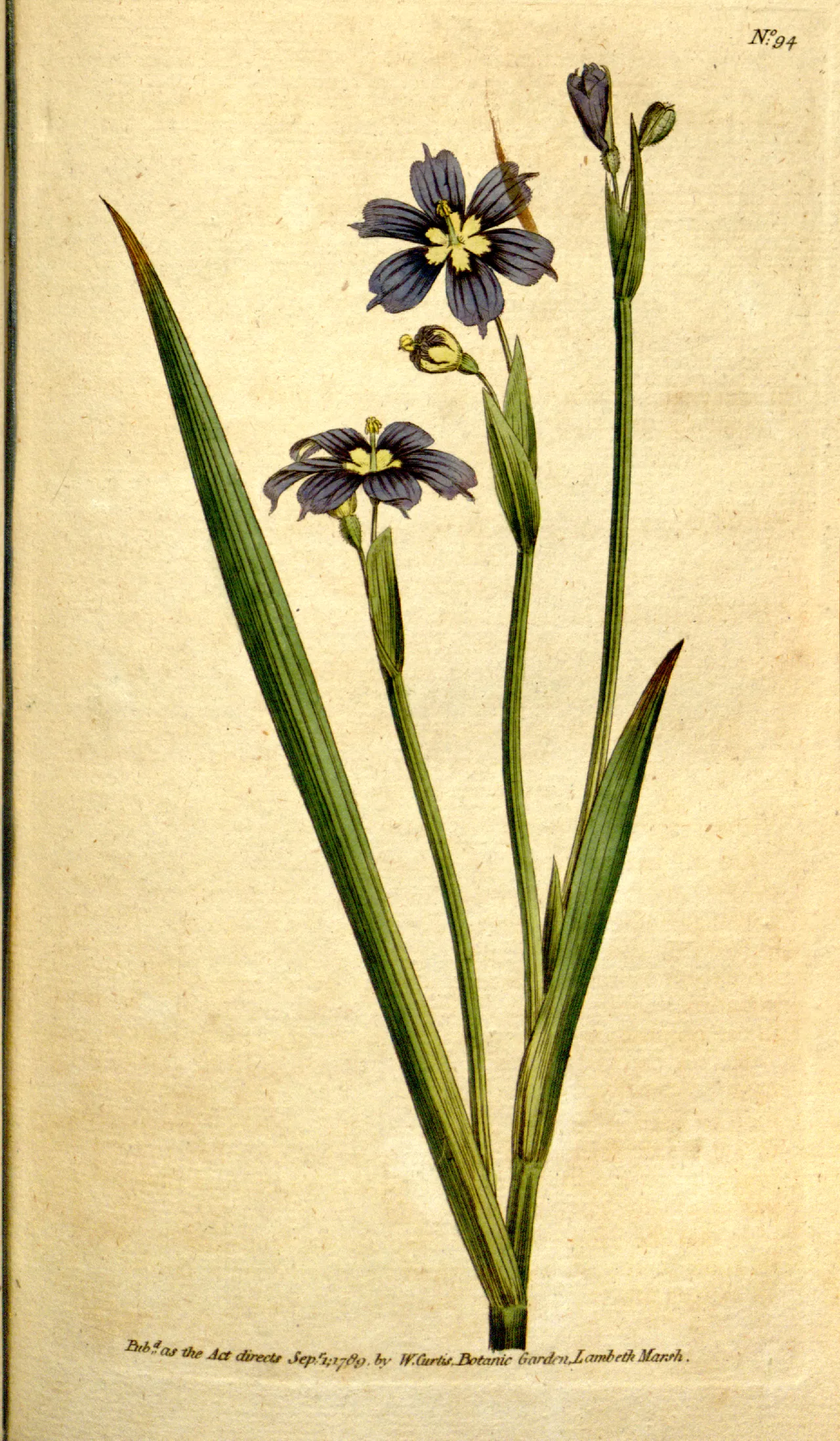 1 of 3
Native to much of the USA and southern Canada
Newfoundland to Manitoba and Platte county, Wyoming, south to Florida and Texas
- Light Full sun to part shade Sun tolerance
- Moisture Moist to wet Moisture preference
- Zones 3–10 Cold to heat range
- Bloom Mar–Jul Flowering time
- Height up to 18 in to 46 cm
- Life cycle Perennial Annual to perennial
In the garden
A prairie wildflower for full sun to part shade and consistently moist to wet soil. At up to 18 in, it suits meadows and sunny borders. Hardy in USDA zones 3–10.
Growing conditions
Light
Full sun Partial shade Full shade
Moisture
Dry Moist Wet
Hardiness zones
Find your zone:
Pollinators & wildlife
- Bees Black-and-gold Bumble Bee
also Western Honey Bee, Orange-legged Furrow Bee, Golden Sweat Bee +20 more
Texas Leafcutter Bee, Eastern Miner Bee, Cresson's Mining Bee, Perplexing Rotund-Resin bee, Cherry Mining Bee, Florida Small Carpenter, Nomada vincta, Nomada superba, Experienced Sweat Bee, Osmia pumila, Osmia conjuncta, hoary sweat bee, Toothed Miner Bee, Goldenrod Long-horned Bee, Nimble Ceratina, Schwarz's Masked Bee, Drury's Long-horned Bee, Eucera belfragei, Yellow-spotted Cuckoo Nomad Bee, Augochlorella persimilis - Flower flies Margined Calligrapher
also Eastern Calligrapher, Common Grass Skimmer, Thin-lined Calligrapher +6 more
Broad-headed Marsh Fly, Bombylius atriceps, Palpada meigenii, Maize Calligrapher, Geron rufipes, Sphaerophoria cylindricus - Beetles Cranberry Rootworm
also Mordellistena comata, Metacmaeops vittata, Emerald Euphoria +1 more
Chlorophorus glaucus - Also visited by
- Wasps: Fraternal Potter Wasp
- Butterflies: Viceroy
Butterflies that use this plant
Documented host and nectar records. Each links to a planting guide for that butterfly.
- Viceroynectar
Full plant details
Where it grows
- Habitat
- PrairieThe wild plant community it grows in.
- Native range
- Much of the USA and southern CanadaUnited States (35): AL, AR, CT, DC, DE, FL, GA, IA, IL, IN, KS, KY, LA, MA, MD, ME, MI, MN, MO, MS, NC, NH, NJ, NY, OH, OK, PA, RI, SC, TN, TX, VA, VT, WI, WV. Canada (3): NS, PE, QC. Where it grows wild on its own, by state and province.
- Native distribution
- Newfoundland to Manitoba and Platte county, Wyoming, south to Florida and TexasThe same native range, usually more exact than the state list, and often noting where it has spread beyond it.
Growing conditions
- Light
- Full sun to part shadeHow much sun it takes, from full sun to full shade.
- Moisture
- Moist to wetThe soil dampness it prefers, from dry to wet.
- Hardiness zones
- USDA 3–10 · Canadian 2–7The cold-to-heat climate range it survives.
- Soil
- Moist, poor to average soilsThe soils it grows in naturally.
- Soil texture
- Light to heavy (sandy to clay)The soil grade it prefers, from sand to clay.
- Soil pH
- 5.0–7.0The acidity to alkalinity it tolerates (7 is neutral).
- Soil quality
- LowHow rich a soil it needs. Many natives prefer lean soil and flop in rich beds.
- Water use
- MediumHow thirsty it is, a rough guide to how often to water.
- Salinity tolerance
- NoneHow well it copes with salty soil, near roads or the coast.
- Lime (CaCO₃) tolerance
- LowHow well it copes with chalky, lime-rich soil.
Growth & form
- Height
- up to 18 in (to 46 cm)Typical mature height.
- Life cycle
- PerennialWhether it lives a single season (annual), two (biennial), or returns for years (perennial).
- Growth rate
- ModerateA relative ranking versus other plants of the same type (USDA), not an absolute rate.
- Shape
- ErectIts overall silhouette.
- Root depth
- 4+ in (10+ cm)How far the roots reach, a guide to drought resilience and transplanting.
Flowers, foliage & fruit
- Type
- WildflowerWhat kind of plant it is.
- Bloom
- Mar–JulWhen it flowers.
- Flower color
- BlueThe bloom color, or colors.
- Fruit/Seeds
- CapsuleThe seed or fruit it sets after flowering.
- Toxicity
- None knownWhether any part is poisonous to people or pets.
Propagation & seed
- Cold stratification
- Not requiredWhether seed needs a cold, moist spell before it will germinate.
- Propagation
- Bare root, bulb, seedHow to start new plants.
- Seed
- ~0.8 million seeds per poundNotes on the seed and how to sow it.
- Seed spread rate
- SlowHow readily it self-sows. Slow or none means well-behaved, not a spreader.
- Seedling vigor
- LowHow strongly young seedlings establish.
- Vegetative spread
- NoneWhether it creeps outward or stays put in a clump.