woodland wildflower
Pale Indian plantain
Arnoglossum atriplicifolium
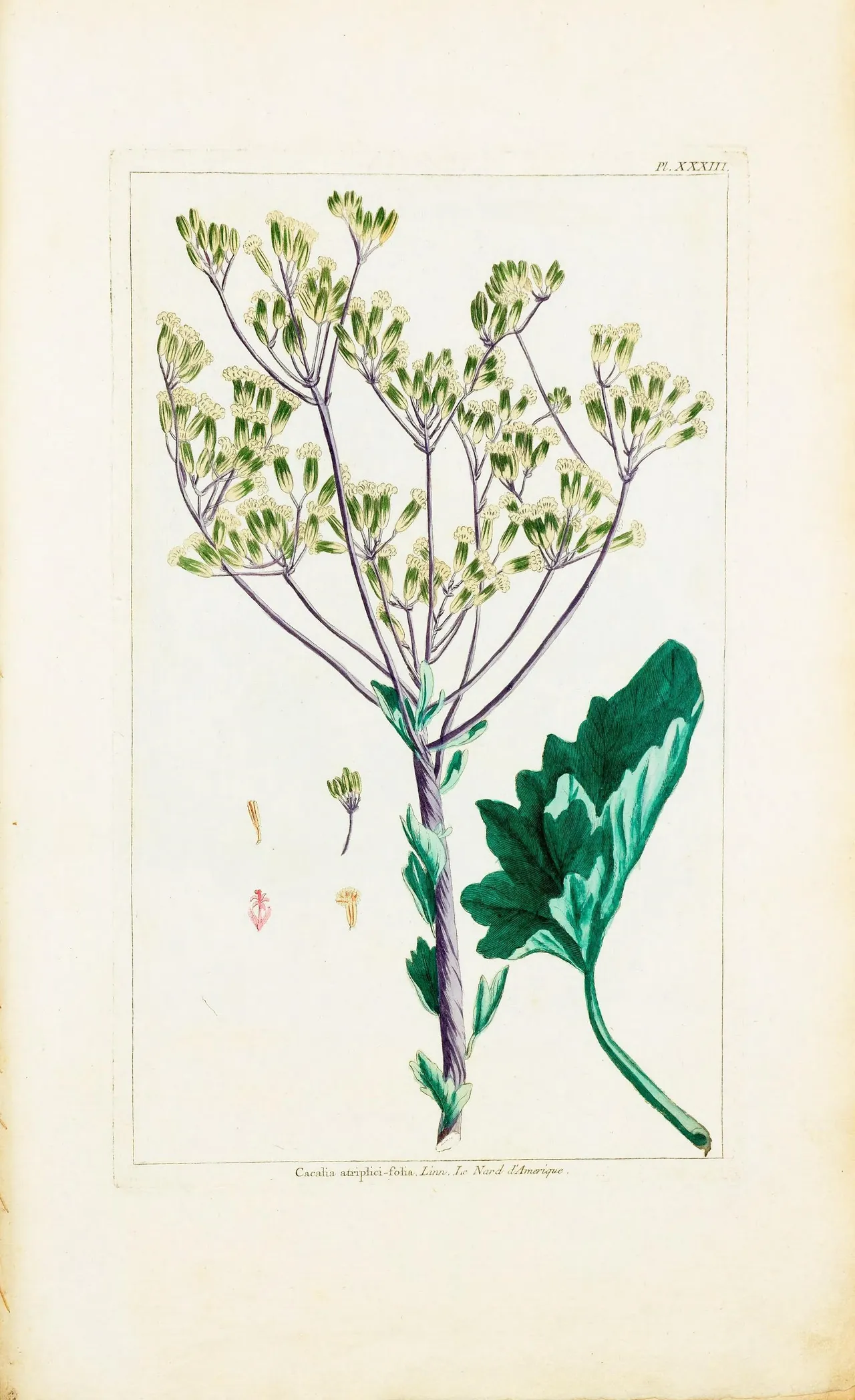 1 of 3
Native to much of the USA
New York to Wisconsin, south to Georgia, Louisiana and Oklahoma
- Light Full sun Sun tolerance
- Moisture Moist Moisture preference
- Zones n/a Cold to heat range
- Bloom Jun–Sep Flowering time
- Height up to 10 ft to 3.0 m
- Life cycle Perennial Annual to perennial
In the garden
A woodland wildflower for full sun and evenly moist soil. Its white flowers peak in July. At up to 10 ft, it needs room in shade gardens and woodland edges.
Growing conditions
Light
Full sun Partial shade Full shade
Moisture
Dry Moist Wet
When it blooms
The Pale Indian plantain's white flowers bloom June to September, peaking in July. This midsummer display draws bees and wasps.
Pale Indian plantain blooms whiteFoliage
Pollinators & wildlife
- Bees Common Eastern Bumble Bee
also Two-spotted Bumble Bee, Ligated Furrow Bee, Pure Green Sweat bee +13 more
Orange-legged Furrow Bee, Agapostemon texanus, Rusty-patched Bumble Bee, Texas Leafcutter Bee, Bristle Sweat Bee, Nomada superba, Lasioglossum cinctipes, Illinois Sweat Bee, Cresson's Nomad Bee, Big-cheeked Angled-Mason, Pseudopanurgus labrosus, Sunflower Cuckoo Nomad Bee, Sphecodes confertus - Wasps Bald-faced Hornet
also Eastern Yellowjacket, Fraternal Potter Wasp, Four-toothed Mason Wasp +4 more
Euodynerus foraminatus, Pseudodynerus quadrisectus, European tube wasp, Cross Potter Wasp - Flower flies Broad-headed Marsh Fly also Yellow-legged Bog Fly
- Also visited by
- Beetles: Onthophagus pennsylvanicus
- Butterflies: Viceroy
Butterflies that use this plant
Documented host and nectar records. Each links to a planting guide for that butterfly.
- Viceroynectar
Full plant details
Where it grows
- Habitat
- WoodlandThe wild plant community it grows in.
- Native range
- Much of the USAUnited States (28): AL, AR, DC, DE, FL, GA, IA, IL, IN, KS, KY, LA, MD, MI, MO, MS, NC, NE, NJ, NY, OH, OK, PA, SC, TN, VA, WI, WV. Where it grows wild on its own, by state and province.
- Native distribution
- New York to Wisconsin, south to Georgia, Louisiana and OklahomaThe same native range, usually more exact than the state list, and often noting where it has spread beyond it.
Growing conditions
- Light
- Full sunHow much sun it takes, from full sun to full shade.
- Moisture
- MoistThe soil dampness it prefers, from dry to wet.
- Soil
- Various soilsThe soils it grows in naturally.
- Soil texture
- Light to heavy (sandy to clay)The soil grade it prefers, from sand to clay.
- Soil pH
- Acid to neutralThe acidity to alkalinity it tolerates (7 is neutral).
- Water use
- MediumHow thirsty it is, a rough guide to how often to water.
Growth & form
- Height
- up to 10 ft (to 3.0 m)Typical mature height.
- Life cycle
- PerennialWhether it lives a single season (annual), two (biennial), or returns for years (perennial).
Flowers, foliage & fruit
- Type
- WildflowerWhat kind of plant it is.
- Bloom
- Jun–SepWhen it flowers.
- Flower color
- WhiteThe bloom color, or colors.
- Fruit/Seeds
- ripens Jul–NovThe seed or fruit it sets after flowering.
- Toxicity
- None knownWhether any part is poisonous to people or pets.