woodland vine
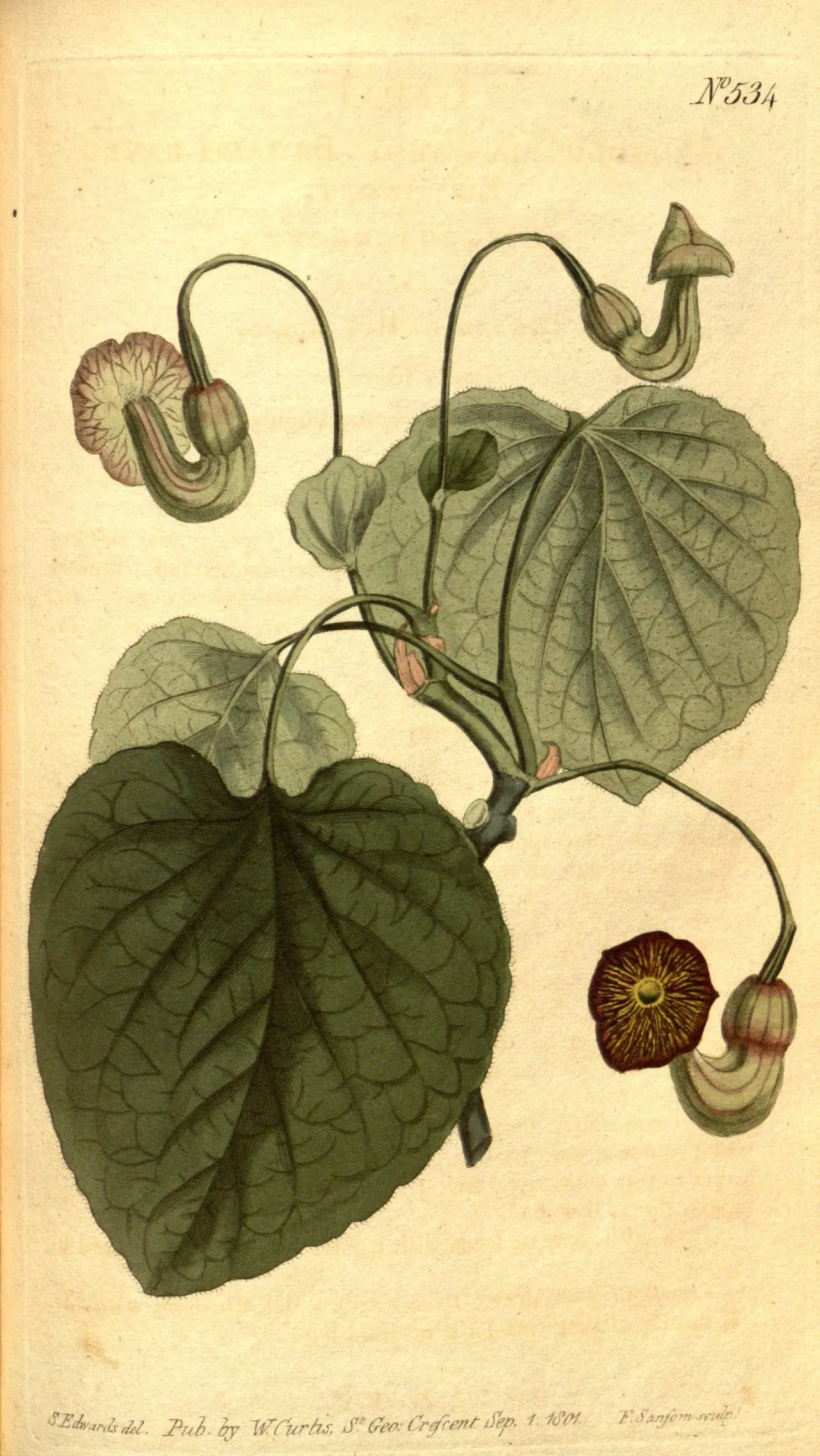
Pipevine
Aristolochia macrophylla
 1 of 2
Native to the Southeast
Southwestern Pennsylvania, southern in the uplands to Georgia and Alabama; naturalized north and eastward
- Light Partial shade Sun tolerance
- Moisture Moist Moisture preference
- Zones n/a Cold to heat range
- Bloom Apr–Jun Flowering time
- Height up to 35 ft to 10.7 m
- Life cycle Perennial Annual to perennial
In the garden
A woodland vine for partial shade and evenly moist soil. Its green flowers peak in May. At up to 35 ft, it needs room in shade gardens and woodland edges.
Growing conditions
Light
Full sun Partial shade Full shade
Moisture
Dry Moist Wet
When it blooms
The Pipevine's green flowers bloom April to June, peaking in May. This late-spring display draws butterflies and bees.
Pipevine blooms green, purple & brownFoliage
Pollinators & wildlife
- Butterflies Silver-spotted Skipper
also Pipevine Swallowtail, California Pipevine Swallowtail, Polydamas Swallowtail +5 more
Southern Festoon, Speyeria idalia, Allancastria cerisyi, Battus polydamas polydamas, Spanish Festoon - Bees Eastern Carpenter Bee
also Agapostemon texanus, Nude Mining Bee, Spot-fronted Wool-carder Bee +3 more
Obliterated Nomad, Pseudopanurgus parvus, Tetragona dissecta - Beetles Fourteen-spotted Lady Beetle
also Cantharis livida, Onthophagus pennsylvanicus, 22-spot Ladybird +1 more
Mordellaria serval - Also visited by
- Flower flies: Broad-headed Marsh Fly, Yellow-legged Bog Fly
- Moths: Eastern Grass-veneer, Plusia precationis
- Hummingbirds: Anna's Hummingbird
Butterflies that use this plant
Documented host and nectar records. Each links to a planting guide for that butterfly.
- Pipevine swallowtailhost & nectar
- Silver-spotted skippernectar
Full plant details
Where it grows
- Habitat
- WoodlandThe wild plant community it grows in.
- Native range
- The SoutheastUnited States (10): AL, GA, KY, MD, NC, PA, SC, TN, VA, WV. Where it grows wild on its own, by state and province.
- Native distribution
- Southwestern Pennsylvania, southern in the uplands to Georgia and Alabama; naturalized north and eastwardThe same native range, usually more exact than the state list, and often noting where it has spread beyond it.
Growing conditions
- Light
- Partial shadeHow much sun it takes, from full sun to full shade.
- Moisture
- MoistThe soil dampness it prefers, from dry to wet.
- Soil
- Organic, well-drained soilsThe soils it grows in naturally.
- Water use
- MediumHow thirsty it is, a rough guide to how often to water.
Growth & form
- Height
- up to 35 ft (to 10.7 m)Typical mature height.
- Life cycle
- PerennialWhether it lives a single season (annual), two (biennial), or returns for years (perennial).
Flowers, foliage & fruit
- Type
- VineWhat kind of plant it is.
- Bloom
- Apr–JunWhen it flowers.
- Flower color
- Green, Purple, BrownThe bloom color, or colors.
- Fruit/Seeds
- ripens Jun–OctThe seed or fruit it sets after flowering.
- Toxicity
- None knownWhether any part is poisonous to people or pets.