wetland wildflower
Scarlet monkeyflower
Erythranthe cardinalis
Also known as Crimson Monkeyflower, Scarlet Monkey-flower
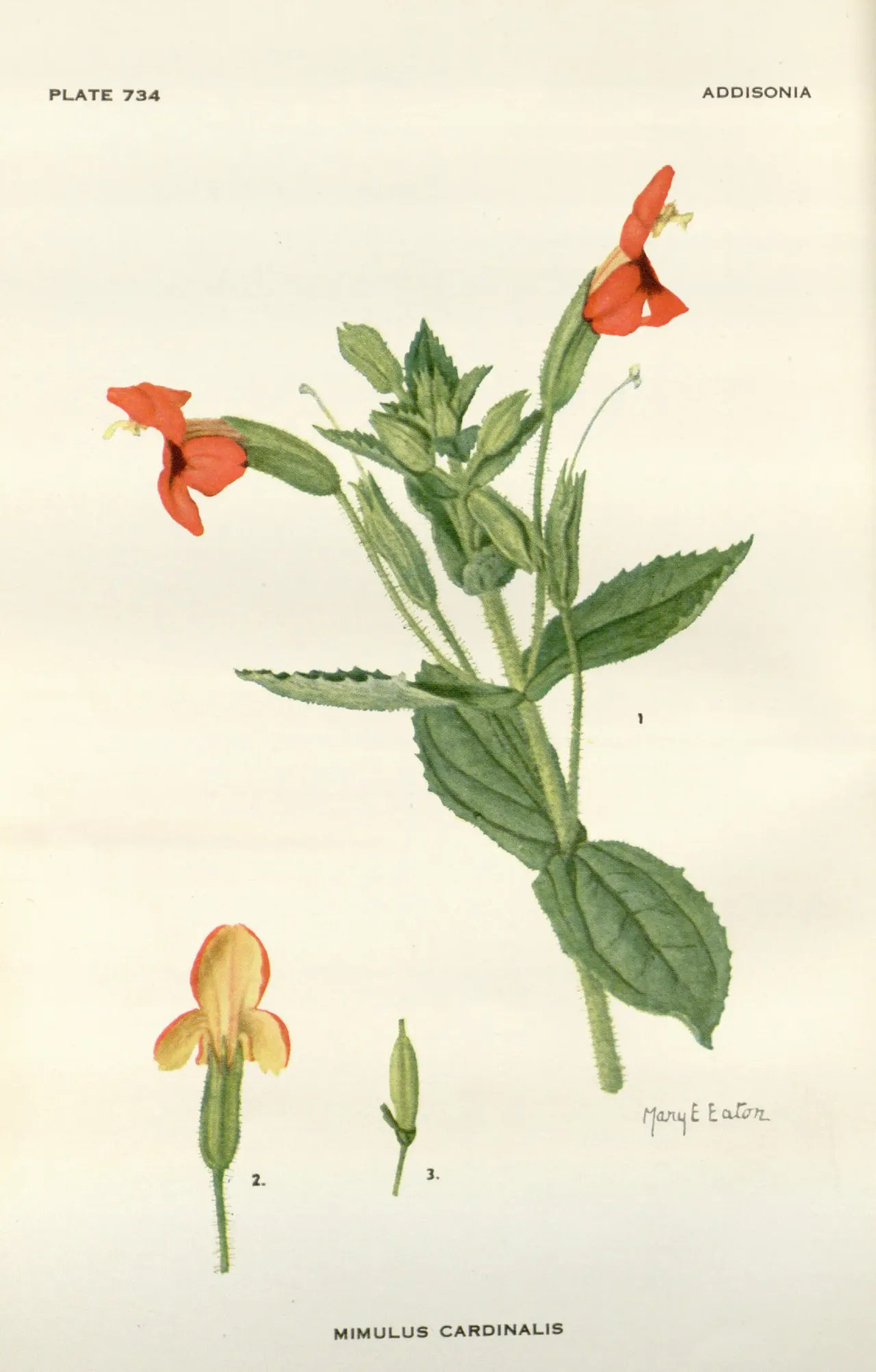 1 of 2
Native to California, Nevada, Oregon, and Washington
California, Nevada, Oregon, Washington, and Baja California, Mexico.
- Light Partial shade Sun tolerance
- Moisture Moist Moisture preference
- Zones 5–11 Cold to heat range
- Bloom May–Oct Flowering time
- Height up to 30 in to 76 cm
- Life cycle Perennial Annual to perennial
In the garden
A wetland wildflower for partial shade and evenly moist soil. Its red and orange flowers peak in July. At up to 30 in, it suits rain gardens, pond edges, and damp low spots. Hardy in USDA zones 5–11.
Growing conditions
Light
Full sun Partial shade Full shade
Moisture
Dry Moist Wet
Hardiness zones
Find your zone:
When it blooms
The Scarlet monkeyflower's red and orange flowers bloom May to October, peaking in July. This midsummer display draws bees and butterflies.
Scarlet monkeyflower blooms red & orangeFoliage
Pollinators & wildlife
- Bees Yellow-fronted Bumble Bee
also Western Honey Bee, Van Dyke's Bumble Bee, Bindweed Turret Bee +1 more
Foothill Carpenter Bee - Butterflies Western Tiger Swallowtail also Pale Swallowtail, Zerene eurydice
- Hummingbirds Anna's Hummingbird
- Also visited by
- Moths: White-lined Sphinx
Butterflies that use this plant
Documented host and nectar records. Each links to a planting guide for that butterfly.
- Common buckeyecaterpillar host
- Eastern tiger swallowtailnectar
- Pale swallowtailnectar
- Western tiger swallowtailnectar
Full plant details
Where it grows
- Habitat
- WetlandThe wild plant community it grows in.
- Native range
- California, Nevada, Oregon, and WashingtonUnited States (4): CA, NV, OR, WA. Where it grows wild on its own, by state and province.
- Native distribution
- California, Nevada, Oregon, Washington, and Baja California, Mexico.The same native range, usually more exact than the state list, and often noting where it has spread beyond it.
Growing conditions
- Light
- Partial shadeHow much sun it takes, from full sun to full shade.
- Moisture
- MoistThe soil dampness it prefers, from dry to wet.
- Hardiness zones
- USDA 5–11 · Canadian 4–9The cold-to-heat climate range it survives.
- Soil
- Moist soilsThe soils it grows in naturally.
- Water use
- HighHow thirsty it is, a rough guide to how often to water.
- Lime (CaCO₃) tolerance
- MediumHow well it copes with chalky, lime-rich soil.
Growth & form
- Height
- up to 30 in (to 76 cm)Typical mature height.
- Life cycle
- PerennialWhether it lives a single season (annual), two (biennial), or returns for years (perennial).
Flowers, foliage & fruit
- Type
- WildflowerWhat kind of plant it is.
- Bloom
- May–OctWhen it flowers.
- Flower color
- Red, OrangeThe bloom color, or colors.
- Fruit/Seeds
- ripens Jun–DecThe seed or fruit it sets after flowering.
- Toxicity
- None knownWhether any part is poisonous to people or pets.