prairie wildflower
Turkey tangle frogfruit
Phyla nodiflora
Also known as Texas Frogfruit, Turkey Tangle Fogfruit, Frogfruit
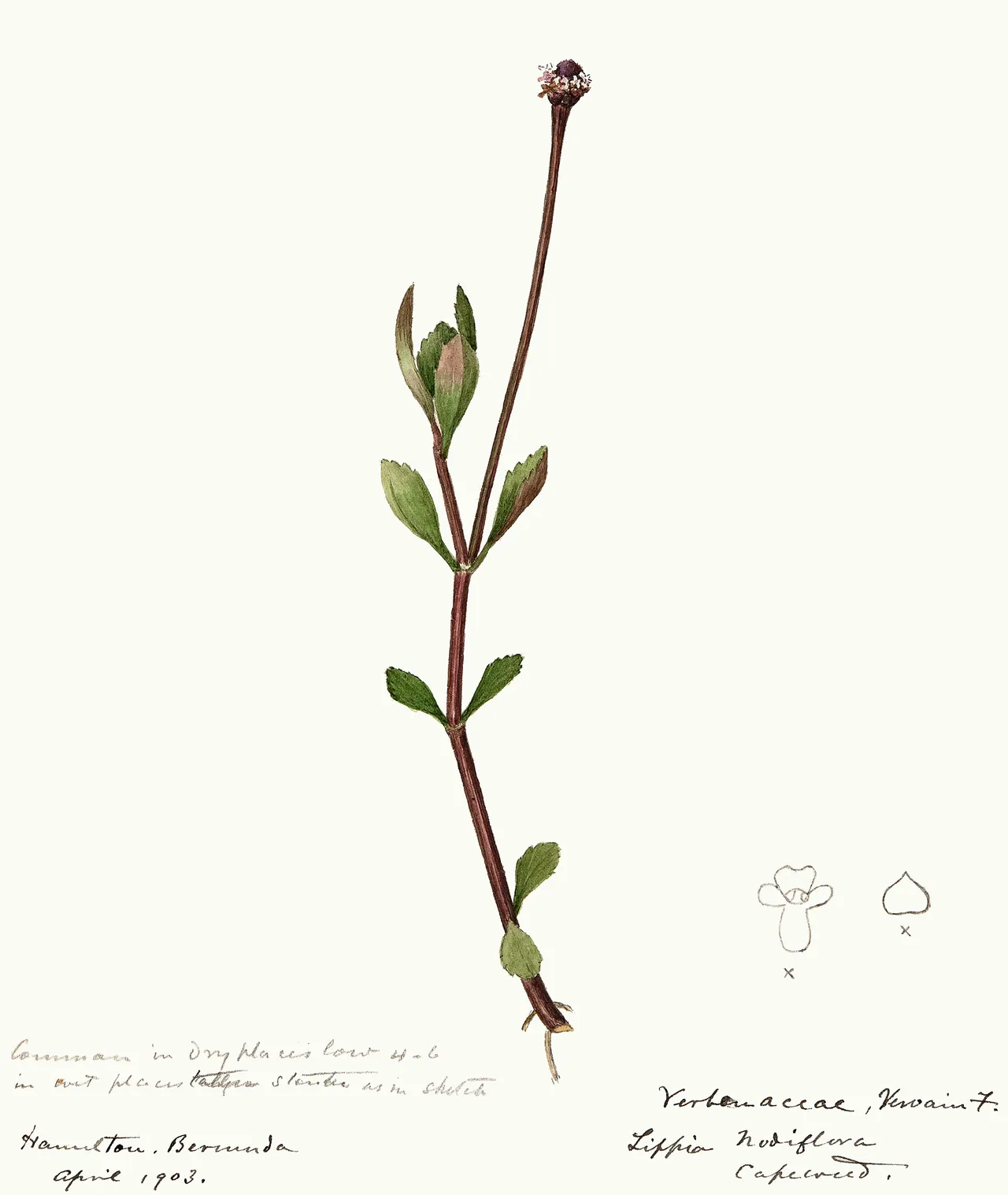 1 of 2
Native to much of the USA
Southern half of the US to the tropics.
- Light Full sun to part shade Sun tolerance
- Moisture Dry to moist Moisture preference
- Zones n/a Cold to heat range
- Bloom May–Nov Flowering time
- Height up to 6 in to 15 cm
- Life cycle Perennial Annual to perennial
In the garden
A prairie wildflower for full sun to part shade and dry to moist soil. At up to 6 in, it tucks into meadows and sunny borders. It spreads readily, so give it room or a contained spot.
Growing conditions
Light
Full sun Partial shade Full shade
Moisture
Dry Moist Wet
Pollinators & wildlife
- Butterflies Gulf Fritillary
also Pearl Crescent, Common Buckeye, Fiery Skipper +69 more
Gray Hairstreak, Eastern Tailed-Blue, Variegated Fritillary, Queen, Common Checkered-Skipper and Allies, Checkered White, Horace's Duskywing, Common Ringlet, Gray Buckeye, Dun Skipper, Dainty Sulphur, Woodland Skipper, Phaon Crescent, Least Skipper, Ceraunus Blue, Bordered Patch, Acmon Blue, Reakirt's Blue, Umber Skipper, Funereal Duskywing, Tawny-edged Skipper, Eufala Skipper, Great Southern White, Texan Crescent, Purplish Copper, Whirlabout, Common Sootywing, Mallow Scrub-Hairstreak, Common Mestra, Barred Yellow, Southern Skipperling, Cassius Blue, Zarucco Duskywing, Florida Mangrove Skipper, Little Metalmark, Great Copper, Confused Cloudywing, Obscure Skipper, Pink-spot Sulphur, Small Heath, Neamathla Skipper, Little Yellow, Nathalis iole iole, Desert Checkered-Skipper, Pyrisitia nise nise, False Ilex Hairstreak, Wallengrenia otho, Baracoa Skipper, Florida Duskywing, Eastern Pygmy-Blue, Lesser Grass Blue, West Indian Mangrove Buckeye, White-patched Skipper, Fulvous Hairstreak, Common Zebra Blue, Dark Grass Blue, White Checkered-Skipper, Panoquina panoquin, Hylephila phyleus phyleus, Atrytone delaware, Panoquina ocola, Wallengrenia egeremet, White Peacock, Common Spurwing, Leptotes trigemmatus, Atalopedes campestris, Pyrgus oileus, Eresia aveyrona mylitta, Ramon Blue - Bees American Bumble Bee
also Western Honey Bee, Brown-winged Striped Sweat Bee, Carpenter-mimic Leafcutter Bee +18 more
Flat-tailed Leafcutter Bee, Poey's Furrow Bee, Southern Plains Bumble Bee, Megachile exilis, Megachile albitarsis, Florida Small Carpenter, Megachile pusilla, Ceratina cockerelli, Graenicher's Masked Bee, Baker's Nomia, Agapostemon poeyi, Melissodes communis communis, Coelioxys slossoni slossoni, Lunate Longhorn-cuckoo Bee, Red Dwarf Honey Bee, Florida Longhorn-Cuckoo, Pubescent Carpenter Bee, Coelioxys mexicana - Flower flies Margined Calligrapher
also Eastern Calligrapher, Oblique Streaktail, Northern Plushback +17 more
Mexican Cactus Fly, Chrysanthrax cypris, Band-winged Bee Fly, Thin-lined Calligrapher, Systoechus solitus, Toxophora amphitea, Black-sided Calligrapher, Florida Bromeliad Fly, Neodiplocampta miranda, Long-spurred Swamp Fly, Palpada pusilla, Palpada agrorum, Pseudodoros clavatus, White-faced Plushback, Poecilanthrax lucifer, Florida Calligrapher, Hyperalonia chilensis - Also visited by
- Moths:
Genista Broom Moth, Dusky Herpetogramma Moth +9 more
Orange-spotted Flower Moth, Spotted Spragueia, Sooty Snout, Assembly Moth, Wine-tinted Oenobotys Moth, Mottled Pyrausta Moth, Ornate Bella Moth, Coffee-loving and Southern Purple Mint Moths, Hawaiian Beet Webworm Moth - Wasps:
Four-toothed Mason Wasp, Red-marked Pachodynerus Wasp +4 more
Zeta argillaceum, Smith's Potter Wasp, Horse Paper Wasp, Slosson's Mason Wasp - Beetles: Alligatorweed Flea Beetle
- Moths:
Butterflies that use this plant
Documented host and nectar records. Each links to a planting guide for that butterfly.
- Acmon bluenectar
- Checkered whitenectar
- Common buckeyenectar
- Common ringletnectar
- Dainty sulphurnectar
- Eastern tailed-bluenectar
- Fiery skippernectar
- Gray hairstreaknectar
- Gulf fritillarynectar
- Little yellownectar
- Pearl crescentnectar
- Queennectar
- Reakirt's bluenectar
- Variegated fritillarynectar
Full plant details
Where it grows
- Habitat
- PrairieThe wild plant community it grows in.
- Native range
- Much of the USAUnited States (22): AL, AR, AZ, CA, FL, GA, KS, KY, LA, MD, MO, MS, NC, NM, NV, OK, OR, PA, SC, TX, UT, VA. Where it grows wild on its own, by state and province.
- Native distribution
- Southern half of the US to the tropics.The same native range, usually more exact than the state list, and often noting where it has spread beyond it.
Growing conditions
- Light
- Full sun to part shadeHow much sun it takes, from full sun to full shade.
- Moisture
- Dry to moistThe soil dampness it prefers, from dry to wet.
- Soil
- Sand, loam, clay, caliche, limestone. Poor drainage and saline soils okayThe soils it grows in naturally.
- Soil texture
- Light to heavy (sandy to clay)The soil grade it prefers, from sand to clay.
- Soil pH
- 6.0–8.5The acidity to alkalinity it tolerates (7 is neutral).
- Soil quality
- LowHow rich a soil it needs. Many natives prefer lean soil and flop in rich beds.
- Water use
- Low to mediumHow thirsty it is, a rough guide to how often to water.
- Salinity tolerance
- MediumHow well it copes with salty soil, near roads or the coast.
- Lime (CaCO₃) tolerance
- MediumHow well it copes with chalky, lime-rich soil.
Growth & form
- Height
- up to 6 in (to 15 cm)Typical mature height.
- Spread
- ~3 ft (1 m)How wide one plant gets, a guide to spacing.
- Life cycle
- PerennialWhether it lives a single season (annual), two (biennial), or returns for years (perennial).
- Growth rate
- RapidA relative ranking versus other plants of the same type (USDA), not an absolute rate.
- Shape
- ProstrateIts overall silhouette.
- Root depth
- 6+ in (15+ cm)How far the roots reach, a guide to drought resilience and transplanting.
Flowers, foliage & fruit
- Type
- WildflowerWhat kind of plant it is.
- Bloom
- May–NovWhen it flowers.
- Flower color
- White, Red, PinkThe bloom color, or colors.
- Fruit/Seeds
- SchizocarpThe seed or fruit it sets after flowering.
- Toxicity
- None knownWhether any part is poisonous to people or pets.
Propagation & seed
- Cold stratification
- Not requiredWhether seed needs a cold, moist spell before it will germinate.
- Propagation
- Seed, sprigsHow to start new plants.
- Seed spread rate
- RapidHow readily it self-sows. Slow or none means well-behaved, not a spreader.
- Seedling vigor
- HighHow strongly young seedlings establish.
- Vegetative spread
- RapidWhether it creeps outward or stays put in a clump.