woodland wildflower
Veiny pea
Lathyrus venosus
Also known as Veiny Vetchling, Wild Sweet Pea, Bushy Vetch
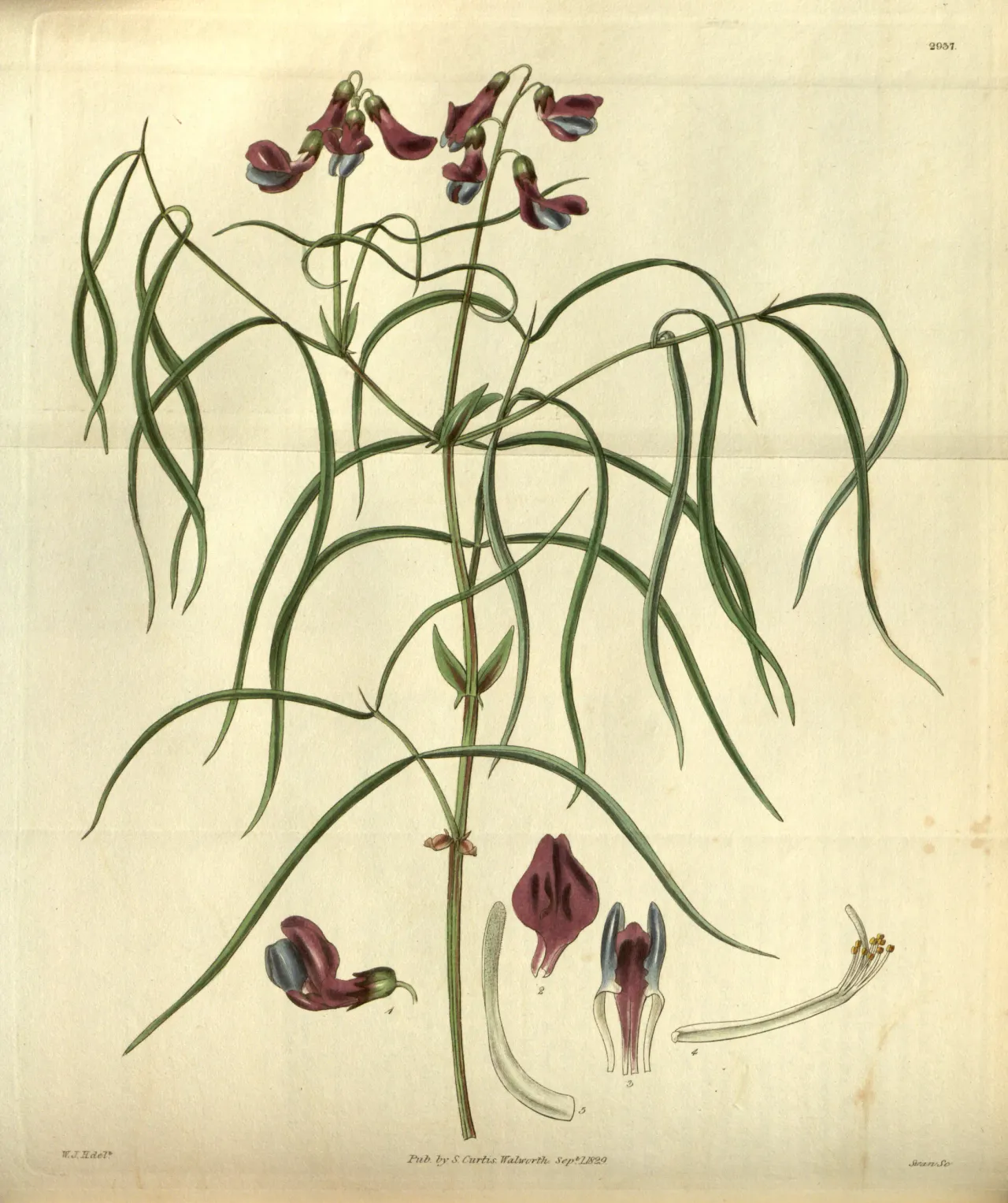 1 of 2
Native to much of the USA and southern Canada
Southern Ontario to Saskatchewan, south to Georgia mountains, Tennessee and Louisiana
- Light Partial shade Sun tolerance
- Moisture Dry to moist Moisture preference
- Zones 2–9 Cold to heat range
- Bloom May–Jul Flowering time
- Height up to 3 ft to 0.9 m
- Life cycle Perennial Annual to perennial
In the garden
A woodland wildflower for partial shade and dry to moist soil. Its pink and purple flowers peak in June. At up to 3 ft, it suits shade gardens and woodland edges. Hardy in USDA zones 2–9.
Growing conditions
Light
Full sun Partial shade Full shade
Moisture
Dry Moist Wet
Hardiness zones
Find your zone:
When it blooms
The Veiny pea's pink and purple flowers bloom May to July, peaking in June. This early-summer display draws bees and butterflies.
Veiny pea blooms pink & purpleFoliage
Pollinators & wildlife
- Bees Brown-belted Bumble Bee
also Western Honey Bee, Two-spotted Bumble Bee, Black-tailed Bumble Bee +12 more
Black-and-gold Bumble Bee, Half-black Bumble Bee, Nevada Bumble Bee, Western Bumble Bee, Cryptic Bumble Bee, Bufflehead Mason Bee, Osmia collinsiae, Colletes cyaneus, Augochlora semiramis, Xylocopa augusti, Xylocopa ciliata, Bellicose Bumble Bee - Butterflies Silvery Blue
also Hobomok Skipper, Northern Cloudywing, Eufala Skipper +1 more
Western Tailed-Blue - Wasps Euodynerus foraminatus
Butterflies that use this plant
Documented host and nectar records. Each links to a planting guide for that butterfly.
- Silvery bluehost & nectar
Full plant details
Where it grows
- Habitat
- WoodlandThe wild plant community it grows in.
- Native range
- Much of the USA and southern CanadaUnited States (27): AL, AR, DC, GA, IA, IL, IN, KY, LA, MD, MI, MN, MO, NC, ND, NJ, NY, OH, OK, PA, SC, SD, TN, TX, VA, WI, WV. Canada (3): MB, ON, SK. Where it grows wild on its own, by state and province.
- Native distribution
- Southern Ontario to Saskatchewan, south to Georgia mountains, Tennessee and LouisianaThe same native range, usually more exact than the state list, and often noting where it has spread beyond it.
Growing conditions
- Light
- Partial shadeHow much sun it takes, from full sun to full shade.
- Moisture
- Dry to moistThe soil dampness it prefers, from dry to wet.
- Hardiness zones
- USDA 2–9 · Canadian 1–7The cold-to-heat climate range it survives.
- Soil
- Various mesic soilsThe soils it grows in naturally.
Growth & form
- Height
- up to 3 ft (to 0.9 m)Typical mature height.
- Life cycle
- PerennialWhether it lives a single season (annual), two (biennial), or returns for years (perennial).
Flowers, foliage & fruit
- Type
- WildflowerWhat kind of plant it is.
- Bloom
- May–JulWhen it flowers.
- Flower color
- Pink, PurpleThe bloom color, or colors.
- Fruit/Seeds
- ripens Jun–AugThe seed or fruit it sets after flowering.
- Toxicity
- None knownWhether any part is poisonous to people or pets.