woodland wildflower
Wild columbine
Aquilegia canadensis
Also known as Eastern Red Columbine, Wild Red Columbine, red columbine
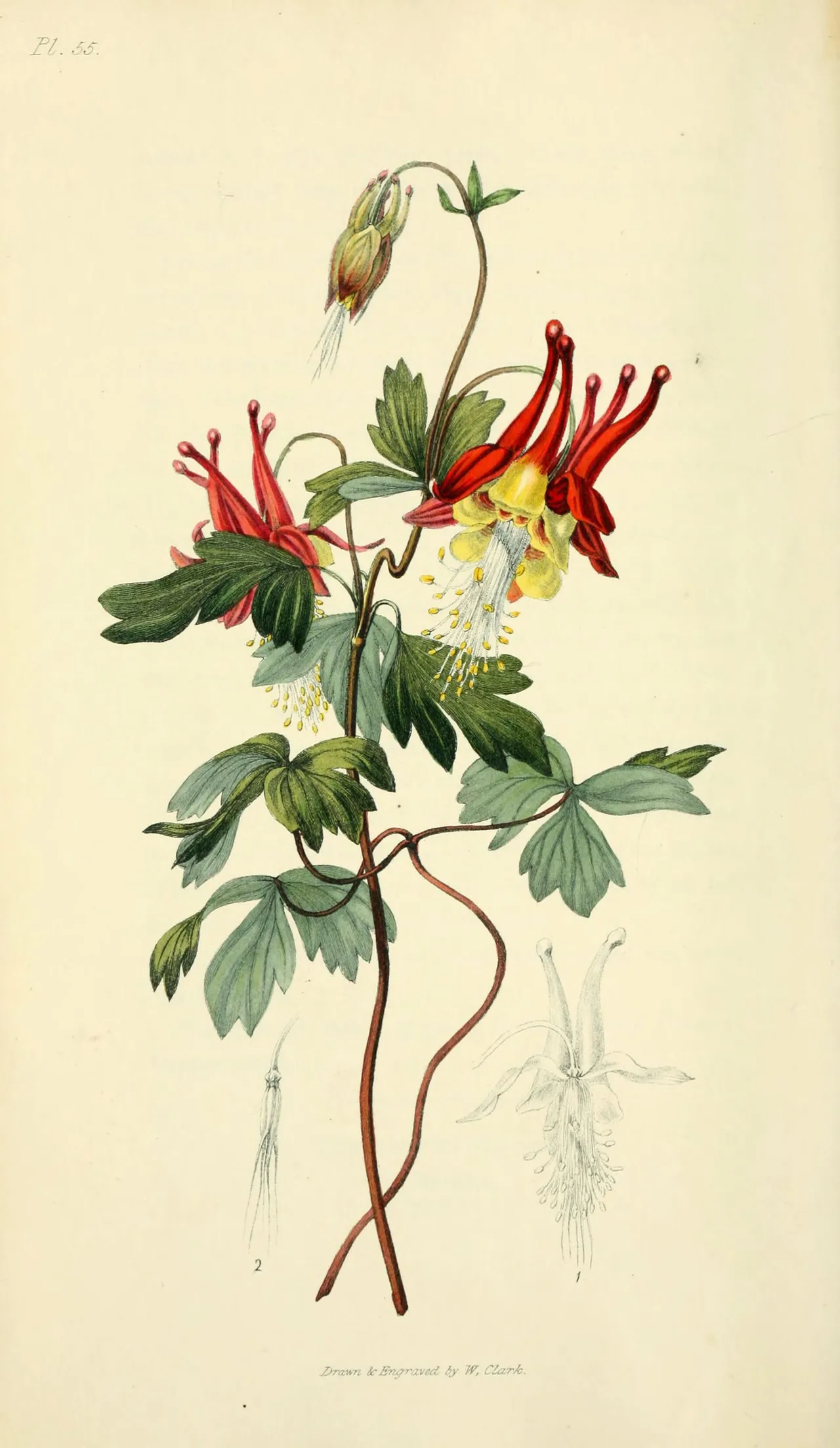 1 of 2
Native to much of the USA and southern Canada
North America east of the Rockies. From Manitoba and Saskatchewan to Ontario and Quebec, south through much of the eastern US. Disjunct populations in central Texas.
- Light Part shade to shade Sun tolerance
- Moisture Dry to moist Moisture preference
- Zones 3–9 Cold to heat range
- Bloom Feb–Jul Flowering time
- Height up to 3 ft to 0.9 m
- Life cycle Perennial Annual to perennial
In the garden
A woodland wildflower for part to full shade and dry to moist soil. At up to 3 ft, it suits shade gardens and woodland edges. It shrugs off drought once established. Hardy in USDA zones 3–9.
Growing conditions
Light
Full sun Partial shade Full shade
Moisture
Dry Moist Wet
Hardiness zones
Find your zone:
Pollinators & wildlife
- Bees Eastern Carpenter Bee
also Western Honey Bee, Brown-belted Bumble Bee, Two-spotted Bumble Bee +14 more
American Bumble Bee, Yellow-faced Bumble Bee, Bombus fervidus, Half-black Bumble Bee, Yellow-fronted Bumble Bee, Agapostemon texanus, Yellow-banded Bumble Bee, Flat-tailed Leafcutter Bee, Great Basin Bumble Bee, Rusty-patched Bumble Bee, Ceratina dupla, Triepeolus simplex, Lasioglossum cinctipes, Coelioxys alternata - Butterflies Spicebush Swallowtail also Canadian Tiger Swallowtail, Pale Swallowtail, Papilio cresphontes
- Hummingbirds Ruby-throated Hummingbird
- Also visited by
- Moths: Ipsilon Dart Moth, Maple Clearwing Moth
Butterflies that use this plant
Documented host and nectar records. Each links to a planting guide for that butterfly.
- Canadian tiger swallowtailnectar
- Eastern tiger swallowtailnectar
- Giant swallowtailnectar
- Pale swallowtailnectar
- Spicebush swallowtailnectar
Full plant details
Where it grows
- Habitat
- WoodlandThe wild plant community it grows in.
- Native range
- Much of the USA and southern CanadaUnited States (37): AL, AR, CT, DC, DE, FL, GA, IA, IL, IN, KS, KY, MA, MD, ME, MI, MN, MO, MS, NC, ND, NE, NH, NJ, NY, OH, OK, PA, RI, SC, SD, TN, TX, VA, VT, WI, WV. Canada (5): MB, NB, ON, QC, SK. Where it grows wild on its own, by state and province.
- Native distribution
- North America east of the Rockies. From Manitoba and Saskatchewan to Ontario and Quebec, south through much of the eastern US. Disjunct populations in central Texas.The same native range, usually more exact than the state list, and often noting where it has spread beyond it.
Growing conditions
- Light
- Part shade to shadeHow much sun it takes, from full sun to full shade.
- Moisture
- Dry to moistThe soil dampness it prefers, from dry to wet.
- Hardiness zones
- USDA 3–9 · Canadian 2–7The cold-to-heat climate range it survives.
- Soil
- Sandy, well-drained soils. Medium Loam, Sandy Loam, Sandy, Limestone-based. Not too richThe soils it grows in naturally.
- Soil texture
- Light to medium (sandy to loamy)The soil grade it prefers, from sand to clay.
- Soil pH
- Mildly acid to mildly alkalineThe acidity to alkalinity it tolerates (7 is neutral).
- Soil quality
- Low (tolerates poor soil)How rich a soil it needs. Many natives prefer lean soil and flop in rich beds.
- Water use
- Low to mediumHow thirsty it is, a rough guide to how often to water.
- Drought tolerance
- HighRelative to plants of the same type and region, inferred from where it grows, not a days-without-water figure.
Growth & form
- Height
- up to 3 ft (to 0.9 m)Typical mature height.
- Spread
- ~1 ft (0.3 m)How wide one plant gets, a guide to spacing.
- Life cycle
- PerennialWhether it lives a single season (annual), two (biennial), or returns for years (perennial).
- Growth rate
- ModerateA relative ranking versus other plants of the same type (USDA), not an absolute rate.
Flowers, foliage & fruit
- Type
- WildflowerWhat kind of plant it is.
- Bloom
- Feb–JulWhen it flowers.
- Flower color
- Red, Pink, YellowThe bloom color, or colors.
- Fruit/Seeds
- Cluster of dry folliclesThe seed or fruit it sets after flowering.
- Toxicity
- None knownWhether any part is poisonous to people or pets.