woodland wildflower
Aspen fleabane
Erigeron speciosus
Also known as Showy Fleabane
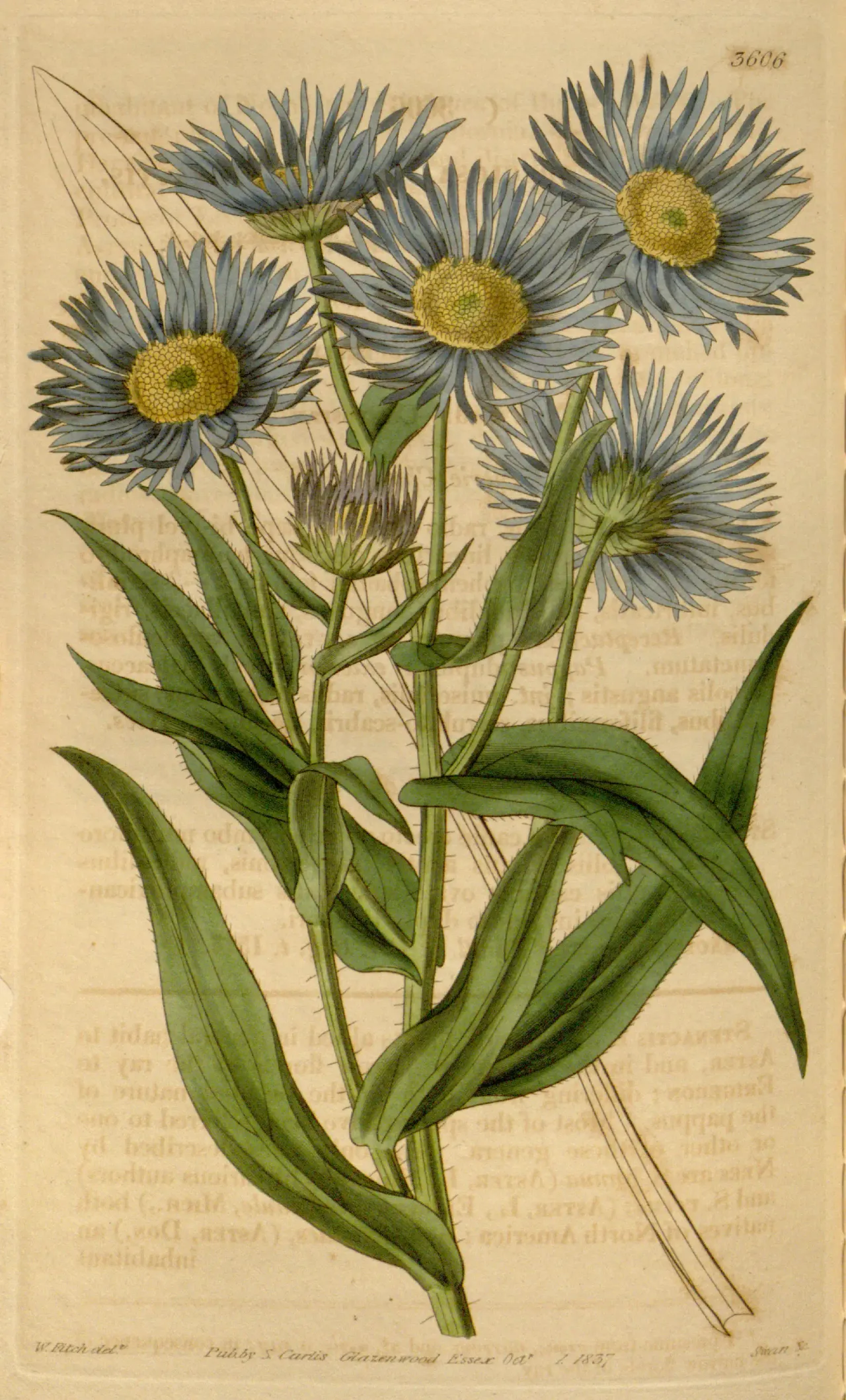 1 of 2
Native to the Southwest, the Rockies, and the Pacific Coast and southern Canada
Alberta to southern British Columbia, south to New Mexico and Arizona; also Black Hills and adjacent Wyoming
- Light Full sun Sun tolerance
- Moisture Moisture preference
- Zones 2–9 Cold to heat range
- Bloom Jun–Sep Flowering time
- Height up to 3 ft to 0.9 m
- Life cycle Perennial Annual to perennial
In the garden
A woodland wildflower for full sun. Its white flowers peak in July. At up to 3 ft, it suits shade gardens and woodland edges. Hardy in USDA zones 2–9.
Growing conditions
Light
Full sun Partial shade Full shade
Moisture
Dry Moist Wet
Hardiness zones
Find your zone:
When it blooms
The Aspen fleabane's white flowers bloom June to September, peaking in July. This midsummer display draws bees and butterflies.
Aspen fleabane blooms white, yellow, blue & purpleFoliage
Pollinators & wildlife
- Bees Yellow-faced Bumble Bee
also Western Honey Bee, Ligated Furrow Bee, Black-tailed Bumble Bee +47 more
Bombus fervidus, Red-belted Bumble Bee, Hunt's Bumble Bee, Fuzzy-Horned Bumble Bee, Two-form Bumble Bee, Orange-legged Furrow Bee, Yellow-fronted Bumble Bee, Tripartite Sweat Bee, California Bumble Bee, Nevada Bumble Bee, Great Basin Bumble Bee, Confusing Furrow Bee, Nearctic Bumble Bee, Yellowish Cuckoo Bumble bee, Sitka Bumble Bee, Indiscriminate Cuckoo Bumble Bee, Orange-tipped Wood-digger, Pugnacious Leafcutter Bee, White-shouldered Bumble Bee, Western Bumble Bee, Forest Bumble Bee, Bufflehead Mason Bee, Ceratina acantha, Green Small-Mason, frigid bumble bee, Golden-tailed Leafcutter Bee, Colorado Mason, Black-fronted turret bee, Osmia montana, Annulate Masked Bee, Incomplete Sweat Bee, Tiny Small carpenter, Heriades variolosa, Nevada Sweat Bee, Knerer's Sweat Bee, Inept Miner Bee, Costilla Miner Bee, Comma Sweat Bee, Osmia grindeliae, Panurginus cressoniellus, Andrena apacheorum, Ceratina neomexicana, Small Long-horned Bee, Melissodes lupinus, Hoplitis pilosifrons, Ceratina micheneri, Megachile pugnata pomonae - Butterflies Red Admiral
also Pearl Crescent, Gray Hairstreak, American Lady +56 more
Orange Sulphur, Clouded Sulphur, Checkered White, Common Wood-Nymph, Dun Skipper, Dainty Sulphur, Woodland Skipper, Silvery Blue, Green Comma, Northern Checkerspot, Atlantis Fritillary, Western White, Clodius Parnassian, Arctic Fritillary, Taxiles Skipper, Tailed Copper, Garita Skipperling, Mottled Duskywing, Mead's Sulphur, Northern Grizzled Skipper, Camillus Crescent, Ross's Alpine, Common Branded Skipper, Lycaena cupreus, Speyeria mormonia, Speyeria atlantis, Colias alexandra, Coenonympha pamphiloides, Emesis zela, Speyeria atlantis hesperis, Speyeria atlantis sorocko, Epidemia dorcas florus, Phyciodes batesii anasazi, Charon Satyr, Titania's Fritillary, Sagebrush Sooty Hairstreak, Plebejus glandon, Blue Copper, Greenish Blue, Cercyonis oetus, Leonard's Skipper, Strymon saepium, Plebejus saepiolus, Epidemia helloides, Lycaena heteronea, Speyeria zerene, Speyeria aphrodite, Speyeria coronis, Pine White, Cynthia cardui, Clossiana improba, Parnassius smintheus smintheus, Snow's Copper, Magdalena Alpine, Chlosyne palla whitneyi, Lilac-bordered Copper - Flower flies Margined Calligrapher
also Eurasian Drone Fly, Large-tailed Aphideater, Yellow-shouldered Drone Fly +13 more
Western Calligrapher, Forked Globetail, Black-footed Globetail, Poecilanthrax tegminipennis, Spot-winged Pond Fly, Villa harveyi, Narrow-banded Meadow Fly, Eurasian Smoothwing, Villa fulviana, grasshopper bee fly, Platycheirus stegnus, Paragus tibialis, Eupeodes lapponicus - Also visited by
- Moths: Lycaena rubidus sirius, Lycaena rubidus
- Wasps: Western Yellowjacket
- Beetles: Convergent Lady Beetle
Butterflies that use this plant
Documented host and nectar records. Each links to a planting guide for that butterfly.
- American ladynectar
- Aphrodite fritillarynectar
- Checkered whitenectar
- Clouded sulphurnectar
- Common wood-nymphnectar
- Dainty sulphurnectar
- Gray hairstreaknectar
- Hedgerow hairstreaknectar
- Orange sulphurnectar
- Pearl crescentnectar
- Red admiralnectar
- Silver-bordered fritillarynectar
- Silvery bluenectar
Full plant details
Where it grows
- Habitat
- WoodlandThe wild plant community it grows in.
- Native range
- The Southwest, the Rockies, and the Pacific Coast and southern CanadaUnited States (11): AZ, CO, ID, MT, NM, NV, OR, SD, UT, WA, WY. Canada (2): AB, BC. Where it grows wild on its own, by state and province.
- Native distribution
- Alberta to southern British Columbia, south to New Mexico and Arizona; also Black Hills and adjacent WyomingThe same native range, usually more exact than the state list, and often noting where it has spread beyond it.
Growing conditions
- Light
- Full sunHow much sun it takes, from full sun to full shade.
- Hardiness zones
- USDA 2–9 · Canadian 1–8The cold-to-heat climate range it survives.
- Soil
- Dry to moist soilsThe soils it grows in naturally.
Growth & form
- Height
- up to 3 ft (to 0.9 m)Typical mature height.
- Life cycle
- PerennialWhether it lives a single season (annual), two (biennial), or returns for years (perennial).
Flowers, foliage & fruit
- Type
- WildflowerWhat kind of plant it is.
- Bloom
- Jun–SepWhen it flowers.
- Flower color
- White, Yellow, Blue, PurpleThe bloom color, or colors.
- Toxicity
- None knownWhether any part is poisonous to people or pets.