prairie wildflower
Common woolly sunflower
Eriophyllum lanatum
Also known as Oregon Sunshine
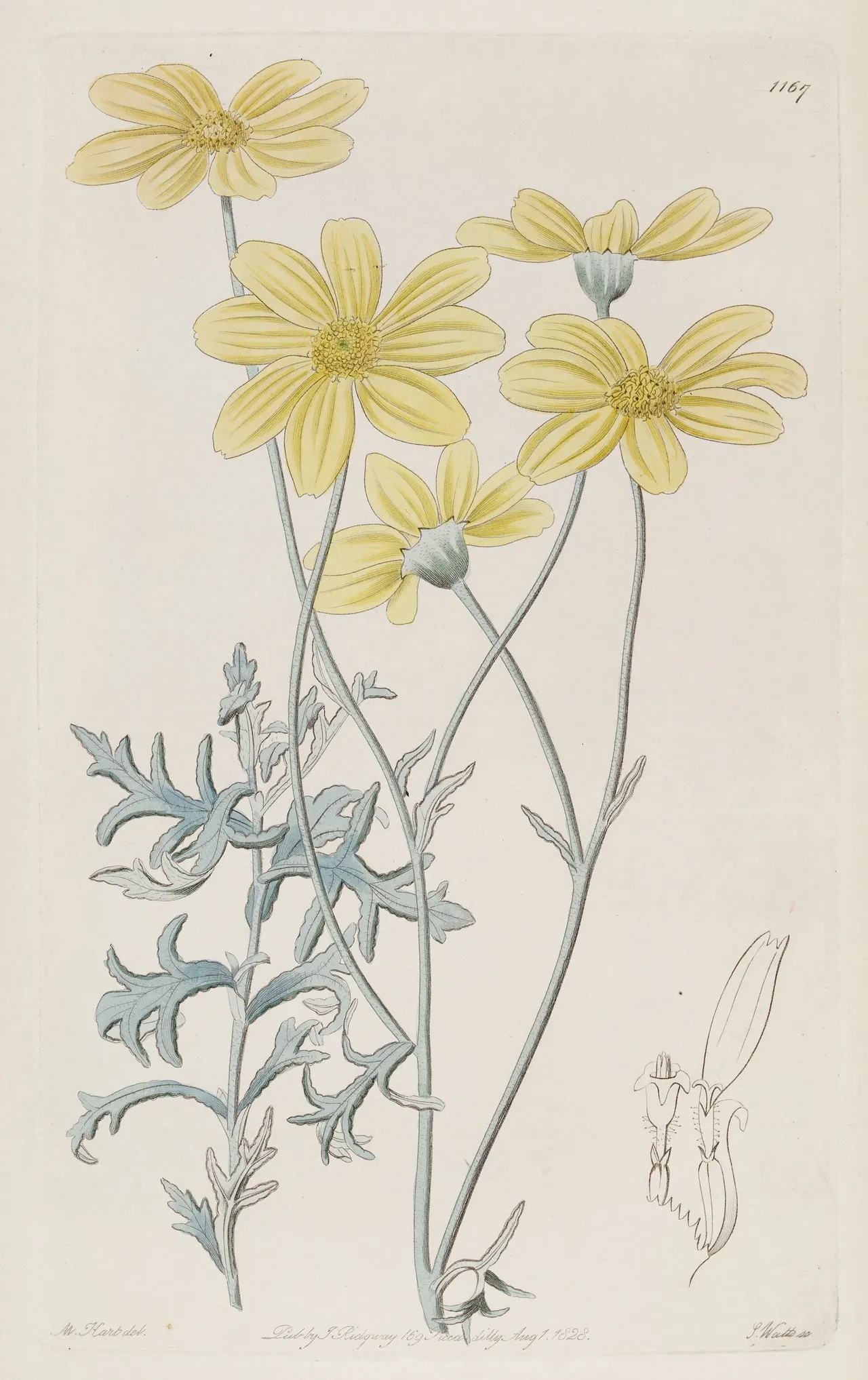 1 of 2
Native to California, Idaho, Montana, Nevada, Oregon, Utah, Washington, and Wyoming and southern Canada
Southern California (more common northward) to British Columbia, east to Rocky Mountains and Great Basin. Formerly also on Guadalupe Island off Baja California, Mexico.
- Light Full sun Sun tolerance
- Moisture Dry Moisture preference
- Zones 3–10 Cold to heat range
- Bloom Apr–Aug Flowering time
- Height up to 40 in to 102 cm
- Life cycle Annual or perennial Annual to perennial
In the garden
A prairie wildflower for full sun and lean, dry soil. Its yellow flowers peak in June. At up to 40 in, it suits meadows and sunny borders. It shrugs off drought once established. Hardy in USDA zones 3–10.
Growing conditions
Hardiness zones
When it blooms
The Common woolly sunflower's yellow flowers bloom April to August, peaking in June. This early-summer display draws bees and butterflies.
Common woolly sunflower blooms yellowFoliage
Pollinators & wildlife
- Bees Brown-belted Bumble Bee
also Western Honey Bee, Yellow-faced Bumble Bee, Ligated Furrow Bee +56 more
Black-tailed Bumble Bee, Bicolored Striped Sweat Bee, Bombus fervidus, Red-belted Bumble Bee, Fuzzy-Horned Bumble Bee, European Woolcarder Bee, Two-form Bumble Bee, Orange-legged Furrow Bee, Yellow-fronted Bumble Bee, Agapostemon texanus, Modest Masked Bee, Confusing Furrow Bee, Western Leafcutter Bee, Urbane Digger Bee, Yellowish Cuckoo Bumble bee, Sitka Bumble Bee, Indiscriminate Cuckoo Bumble Bee, Wide-striped Sweat Bee, Prunus Miner Bee, White-shouldered Bumble Bee, Tansy Mustard Sweat Bee, Van Dyke's Bumble Bee, Black-and-gray Leafcutter Bee, Ceratina acantha, Colorado Mason, Small-handed Leaf-cutter Bee, Least Cellophane-cuckoo Bee, Cresson's Sweat Bee, Texas Mason Bee, Very Smooth Sweat Bee, Incomplete Sweat Bee, Tiny Small carpenter, Black-tipped Miner Bee, Olympia Sweat Bee, Nevada Sweat Bee, Tooth-bellied Mason Bee, Knerer's Sweat Bee, Shaggy Furrow Bee, Subtle Miner Bee, Nomada (Nomada) sp. 3, Nomada (Nomada) sp. 4, Stelis "albosignata", Nomada (Nomada) sp. 1, Nomada (Nomada) sp. 2, Lasioglossum pacificum, Narrow-legged Miner Bee, Titus's Sweat Bee, Ceratina micheneri, Cinquefoil Masked Bee, Golden-haired Miner Bee, Coelioxys sodalis, Osmia dolerosa, Lasioglossum zonulum, Bombus vancouverensis vancouverensis, Foothill Carpenter Bee, Bombus flavidus flavidus - Butterflies Painted Lady
also Gray Hairstreak, Common Checkered-Skipper and Allies, Variable Checkerspot +27 more
Lorquin's Admiral, Acmon Blue, Northern Cloudywing, West Coast Lady, Milbert's Tortoiseshell, Northern Checkerspot, Dreamy Duskywing, Propertius Duskywing, Clodius Parnassian, Persius Duskywing, Pacific Fritillary, Lotus Hairstreak, Juba Skipper, Rural Skipper, California Hairstreak, Gorgon Copper, Cedar Hairstreak, Zerene eurydice, Hesperia colorado mattoonorum, Rice's Blue, Occidryas colon, Chlosyne leanira, Muir's Hairstreak, Incisalia irioides, Eresia aveyrona mylitta, Mitoura gryneus, Incisalia eryphon - Flower flies Margined Calligrapher
also Common Drone Fly, Oblique Streaktail, Thick-legged Hover Fly +21 more
Eurasian Drone Fly, Greater Bee Fly, Large-tailed Aphideater, The Merodon equestris Group, Common Grass Skimmer, Western Calligrapher, Forked Globetail, Common Lagoon Fly, Yellow-haired Sun Fly, Black-footed Drone Fly, Black-footed Globetail, Hourglass Drone Fly, Conophorus sackenii, Straight-banded Smoothtail, Eurasian Smoothwing, Merodon Merodon equestris, Chrysotoxum fasciatus, Conophorus columbiensis, Platycheirus stegnus, Thevenetimyia celer, Orange-spotted Drone Fly - Also visited by
- Beetles:
Convergent Lady Beetle, Chaparral Leatherwing Beetle +2 more
Dandelion Anthaxia Beetle, Broom Seed Beetle - Moths:
Small Heliothodes Moth, Drasteria divergens +1 more
Schinia vacciniae
- Beetles:
Butterflies that use this plant
Documented host and nectar records. Each links to a planting guide for that butterfly.
- Acmon bluenectar
- Coral hairstreaknectar
- Eastern pine elfinnectar
- Gray hairstreaknectar
- Juniper hairstreaknectar
- Milbert's tortoiseshellnectar
- Painted ladynectar
Full plant details
Where it grows
- Habitat
- PrairieThe wild plant community it grows in.
- Native range
- California, Idaho, Montana, Nevada, Oregon, Utah, Washington, and Wyoming and southern CanadaUnited States (8): CA, ID, MT, NV, OR, UT, WA, WY. Canada (1): BC. Where it grows wild on its own, by state and province.
- Native distribution
- Southern California (more common northward) to British Columbia, east to Rocky Mountains and Great Basin. Formerly also on Guadalupe Island off Baja California, Mexico.The same native range, usually more exact than the state list, and often noting where it has spread beyond it.
Growing conditions
- Light
- Full sunHow much sun it takes, from full sun to full shade.
- Moisture
- DryThe soil dampness it prefers, from dry to wet.
- Hardiness zones
- USDA 3–10 · Canadian 1–9The cold-to-heat climate range it survives.
- Soil
- Dry, sandy soilThe soils it grows in naturally.
- Drought tolerance
- HighRelative to plants of the same type and region, inferred from where it grows, not a days-without-water figure.
Growth & form
- Height
- up to 40 in (to 102 cm)Typical mature height.
- Life cycle
- Annual or perennialWhether it lives a single season (annual), two (biennial), or returns for years (perennial).
Flowers, foliage & fruit
- Type
- WildflowerWhat kind of plant it is.
- Bloom
- Apr–AugWhen it flowers.
- Flower color
- YellowThe bloom color, or colors.
- Fruit/Seeds
- ripens May–OctThe seed or fruit it sets after flowering.
- Toxicity
- None knownWhether any part is poisonous to people or pets.