prairie wildflower
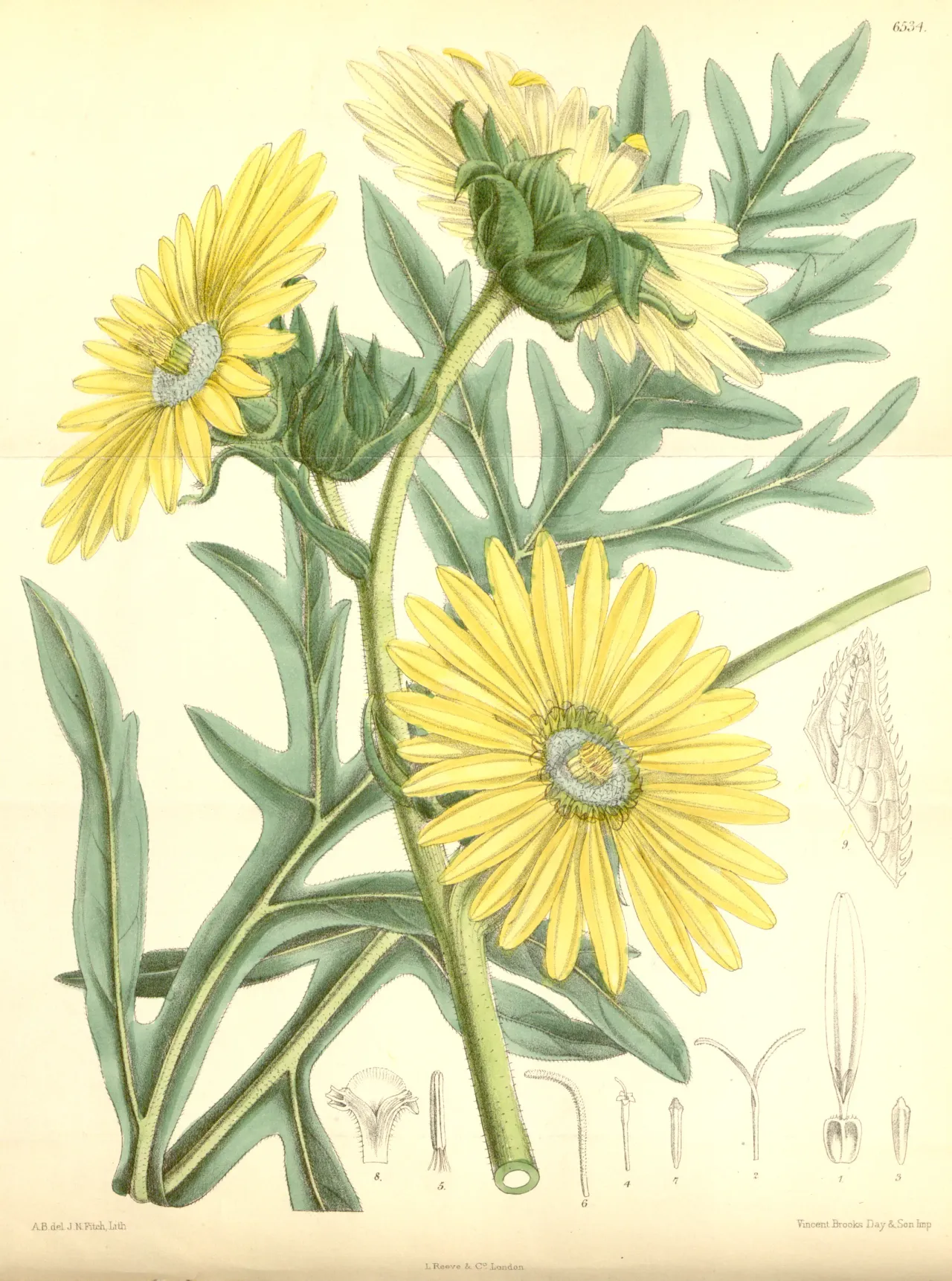
Compass plant
Silphium laciniatum
Also known as Compassplant
 1 of 2
Native to much of the USA and southern Canada
Ohio to Louisiana, west to eastern Great Plains
- Light Full sun Sun tolerance
- Moisture Dry Moisture preference
- Zones 4–9 Cold to heat range
- Bloom Jun–Aug Flowering time
- Height up to 10 ft to 3.0 m
- Life cycle Perennial Annual to perennial
In the garden
A prairie wildflower for full sun and lean, dry soil. Its yellow flowers peak in July. At up to 10 ft, it needs room in meadows and sunny borders. It shrugs off drought once established. Hardy in USDA zones 4–9.
Growing conditions
Light
Full sun Partial shade Full shade
Moisture
Dry Moist Wet
Hardiness zones
Find your zone:
When it blooms
The Compass plant's yellow flowers bloom June to August, peaking in July. This midsummer display draws bees and flower flies.
Compass plant blooms yellowFoliage
Pollinators & wildlife
- Bees Common Eastern Bumble Bee
also Western Honey Bee, Brown-belted Bumble Bee, American Bumble Bee +26 more
Ligated Furrow Bee, Bicolored Striped Sweat Bee, Red-belted Bumble Bee, Two-spotted Longhorn Bee, Black-and-gold Bumble Bee, Agapostemon texanus, Carpenter-mimic Leafcutter Bee, Pugnacious Leafcutter Bee, Bristle Sweat Bee, Cherry Mining Bee, Agile Longhorn Bee, Megachile brevis, Ceratina dupla, False Sunflower Cuckoo Nomad Bee, Sphecodes smilacinae, Melissodes coloradensis, Ptilothrix bombiformis, Drury's Long-horned Bee, Andrena miserabilis, Eucera belfragei, Svastra compta, Megachile pyrrhothorax, Lunate Longhorn-cuckoo Bee, Svastra obliqua, Agapostemon viridulus, Triepeolus concavus - Flower flies Margined Calligrapher
also Transverse-banded Flower Fly, Oblique Streaktail, Yellow-shouldered Drone Fly +4 more
Villa alternata, grasshopper bee fly, Shiny Thickleg, Geron rufipes - Butterflies Eastern Tiger Swallowtail
also Black Swallowtail, Gray Hairstreak, Arogos Skipper +2 more
Prairie Arogos Skipper, Anosia plexippus - Also visited by
- Beetles:
Red Milkweed Beetle, Honeylocust Agrilus +1 more
Chlorophorus glaucus
- Beetles:
Butterflies that use this plant
Documented host and nectar records. Each links to a planting guide for that butterfly.
- Gorgone checkerspotcaterpillar host
- Black swallowtailnectar
- Eastern tiger swallowtailnectar
- Gray hairstreaknectar
Full plant details
Where it grows
- Habitat
- PrairieThe wild plant community it grows in.
- Native range
- Much of the USA and southern CanadaUnited States (20): AL, AR, IA, IL, IN, KS, KY, LA, MI, MN, MO, MS, ND, NE, OH, OK, SD, TN, TX, WI. Canada (1): ON. Where it grows wild on its own, by state and province.
- Native distribution
- Ohio to Louisiana, west to eastern Great PlainsThe same native range, usually more exact than the state list, and often noting where it has spread beyond it.
Growing conditions
- Light
- Full sunHow much sun it takes, from full sun to full shade.
- Moisture
- DryThe soil dampness it prefers, from dry to wet.
- Hardiness zones
- USDA 4–9 · Canadian 5–7The cold-to-heat climate range it survives.
- Soil
- Various well-drained soilsThe soils it grows in naturally.
- Soil texture
- Light to heavy (sandy to clay)The soil grade it prefers, from sand to clay.
- Soil pH
- Mildly acid to mildly alkalineThe acidity to alkalinity it tolerates (7 is neutral).
- Drought tolerance
- HighRelative to plants of the same type and region, inferred from where it grows, not a days-without-water figure.
Growth & form
- Height
- up to 10 ft (to 3.0 m)Typical mature height.
- Spread
- ~2 ft (0.6 m)How wide one plant gets, a guide to spacing.
- Life cycle
- PerennialWhether it lives a single season (annual), two (biennial), or returns for years (perennial).
Flowers, foliage & fruit
- Type
- WildflowerWhat kind of plant it is.
- Bloom
- Jun–AugWhen it flowers.
- Flower color
- YellowThe bloom color, or colors.
- Fruit/Seeds
- Winged achene; ripens Jul–OctThe seed or fruit it sets after flowering.
- Toxicity
- None knownWhether any part is poisonous to people or pets.