woodland wildflower
Dutchman's breeches
Dicentra cucullaria
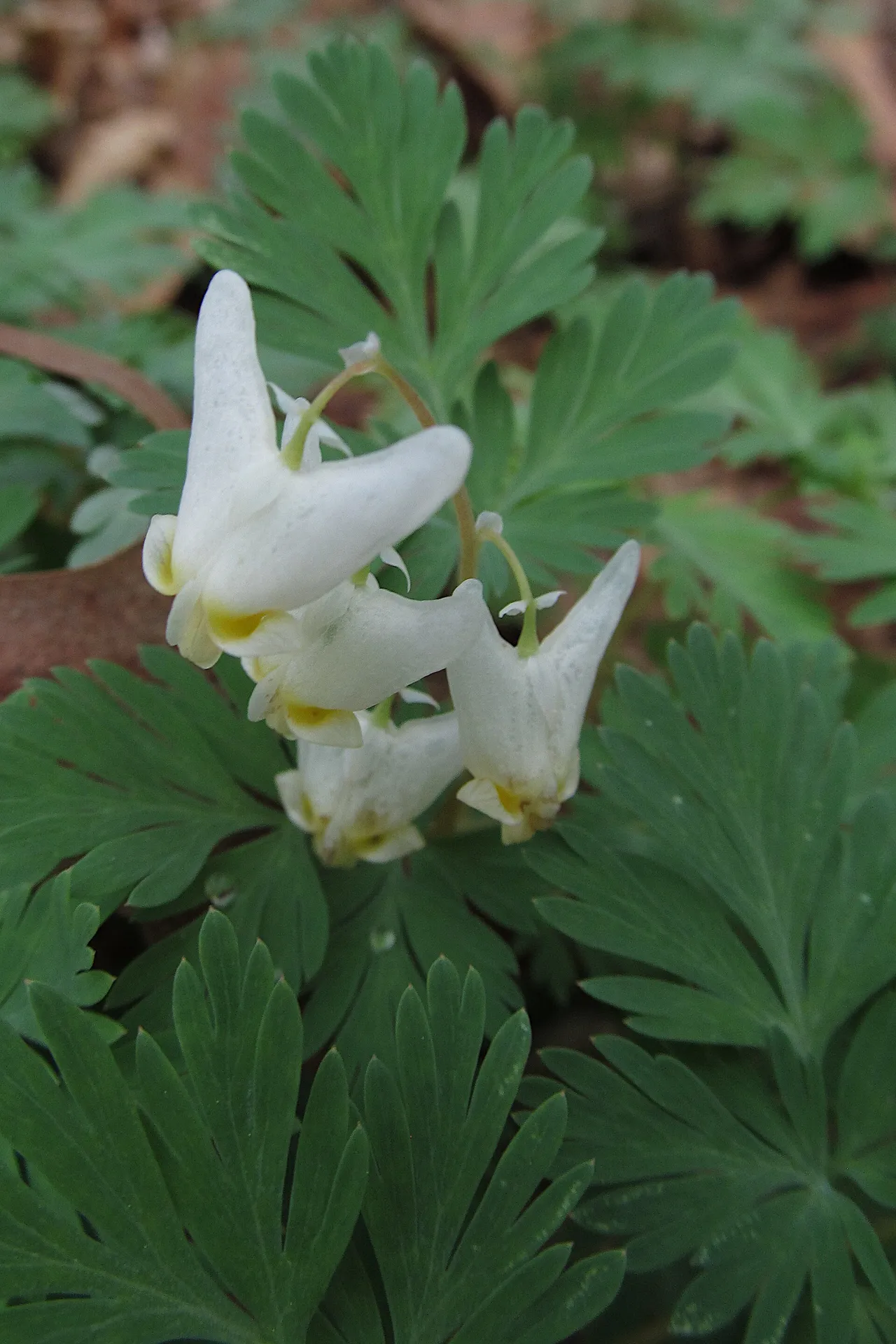 1 of 2
Native to much of the USA and southern Canada
Eastern Quebec to Minnesota, south to northern Georgia, Alabama and eastern Kansas; also near the Columbia River in Washington, Oregon and Idaho
- Light Full sun to shade Sun tolerance
- Moisture Moist Moisture preference
- Zones 3–8 Cold to heat range
- Bloom Apr–May Flowering time
- Height up to 1 ft to 0.3 m
- Life cycle Perennial Annual to perennial
In the garden
A woodland wildflower for sun through shade and evenly moist soil. At up to 1 ft, it tucks into shade gardens and woodland edges. Hardy in USDA zones 3–8.
Growing conditions
Light
Full sun Partial shade Full shade
Moisture
Dry Moist Wet
Hardiness zones
Find your zone:
Pollinators & wildlife
- Bees Common Eastern Bumble Bee
also Western Honey Bee, Brown-belted Bumble Bee, Two-spotted Bumble Bee +27 more
American Bumble Bee, Tricolored Bumble Bee, Bombus fervidus, Perplexing Bumble Bee, Black-and-gold Bumble Bee, Half-black Bumble Bee, Yellow-banded Bumble Bee, Rusty-patched Bumble Bee, Blue Orchard Bee, Carlin's Mining Bee, Black-and-yellow Nomad Bee, Bufflehead Mason Bee, Anthophora ursina, Colletes nudus, Triepeolus simplex, Nelumbo Masked Bee, Big-cheeked Angled-Mason, Heriades variolosa, Osmia collinsiae, Sphecodes confertus, Coelioxys alternata, Pseudopanurgus parvus, Nomada parva, Trout-lily Mining Bee, Eucera belfragei, Eucera dubitata, Blueberry Digger Bee - Butterflies Eastern Tiger Swallowtail
also Red Admiral, Protographium marcellus, Little Yellow +1 more
Anosia plexippus - Flower flies Eastern Calligrapher also Greater Bee Fly, Broad-headed Marsh Fly, Epistrophe emarginata
- Also visited by
- Beetles: Mordellistena comata, Onthophagus pennsylvanicus
- Moths: Subgothic and Tricose Darts
Butterflies that use this plant
Documented host and nectar records. Each links to a planting guide for that butterfly.
- Eastern tiger swallowtailnectar
- Little yellownectar
- Red admiralnectar
- Zebra swallowtailnectar
Full plant details
Where it grows
- Habitat
- WoodlandThe wild plant community it grows in.
- Native range
- Much of the USA and southern CanadaUnited States (34): AL, AR, CT, DC, GA, IA, ID, IL, IN, KS, KY, MA, MD, ME, MI, MN, MO, MS, NC, NE, NH, NJ, NY, OH, OR, PA, RI, SC, TN, VA, VT, WA, WI, WV. Canada (6): MB, NB, NS, ON, PE, QC. Where it grows wild on its own, by state and province.
- Native distribution
- Eastern Quebec to Minnesota, south to northern Georgia, Alabama and eastern Kansas; also near the Columbia River in Washington, Oregon and IdahoThe same native range, usually more exact than the state list, and often noting where it has spread beyond it.
Growing conditions
- Light
- Full sun to shadeHow much sun it takes, from full sun to full shade.
- Moisture
- MoistThe soil dampness it prefers, from dry to wet.
- Hardiness zones
- USDA 3–8 · Canadian 3–7The cold-to-heat climate range it survives.
- Soil
- Humus-rich, acid to neutral soils. Tolerates limestoneThe soils it grows in naturally.
- Soil texture
- Light to medium (sandy to loamy)The soil grade it prefers, from sand to clay.
- Soil pH
- Acid to neutralThe acidity to alkalinity it tolerates (7 is neutral).
Growth & form
- Height
- up to 1 ft (to 0.3 m)Typical mature height.
- Spread
- ~1 ft (0.3 m)How wide one plant gets, a guide to spacing.
- Life cycle
- PerennialWhether it lives a single season (annual), two (biennial), or returns for years (perennial).
- Growth rate
- ModerateA relative ranking versus other plants of the same type (USDA), not an absolute rate.
Flowers, foliage & fruit
- Type
- WildflowerWhat kind of plant it is.
- Bloom
- Apr–MayWhen it flowers.
- Flower color
- White, YellowThe bloom color, or colors.
- Toxicity
- Poisonous if eatenWhether any part is poisonous to people or pets.