prairie wildflower
Field locoweed
Oxytropis campestris
Also known as Northern Yellow Locoweed, Northern Field Oxytrope
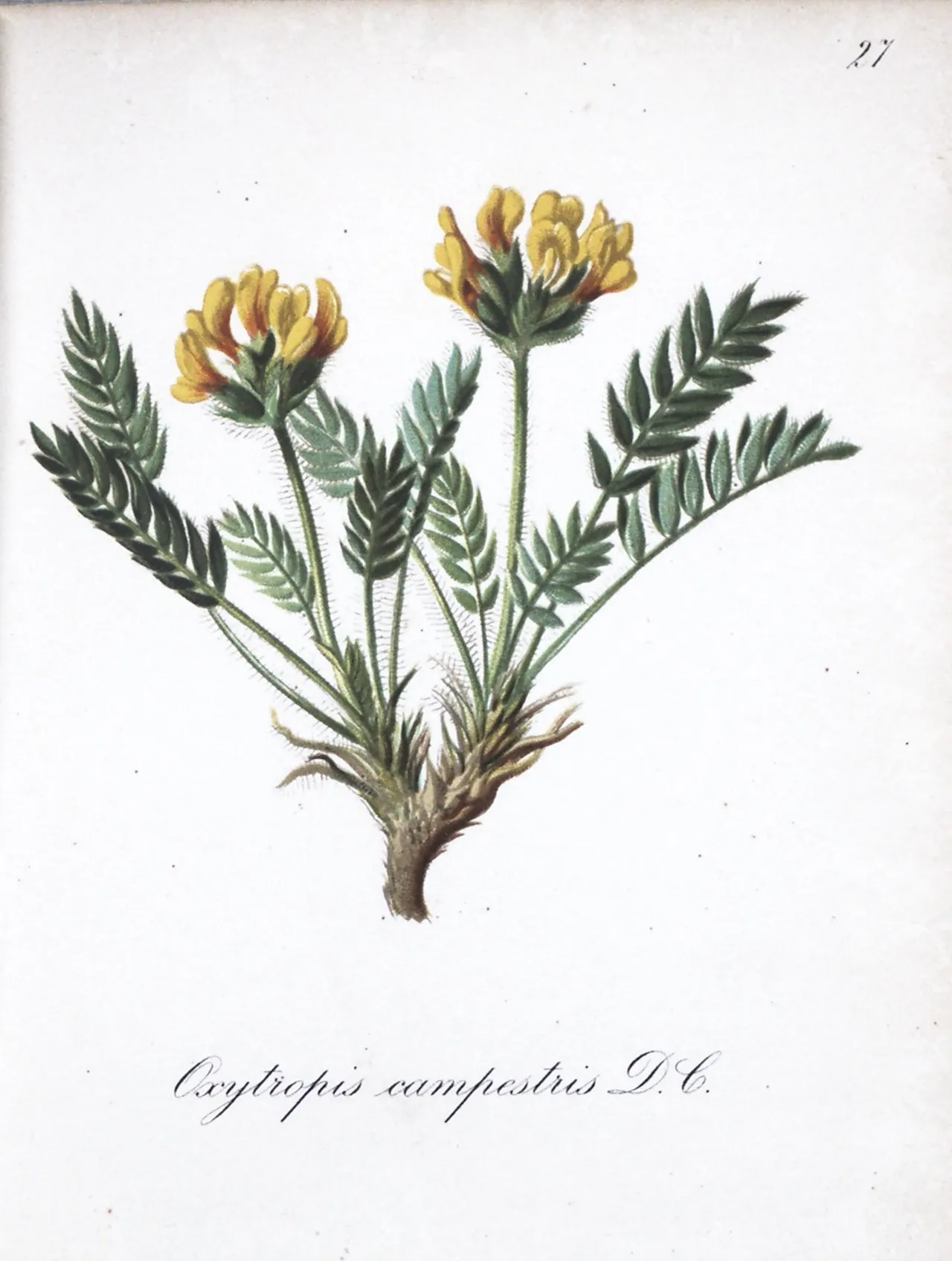 1 of 3
Native to the Rockies and the Pacific Coast and southern Canada
Northern Alaska to Labrador, southern in the western mountains and the Black Hills
- Light Full sun Sun tolerance
- Moisture Moisture preference
- Zones 1–8 Cold to heat range
- Bloom May–Jul Flowering time
- Height up to 1 ft to 0.3 m
- Life cycle Perennial Annual to perennial
In the garden
A prairie wildflower for full sun. At up to 1 ft, it tucks into meadows and sunny borders. Hardy in USDA zones 1–8.
Growing conditions
Light
Full sun Partial shade Full shade
Moisture
Dry Moist Wet
Hardiness zones
Find your zone:
Pollinators & wildlife
- Bees Red-belted Bumble Bee
also Bombus fervidus, Fuzzy-Horned Bumble Bee, Yellow-fronted Bumble Bee +53 more
Nevada Bumble Bee, Confusing Furrow Bee, Nearctic Bumble Bee, Wilke's Mining Bee, White-shouldered Bumble Bee, Forest Bumble Bee, Bufflehead Mason Bee, frigid bumble bee, Western Blue Orchard Bee, Black-and-green Metallic-Sweat bee, Osmia integra, Silver-fronted Small-Mason, white-winged sweat bee, Osmia juxta, White-sided Mason Bee, Bombus balteatus, Osmia steinmanni, Nomada rhenana, Lasioglossum lissonotum, Lasioglossum quadrisignatum, White-tipped Leafcutter Bee, Eucera chrysopyga, Osmia tergestensis, Noble Nomad, Lasioglossum nigripes, black-brushed leafcutter bee, Banded Mud Bee, Clover Blunt-horn, Osmia mustelina, Lot's Woolcarder, Pinewood Mason Bee, Unexpected Bumble Bee, Megachile pyrenaica, Osmia viridana, Lasioglossum marginellum, Small Shiny Furrow Bee, Andrena similis, Ravoux's Small-Mason, Lasioglossum glabriusculum, Anthophora aestivalis, Osmia gallarum, Osmia rufohirta, Mountain Mason Bee, Large Meadow Mining Bee, Andrena intermedia, Clay Bumble Bee, Lasioglossum griseolum, Hoplitis hypocrita, Osmia iridis, Monk Longhorn, Edwards's Long-horned Bee, Osmia longula, McKay's Western Bumble Bee - Butterflies Silver-spotted Skipper
also Clouded Sulphur, Canadian Tiger Swallowtail, Silvery Blue +1 more
Hobomok Skipper - Beetles Three-banded Lady Beetle also Judolia instabilis, Judolia quadrata
- Also visited by
- Moths: Bedstraw Hawkmoth
Butterflies that use this plant
Documented host and nectar records. Each links to a planting guide for that butterfly.
- Canadian tiger swallowtailnectar
- Clouded sulphurnectar
- Eastern tiger swallowtailnectar
- Silver-spotted skippernectar
- Silvery bluenectar
Full plant details
Where it grows
- Habitat
- PrairieThe wild plant community it grows in.
- Native range
- The Rockies and the Pacific Coast and southern CanadaUnited States (13): AK, CO, ID, ME, MN, MT, ND, OR, SD, UT, WA, WI, WY. Canada (3): NB, NS, SK. Where it grows wild on its own, by state and province.
- Native distribution
- Northern Alaska to Labrador, southern in the western mountains and the Black HillsThe same native range, usually more exact than the state list, and often noting where it has spread beyond it.
Growing conditions
- Light
- Full sunHow much sun it takes, from full sun to full shade.
- Hardiness zones
- USDA 1–8 · Canadian 0–8The cold-to-heat climate range it survives.
- Soil
- Sands & gravelsThe soils it grows in naturally.
Growth & form
- Height
- up to 1 ft (to 0.3 m)Typical mature height.
- Life cycle
- PerennialWhether it lives a single season (annual), two (biennial), or returns for years (perennial).
Flowers, foliage & fruit
- Type
- WildflowerWhat kind of plant it is.
- Bloom
- May–JulWhen it flowers.
- Flower color
- White, YellowThe bloom color, or colors.
- Toxicity
- None knownWhether any part is poisonous to people or pets.