wetland wildflower
Giant sunflower
Helianthus giganteus
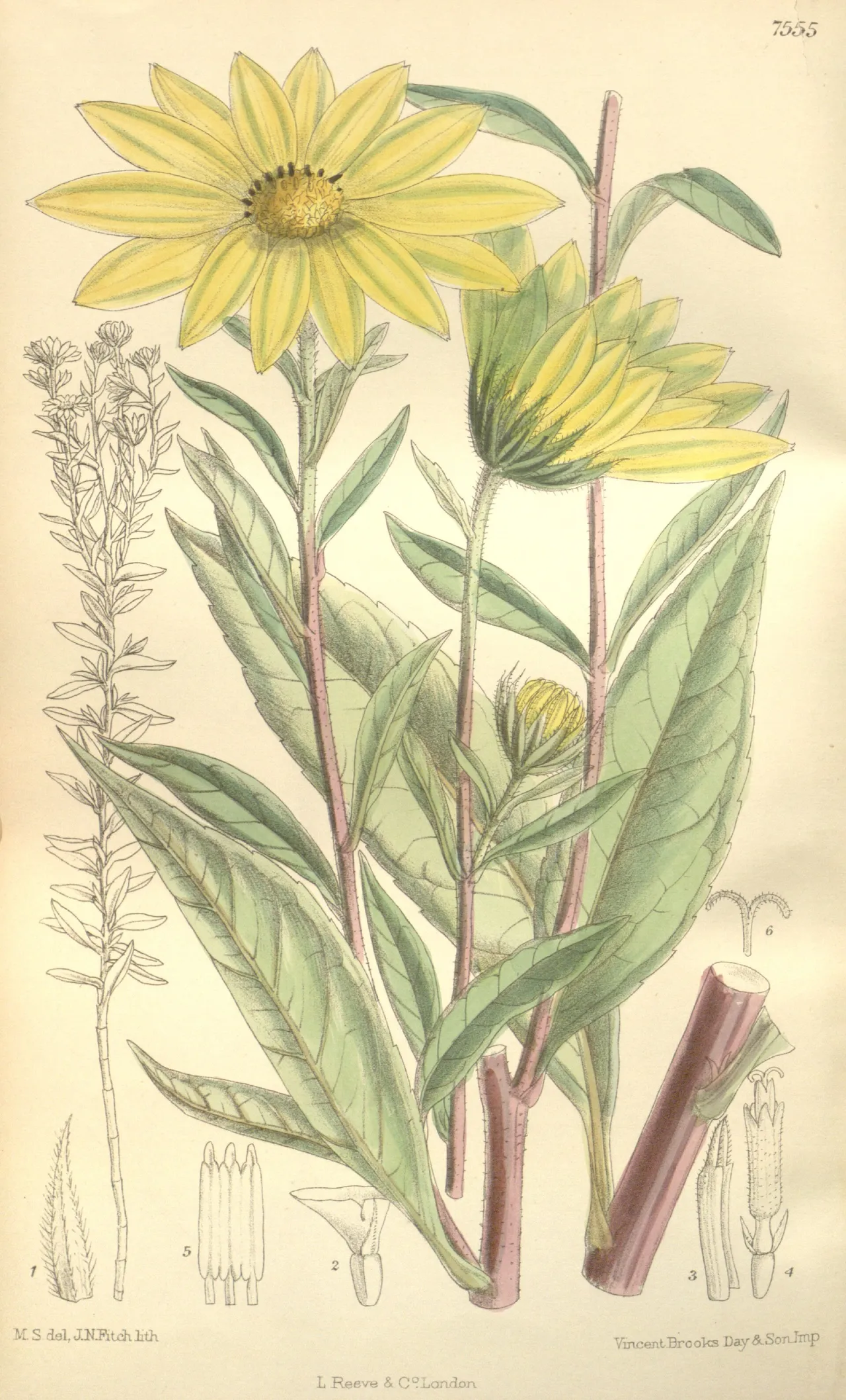 1 of 2
Native to much of the USA and southern Canada
New York and Ontario to Minnesota, south to Georgia and Kentucky; naturalized northeastward
- Light Full sun Sun tolerance
- Moisture Moist to wet Moisture preference
- Zones 3–9 Cold to heat range
- Bloom Aug–Oct Flowering time
- Height up to 12 ft to 3.7 m
- Life cycle Perennial Annual to perennial
In the garden
A wetland wildflower for full sun and consistently moist to wet soil. Its yellow flowers peak in September. At up to 12 ft, it needs room in rain gardens, pond edges, and damp low spots. Hardy in USDA zones 3–9.
Growing conditions
Light
Full sun Partial shade Full shade
Moisture
Dry Moist Wet
Hardiness zones
Find your zone:
When it blooms
The Giant sunflower's yellow flowers bloom August to October, peaking in September. This early-fall display draws bees and butterflies.
Giant sunflower blooms yellowFoliage
Pollinators & wildlife
- Bees Common Eastern Bumble Bee
also Brown-belted Bumble Bee, American Bumble Bee, Ligated Furrow Bee +136 more
Tricolored Bumble Bee, Pure Green Sweat bee, European Woolcarder Bee, Half-black Bumble Bee, Lemon Cuckoo Bumble Bee, Brown-winged Striped Sweat Bee, Carpenter-mimic Leafcutter Bee, Oblong Woolcarder Bee, Confusing Furrow Bee, Pugnacious Leafcutter Bee, Cryptic Bumble Bee, Sanderson's Bumble Bee, Slender-faced Masked Bee, Sunflower Mining Bee, Patchwork Leafcutter Bee, Squash Longhorn-Cuckoo, Punctate Masked Bee, Annulate Masked Bee, Hairy masked Bee, Lasioglossum nitidiusculum, Golden-tailed Woodborer, Little Masked Bee, Common Masked Bee, Large-headed Armoured-Resin bee, Nomada bifasciata, Robust Small-Mason, Black Masked Bee, Large Masked Bee, Spined Mason Bee, Golden Furrow Bee, Linsenmaier's Nomad, Lasioglossum sabulosum, Lasioglossum pleurospeculum, Lasioglossum podolicum, Lasioglossum subfulvicorne, Lasioglossum laevidorsum, Hylaeus glacialis, Hylaeus pfankuchi, Snowy Masked Bee, Lasioglossum tarsatum, Hylaeus moricei, Nomada pleurosticta, Andrena amieti, Lasioglossum euboeense, Lasioglossum lissonotum, Lasioglossum alpigenum, Halictus carinthiacus, Hylaeus pilosulus, Heriades crenulatus, Translucent Miner, Lasioglossum laeve, Hylaeus bifasciatus, Femoral Nomad, Grey-banded Mining Bee, Buff-tailed Mining Bee, Lasioglossum aeratum, Lasioglossum subfasciatum, Colletes mlokossewiczi, Hylaeus duckei, Hylaeus euryscapus, Small-headed Resin Bee, Hylaeus crassanus, Hylaeus alpinus, Eucera nigrifacies, Megachile genalis, Nomada facilis, Hylaeus gibbus, Osmia labialis, Megachile flabellipes, White-lipped Yellow-face Bee, Panurgus dentipes, Lasioglossum bluethgeni, Hylaeus sinuatus, Small Shiny Furrow Bee, Lasioglossum marginellum, Halictus leucaheneus, Chalk Yellow-face Bee, Lasioglossum majus, Hylaeus tyrolensis, Dotted Masked Bee, Osmia scutellaris, Narrowed Masked Bee, Forest Masked Bee, Shiny Dufourea, Polished Miner, Orange-vented Mason Bee, Broad-banded Nomad Bee, Nomada integra, Osmia mustelina, Hylaeus kahri, Lasioglossum subhirtum, Megachile melanopyga, Onion Yellow-face Bee, Halictus seladonius, Gredler's Masked Bee, Andrena livens, Pseudapis diversipes, Ridge-gastered Furrow Bee, Lasioglossum albocinctum, Common Pantaloon Bee, Lasioglossum lineare, Bare-saddled Cellophane Bee, Hairy-saddled Cellophane Bee, Horned Masked Bee, Lasioglossum minutulum, Great Banded Furrow Bee, Lasioglossum discum, Lasioglossum marginatum, Lasioglossum interruptum, Hylaeus imparilis, White-jawed Yellow-face Bee, Fringed Furrow Bee, Andrena rhenana, Lasioglossum nigripes, Osmia rufohirta, Andrena nigroolivacea, Hylaeus styriacus, Short-horned Yellow-face Bee, Small Shaggy Bee, Hylaeus difformis, Snowy Mason, Large Shaggy Bee, Hylaeus taeniolatus, Davies' Cellophane Bee, Lasioglossum lucidulum, Variegated Masked Bee, Reed Yellow-face Bee, Squat Furrow Bee, Hesperian Miner, Hylaeus paulus, Andrena taraxaci, Nomada distinguenda, Yellow-faced Miner Bee, Crenulate Armoured-Resin bee, Giant Sweat Bee, Perdita bequaerti bequaerti - Butterflies Monarch
also Eastern Tiger Swallowtail, Red Admiral, Gray Hairstreak +1 more
Titania's Fritillary - Flower flies Common Drone Fly
also Transverse-banded Flower Fly, Thick-legged Hover Fly, Eurasian Drone Fly +2 more
Virginia Giant Hover Fly, Common Loopwing Aphideater - Also visited by
- Wasps: European tube wasp, German Yellowjacket
- Moths: Garden Webworm Moth, Signate Quaker
- Beetles: Asian Lady Beetle
Butterflies that use this plant
Documented host and nectar records. Each links to a planting guide for that butterfly.
- Gorgone checkerspotcaterpillar host
- Silvery checkerspotcaterpillar host
- Eastern tiger swallowtailnectar
- Gray hairstreaknectar
- Monarch butterflynectar
- Red admiralnectar
Full plant details
Where it grows
- Habitat
- WetlandThe wild plant community it grows in.
- Native range
- Much of the USA and southern CanadaUnited States (21): DC, DE, GA, IA, IL, IN, KY, MD, MI, MN, MS, NC, NJ, NY, OH, PA, SC, TN, VA, WI, WV. Canada (1): ON. Where it grows wild on its own, by state and province.
- Native distribution
- New York and Ontario to Minnesota, south to Georgia and Kentucky; naturalized northeastwardThe same native range, usually more exact than the state list, and often noting where it has spread beyond it.
Growing conditions
- Light
- Full sunHow much sun it takes, from full sun to full shade.
- Moisture
- Moist to wetThe soil dampness it prefers, from dry to wet.
- Hardiness zones
- USDA 3–9 · Canadian 2–7The cold-to-heat climate range it survives.
- Soil
- Moist soilsThe soils it grows in naturally.
- Soil texture
- Light to heavy (sandy to clay)The soil grade it prefers, from sand to clay.
- Soil pH
- Mildly acid to mildly alkalineThe acidity to alkalinity it tolerates (7 is neutral).
Growth & form
- Height
- up to 12 ft (to 3.7 m)Typical mature height.
- Life cycle
- PerennialWhether it lives a single season (annual), two (biennial), or returns for years (perennial).
- Growth rate
- RapidA relative ranking versus other plants of the same type (USDA), not an absolute rate.
Flowers, foliage & fruit
- Type
- WildflowerWhat kind of plant it is.
- Bloom
- Aug–OctWhen it flowers.
- Flower color
- YellowThe bloom color, or colors.
- Fruit/Seeds
- Achene; ripens Aug–OctThe seed or fruit it sets after flowering.
- Toxicity
- Poisonous if eatenWhether any part is poisonous to people or pets.