woodland wildflower
Large-flowered tickseed
Coreopsis grandiflora
Also known as Largeflower Tickseed, Large-flower Tickseed, Common Coreopsis
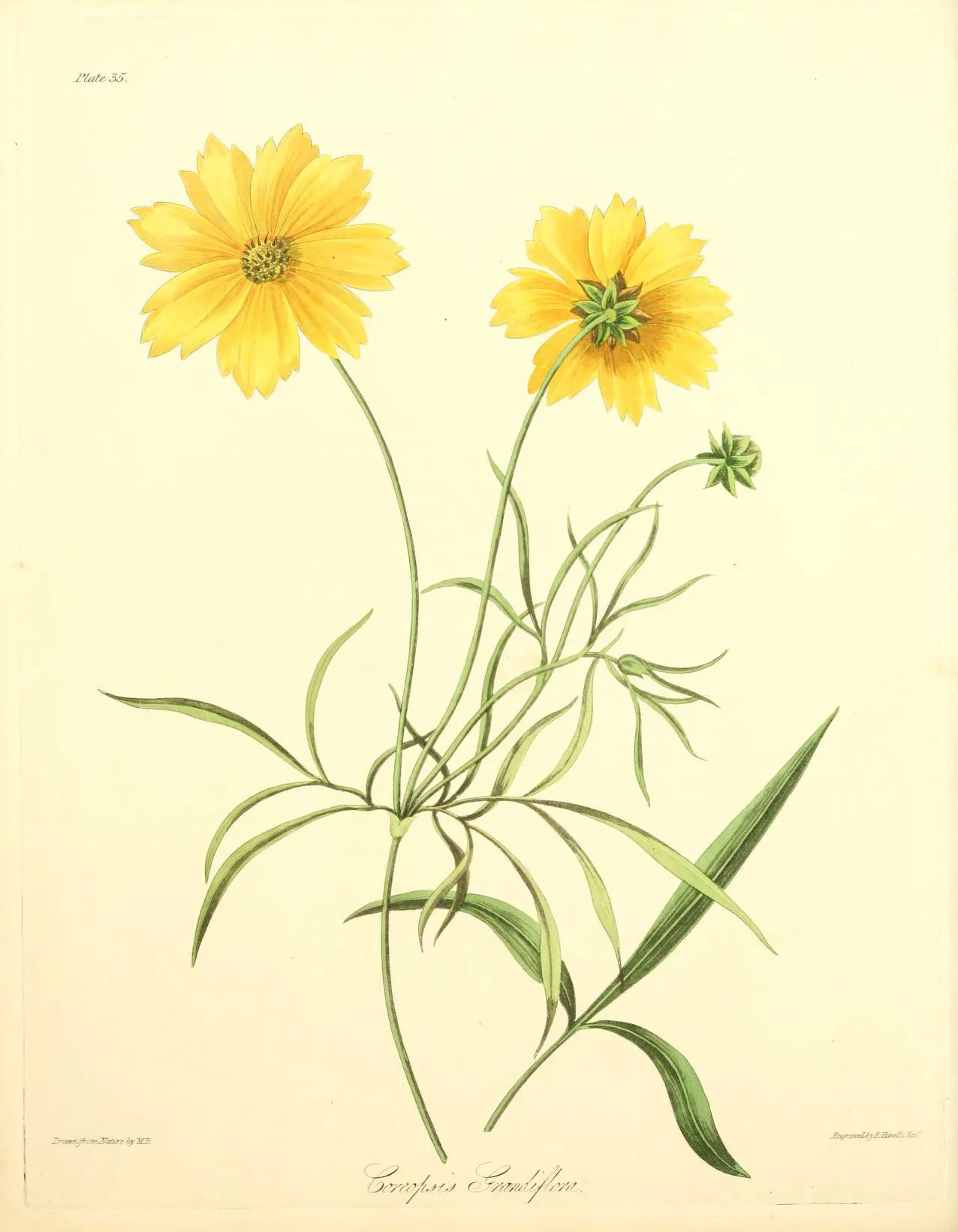 1 of 3
Native to the Southeast and the Great Plains
Southeastern U.S., inland to Missouri, eastern Kansas, Oklahoma and Texas; introduced elsewhere.
- Light Partial shade Sun tolerance
- Moisture Moisture preference
- Zones 4–9 Cold to heat range
- Bloom Apr–Sep Flowering time
- Height up to 2 ft to 0.6 m
- Life cycle Perennial Annual to perennial
In the garden
A woodland wildflower for partial shade. Its yellow flowers peak in June. At up to 2 ft, it suits shade gardens and woodland edges. Hardy in USDA zones 4–9.
Growing conditions
Light
Full sun Partial shade Full shade
Moisture
Dry Moist Wet
Hardiness zones
Find your zone:
When it blooms
The Large-flowered tickseed's yellow flowers bloom April to September, peaking in June. This early-summer display draws bees and butterflies.
Large-flowered tickseed blooms yellowFoliage
Pollinators & wildlife
- Bees Common Eastern Bumble Bee
also Ligated Furrow Bee, Two-spotted Longhorn Bee, Perplexing Bumble Bee +7 more
Brown-winged Striped Sweat Bee, Carpenter-mimic Leafcutter Bee, Poey's Furrow Bee, Common Longhorn Bee, Megachile albitarsis, Buff-tailed Bumble Bee, Lasioglossum emirnense - Butterflies Eastern Tiger Swallowtail also American Lady, Orange Sulphur, Variegated Fritillary
- Moths Eight-spotted Forester Moth also Coffee-loving and Southern Purple Mint Moths
- Also visited by
- Flower flies: Margined Calligrapher, Yellow-shouldered Drone Fly
Butterflies that use this plant
Documented host and nectar records. Each links to a planting guide for that butterfly.
- American ladynectar
- Eastern tiger swallowtailnectar
- Orange sulphurnectar
- Variegated fritillarynectar
Full plant details
Where it grows
- Habitat
- WoodlandThe wild plant community it grows in.
- Native range
- The Southeast and the Great PlainsUnited States (15): AL, AR, FL, GA, KS, KY, LA, MO, MS, NC, OK, SC, TN, TX, WV. Where it grows wild on its own, by state and province.
- Native distribution
- Southeastern U.S., inland to Missouri, eastern Kansas, Oklahoma and Texas; introduced elsewhere.The same native range, usually more exact than the state list, and often noting where it has spread beyond it.
Growing conditions
- Light
- Partial shadeHow much sun it takes, from full sun to full shade.
- Hardiness zones
- USDA 4–9 · Canadian 4–7The cold-to-heat climate range it survives.
- Soil
- Sandy soilsThe soils it grows in naturally.
Growth & form
- Height
- up to 2 ft (to 0.6 m)Typical mature height.
- Life cycle
- PerennialWhether it lives a single season (annual), two (biennial), or returns for years (perennial).
Flowers, foliage & fruit
- Type
- WildflowerWhat kind of plant it is.
- Bloom
- Apr–SepWhen it flowers.
- Flower color
- YellowThe bloom color, or colors.
- Fruit/Seeds
- AcheneThe seed or fruit it sets after flowering.
- Toxicity
- None knownWhether any part is poisonous to people or pets.