woodland wildflower
Rocky Mountain zinnia
Zinnia grandiflora
Also known as Plains Zinnia, Prairie Zinnia, Little Golden Zinnia, Yellow Zinnia
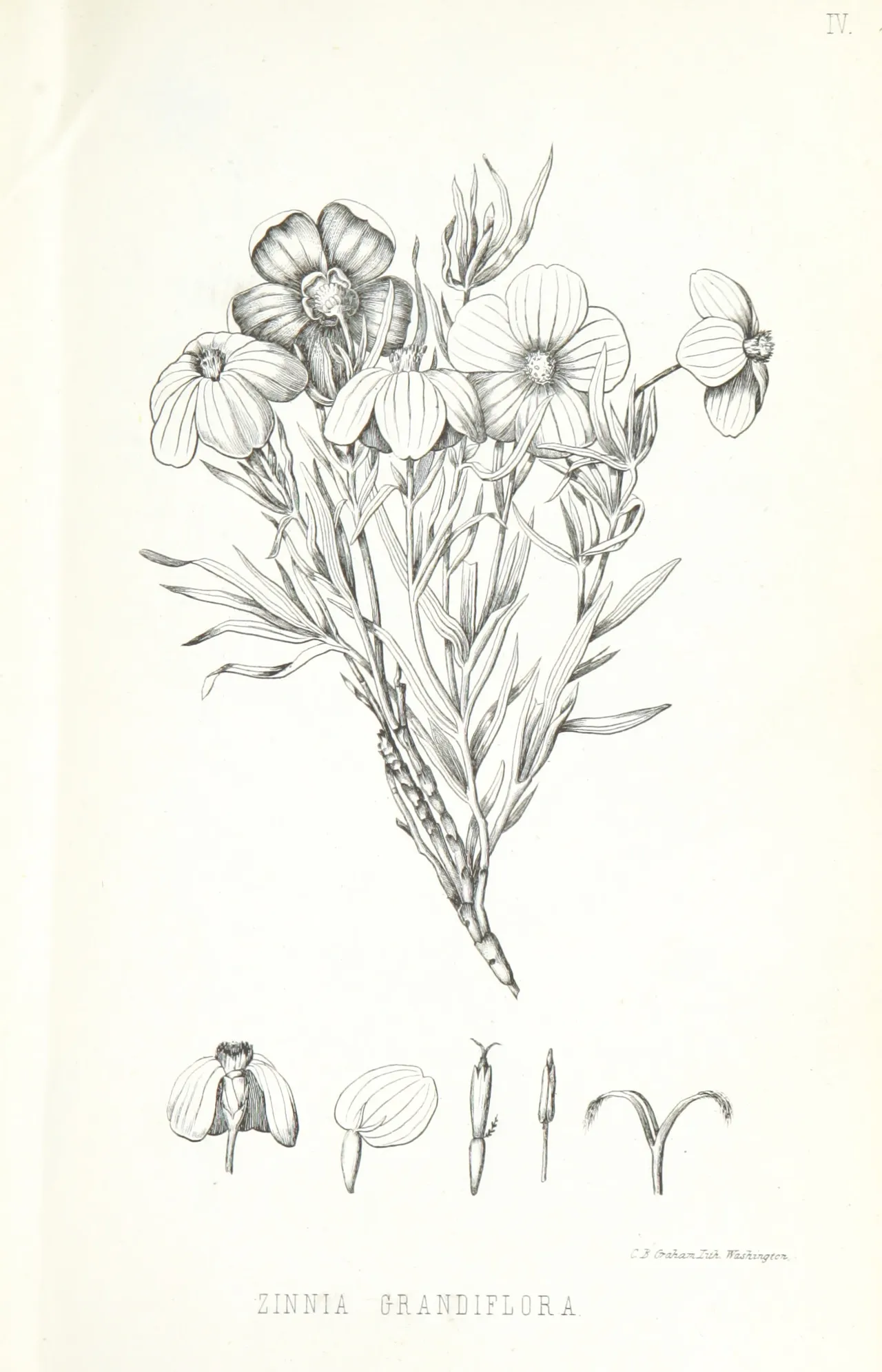 1 of 2
Native to Arizona, Colorado, Kansas, New Mexico, Oklahoma, and Texas
Kansas to Nevada, south to western Texas, Arizona, and northern Mexico as far south as Zacatecas
- Light Partial shade Sun tolerance
- Moisture Dry Moisture preference
- Zones n/a Cold to heat range
- Bloom May–Oct Flowering time
- Height up to 8 in to 20 cm
- Life cycle Perennial Annual to perennial
In the garden
A woodland wildflower for partial shade and lean, dry soil. At up to 8 in, it tucks into shade gardens and woodland edges.
Growing conditions
Light
Full sun Partial shade Full shade
Moisture
Dry Moist Wet
Pollinators & wildlife
- Butterflies Common Buckeye
also Fiery Skipper, Painted Lady, Gray Hairstreak +18 more
American Lady, Orange Sulphur, Variegated Fritillary, Common Checkered-Skipper and Allies, Checkered White, Dainty Sulphur, Phaon Crescent, Marine Blue, Bordered Patch, Reakirt's Blue, Western Pygmy-Blue, Funereal Duskywing, Common Sootywing, Orange Skipperling, Abaeis nicippe, Junonia evarete nigrosuffusa, Cynthia cardui, Fulvia Checkerspot - Bees Ligated Furrow Bee
also Western Honey Bee, Tripartite Sweat Bee, Protandrena aethiops +1 more
Pseudopanurgus fraterculus - Flower flies Dorcadion Bee Fly also Exoprosopa brevirostris, Poecilanthrax lucifer
- Also visited by
- Moths: Gilded Seedcropper
Butterflies that use this plant
Documented host and nectar records. Each links to a planting guide for that butterfly.
- American ladynectar
- Checkered whitenectar
- Common buckeyenectar
- Dainty sulphurnectar
- Fiery skippernectar
- Gray hairstreaknectar
- Marine bluenectar
- Orange sulphurnectar
- Painted ladynectar
- Reakirt's bluenectar
- Sleepy orangenectar
- Variegated fritillarynectar
Full plant details
Where it grows
- Habitat
- WoodlandThe wild plant community it grows in.
- Native range
- Arizona, Colorado, Kansas, New Mexico, Oklahoma, and TexasUnited States (6): AZ, CO, KS, NM, OK, TX. Where it grows wild on its own, by state and province.
- Native distribution
- Kansas to Nevada, south to western Texas, Arizona, and northern Mexico as far south as ZacatecasThe same native range, usually more exact than the state list, and often noting where it has spread beyond it.
Growing conditions
- Light
- Partial shadeHow much sun it takes, from full sun to full shade.
- Moisture
- DryThe soil dampness it prefers, from dry to wet.
- Soil
- Dry, calcareous soils. Sandy Loam, Sandy, Gravelly, Limestone/chalky, Limestone-based, Caliche typeThe soils it grows in naturally.
- Water use
- LowHow thirsty it is, a rough guide to how often to water.
Growth & form
- Height
- up to 8 in (to 20 cm)Typical mature height.
- Life cycle
- PerennialWhether it lives a single season (annual), two (biennial), or returns for years (perennial).
Flowers, foliage & fruit
- Type
- WildflowerWhat kind of plant it is.
- Bloom
- May–OctWhen it flowers.
- Flower color
- YellowThe bloom color, or colors.
- Toxicity
- None knownWhether any part is poisonous to people or pets.