wetland shrub
Sea ox-eye
Borrichia frutescens
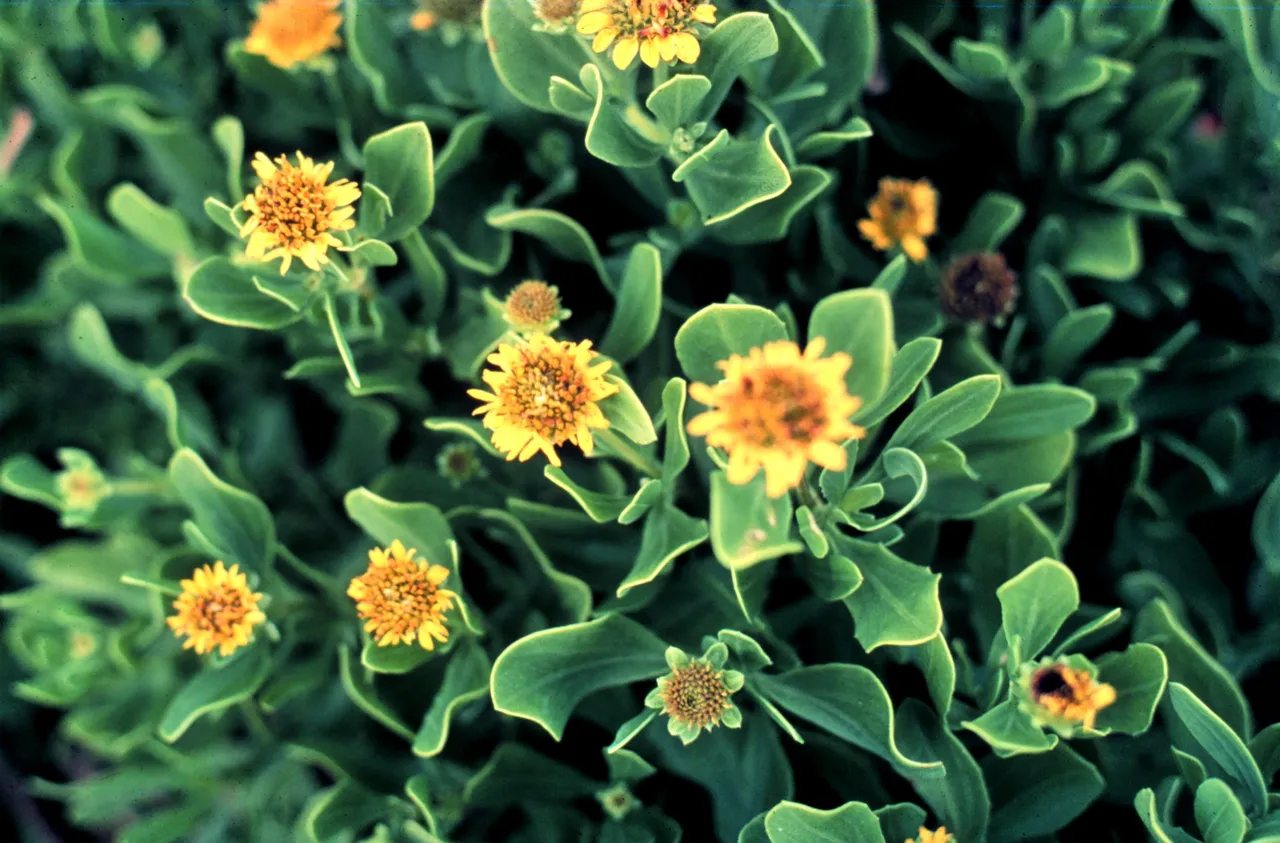 1 of 2
Native to the Southeast
Coastal areas from Maryland to Texas and Mexico
- Light Full sun Sun tolerance
- Moisture Moist Moisture preference
- Zones n/a Cold to heat range
- Bloom Jan–Nov Flowering time
- Height up to 4 ft to 1.2 m
- Life cycle Perennial Annual to perennial
In the garden
A wetland shrub for full sun and evenly moist soil. Its yellow flowers peak in May. At up to 4 ft, it suits rain gardens, pond edges, and damp low spots.
Growing conditions
Light
Full sun Partial shade Full shade
Moisture
Dry Moist Wet
When it blooms
The Sea ox-eye's yellow flowers bloom January to November, peaking in May. This late-spring display draws butterflies and bees.
Sea ox-eye blooms yellowFoliage
Pollinators & wildlife
- Butterflies Monarch
also Gulf Fritillary, Common Buckeye, Queen +12 more
Checkered White, Horace's Duskywing, Ceraunus Blue, Great Southern White, Florida Zebra Longwing, Obscure Skipper, Mangrove Skipper, Polygonus leo, Eastern Pygmy-Blue, West Indian Mangrove Buckeye, Panoquina panoquin, White Peacock - Bees Common Eastern Bumble Bee
also Western Honey Bee, Two-spotted Longhorn Bee, Brown-winged Striped Sweat Bee +8 more
Carpenter-mimic Leafcutter Bee, Poey's Furrow Bee, Sumac Cellophane-Cuckoo, Megachile bahamensis, Coelioxys slossoni, Megachile inimica inimica, Megachile policaris, Florida Longhorn-Cuckoo - Wasps Red-marked Pachodynerus Wasp also Southern Paper Wasp
- Also visited by
- Moths: Black-dotted Spragueia Moth
- Flower flies: White-faced Plushback
- Beetles: Margined Leatherwing Beetle
Butterflies that use this plant
Documented host and nectar records. Each links to a planting guide for that butterfly.
- Checkered whitenectar
- Common buckeyenectar
- Gulf fritillarynectar
- Monarch butterflynectar
- Queennectar
Full plant details
Where it grows
- Habitat
- WetlandThe wild plant community it grows in.
- Native range
- The SoutheastUnited States (10): AL, FL, GA, LA, MD, MS, NC, SC, TX, VA. Where it grows wild on its own, by state and province.
- Native distribution
- Coastal areas from Maryland to Texas and MexicoThe same native range, usually more exact than the state list, and often noting where it has spread beyond it.
Growing conditions
- Light
- Full sunHow much sun it takes, from full sun to full shade.
- Moisture
- MoistThe soil dampness it prefers, from dry to wet.
- Soil
- Wet, brackish sands or muds. Saline tolerant, Sandy, Sandy Loam, Medium Loam, Clay Loam, ClayThe soils it grows in naturally.
- Soil pH
- 6.1–7.5The acidity to alkalinity it tolerates (7 is neutral).
- Soil quality
- LowHow rich a soil it needs. Many natives prefer lean soil and flop in rich beds.
- Water use
- MediumHow thirsty it is, a rough guide to how often to water.
- Salinity tolerance
- HighHow well it copes with salty soil, near roads or the coast.
- Lime (CaCO₃) tolerance
- HighHow well it copes with chalky, lime-rich soil.
Growth & form
- Height
- up to 4 ft (to 1.2 m)Typical mature height.
- Life cycle
- PerennialWhether it lives a single season (annual), two (biennial), or returns for years (perennial).
- Growth rate
- RapidA relative ranking versus other plants of the same type (USDA), not an absolute rate.
- Shape
- ErectIts overall silhouette.
- Root depth
- 14+ in (36+ cm)How far the roots reach, a guide to drought resilience and transplanting.
Flowers, foliage & fruit
- Type
- ShrubWhat kind of plant it is.
- Bloom
- Jan–NovWhen it flowers.
- Flower color
- YellowThe bloom color, or colors.
- Toxicity
- None knownWhether any part is poisonous to people or pets.
Propagation & seed
- Cold stratification
- Not requiredWhether seed needs a cold, moist spell before it will germinate.
- Propagation
- Bare root, container, seedHow to start new plants.
- Seed spread rate
- ModerateHow readily it self-sows. Slow or none means well-behaved, not a spreader.
- Seedling vigor
- HighHow strongly young seedlings establish.
- Vegetative spread
- ModerateWhether it creeps outward or stays put in a clump.