prairie wildflower
Small camas
Camassia quamash
Also known as Common Camass, Swamp Sego
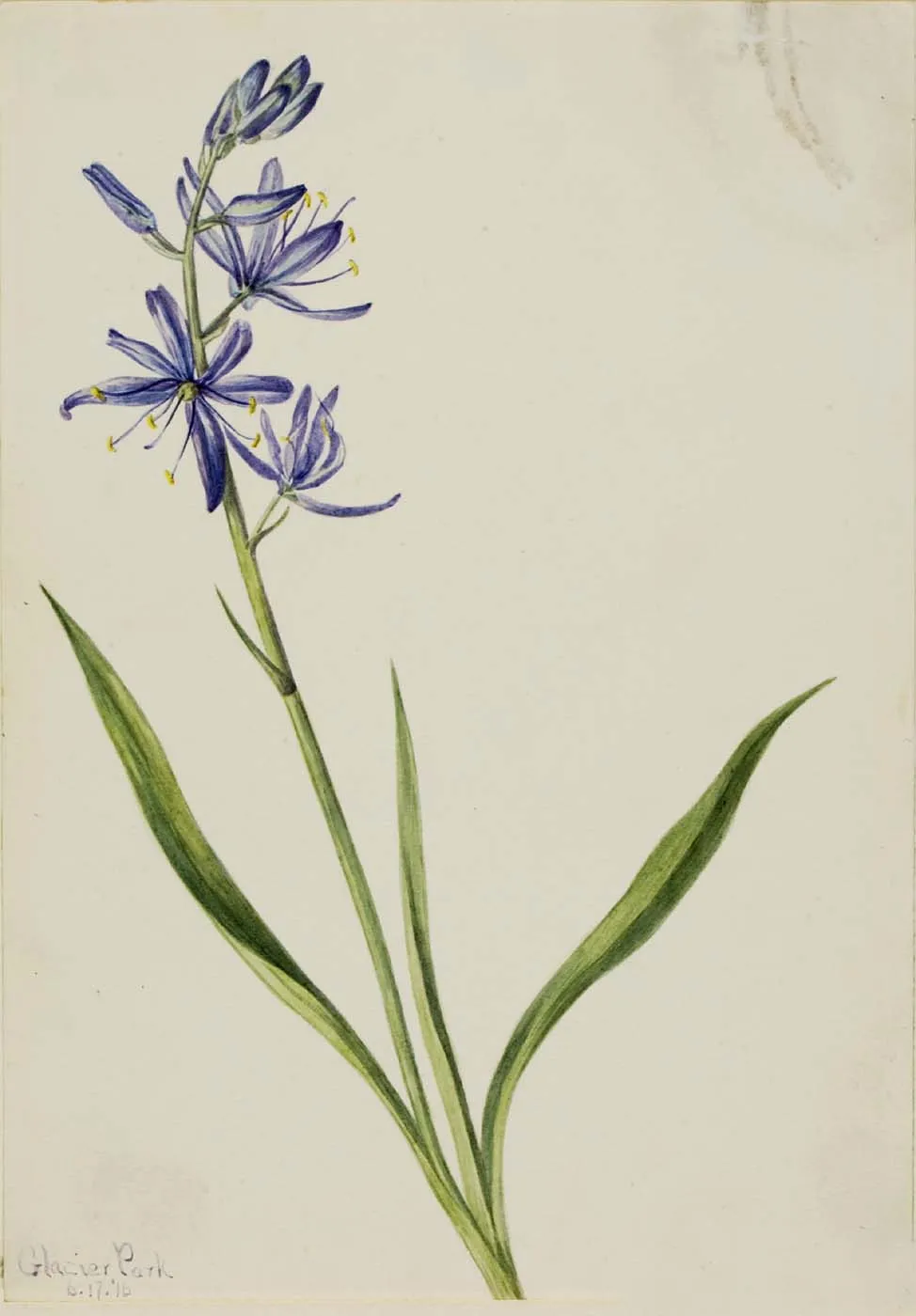 1 of 3
Native to California, Idaho, Montana, Nevada, Oregon, Utah, Washington, and Wyoming and southern Canada
British Columbia to California, east to southwestern Alberta, Montana, Wyoming and Utah
- Light Full sun Sun tolerance
- Moisture Moist Moisture preference
- Zones 3–10 Cold to heat range
- Bloom Apr–Jun Flowering time
- Height up to 3 ft to 0.9 m
- Life cycle Perennial Annual to perennial
In the garden
A prairie wildflower for full sun and evenly moist soil. Its blue flowers peak in May. At up to 3 ft, it suits meadows and sunny borders. It shrugs off drought once established. Hardy in USDA zones 3–10.
Growing conditions
Light
Full sun Partial shade Full shade
Moisture
Dry Moist Wet
Hardiness zones
Find your zone:
When it blooms
The Small camas's blue flowers bloom April to June, peaking in May. This late-spring display draws bees and flower flies.
Small camas blooms blueFoliage
Pollinators & wildlife
- Bees Common Eastern Bumble Bee
also Western Honey Bee, Eastern Carpenter Bee, Brown-belted Bumble Bee +102 more
Two-spotted Bumble Bee, American Bumble Bee, Yellow-faced Bumble Bee, Ligated Furrow Bee, Black-tailed Bumble Bee, Bicolored Striped Sweat Bee, Bombus fervidus, Red-belted Bumble Bee, Fuzzy-Horned Bumble Bee, Two-form Bumble Bee, Black-and-gold Bumble Bee, Orange-legged Furrow Bee, Yellow-fronted Bumble Bee, Vancouver Bumble Bee, Agapostemon texanus, California Bumble Bee, Nevada Bumble Bee, Flat-tailed Leafcutter Bee, Golden Sweat Bee, Confusing Furrow Bee, Spurred Ceratina, Blue Orchard Bee, Yellowish Cuckoo Bumble bee, Sitka Bumble Bee, Eastern Thistle Longhorn Bee, Prunus Miner Bee, White-shouldered Bumble Bee, Western Bumble Bee, Van Dyke's Bumble Bee, Bufflehead Mason Bee, Ceratina acantha, Rugose-chested Sweat Bee, Cresson's Mining Bee, Western Blue Orchard Bee, Red-footed Cuckoo Leafcutter, Colorado Mason, Articulated Nomad, Small-handed Leaf-cutter Bee, Ceratina dupla, Anthophora edwardsii, Cresson's Sweat Bee, Nomada superba, Snowy Mining Bee, Meadow Parsnip Miner Bee, Lonely Mining Bee, Experienced Sweat Bee, Osmia pumila, Spot-sided Dark Bee, Very Smooth Sweat Bee, Perplexed Miner Bee, Triepeolus cressonii, hoary sweat bee, Olympia Sweat Bee, Caerulean Miner Bee, Melissodes vernoniae, Nomada affabilis, Nevada Sweat Bee, Tooth-bellied Mason Bee, Andrena personata, Sigmund's Mining Bee, Willow Flower Miner Bee, Tickseed Longhorn Bee, Osmia cyanella, Knerer's Sweat Bee, Osmia tristella, White-sided Mason Bee, Osmia trevoris, Osmia juxta, Subtle Miner Bee, Victoria Miner Bee, Shaggy Furrow Bee, Osmia pusilla, Buckell's Miner Bee, Nomada (Nomada) sp. 4, Nomada crutchii, Nomada (Nomada) sp. 2, Nomada (Nomada) sp. 1, Lasioglossum pacificum, Habropoda cineraria, Pacific Digger Bee, Osmia densa, Shifty Miner Bee, Copper-tinted Miner Bee, Blue-and-black Mining Bee, Narrow-legged Miner Bee, Andrena transnigra, Monk Longhorn, Osmia dolerosa, Lasioglossum zonulum, Partly-haired Miner Bee, Bombus vancouverensis vancouverensis, Early Bumble Bee, Augochloropsis fulgida, Colourful Willow Miner Bee, Two-spotted Miner Bee, Nomada parva, Leioproctus clypeatus, Agapostemon viridulus, Eucera belfragei, Forbes's Sweat Bee, Augochlorella persimilis, Tetragona dissecta - Flower flies Margined Calligrapher
also Common Drone Fly, Narrow-headed Marsh Fly, Thick-legged Hover Fly +24 more
Greater Bee Fly, Black-shouldered Drone Fly, Large-tailed Aphideater, Black-margined Flower Fly, Variable Duskyface Fly, Western Calligrapher, Wavy Mucksucker, Volucella bombylans, Black-footed Globetail, Broad-banded Aphideater, Yellow-faced Swiftwing, Lesser Bulb Fly, Eurasian Smoothwing, Merodon Merodon equestris, Chrysotoxum fasciatus, Bare-winged Aphideater, Eriozona erratica, Platycheirus stegnus, Eupeodes lapponicus, Comma-spot Aphideater, Epistrophe emarginata, Palpada meigenii, Paragus bicolor, Pictipennis species group - Butterflies Red Admiral
also American Lady, Eastern Tailed-Blue, Red-banded Hairstreak +9 more
Silvery Blue, Anise Swallowtail, Echo Azure, Common Sootywing, Propertius Duskywing, Hesperiidae sp., Asher's Blue, Plebejus podarce, Silvery Checkerspot - Also visited by
- Wasps:
Fraternal Potter Wasp, Western Yellowjacket +2 more
Common Aerial Yellowjacket, Vespula atripilosa - Beetles:
Seven-spotted Lady Beetle, Acmaeodera tubulus +2 more
Slender Flower Longhorn Beetle, Chlorophorus glaucus - Hummingbirds: Rufous Hummingbird
- Wasps:
Butterflies that use this plant
Documented host and nectar records. Each links to a planting guide for that butterfly.
- American ladynectar
- Banded hairstreaknectar
- Eastern tailed-bluenectar
- Edwards' hairstreaknectar
- Red admiralnectar
- Red-banded hairstreaknectar
- Silvery bluenectar
- Silvery checkerspotnectar
Full plant details
Where it grows
- Habitat
- PrairieThe wild plant community it grows in.
- Native range
- California, Idaho, Montana, Nevada, Oregon, Utah, Washington, and Wyoming and southern CanadaUnited States (8): CA, ID, MT, NV, OR, UT, WA, WY. Canada (1): BC. Where it grows wild on its own, by state and province.
- Native distribution
- British Columbia to California, east to southwestern Alberta, Montana, Wyoming and UtahThe same native range, usually more exact than the state list, and often noting where it has spread beyond it.
Growing conditions
- Light
- Full sunHow much sun it takes, from full sun to full shade.
- Moisture
- MoistThe soil dampness it prefers, from dry to wet.
- Hardiness zones
- USDA 3–10 · Canadian 2–9The cold-to-heat climate range it survives.
- Soil
- Heavy, winter- & spring-moist soilsThe soils it grows in naturally.
- Soil texture
- Light to heavy (sandy to clay)The soil grade it prefers, from sand to clay.
- Soil pH
- 5.7–7.0The acidity to alkalinity it tolerates (7 is neutral).
- Soil quality
- MediumHow rich a soil it needs. Many natives prefer lean soil and flop in rich beds.
- Water use
- HighHow thirsty it is, a rough guide to how often to water.
- Drought tolerance
- HighRelative to plants of the same type and region, inferred from where it grows, not a days-without-water figure.
- Salinity tolerance
- NoneHow well it copes with salty soil, near roads or the coast.
- Lime (CaCO₃) tolerance
- LowHow well it copes with chalky, lime-rich soil.
Growth & form
- Height
- up to 3 ft (to 0.9 m)Typical mature height.
- Spread
- ~1 ft (0.2 m)How wide one plant gets, a guide to spacing.
- Life cycle
- PerennialWhether it lives a single season (annual), two (biennial), or returns for years (perennial).
- Growth rate
- ModerateA relative ranking versus other plants of the same type (USDA), not an absolute rate.
- Shape
- ErectIts overall silhouette.
- Root depth
- 10+ in (25+ cm)How far the roots reach, a guide to drought resilience and transplanting.
Flowers, foliage & fruit
- Type
- WildflowerWhat kind of plant it is.
- Bloom
- Apr–JunWhen it flowers.
- Flower color
- BlueThe bloom color, or colors.
- Fruit/Seeds
- ripens Apr–JunThe seed or fruit it sets after flowering.
- Toxicity
- None knownWhether any part is poisonous to people or pets.
Propagation & seed
- Cold stratification
- Required (cold, moist)Whether seed needs a cold, moist spell before it will germinate.
- Propagation
- Bare root, bulb, container, seed, sprigsHow to start new plants.
- Seed
- ~0.1 million seeds per poundNotes on the seed and how to sow it.
- Seed spread rate
- SlowHow readily it self-sows. Slow or none means well-behaved, not a spreader.
- Seedling vigor
- MediumHow strongly young seedlings establish.
- Vegetative spread
- SlowWhether it creeps outward or stays put in a clump.