woodland wildflower
Tall coreopsis
Coreopsis tripteris
Also known as Tall Tickseed
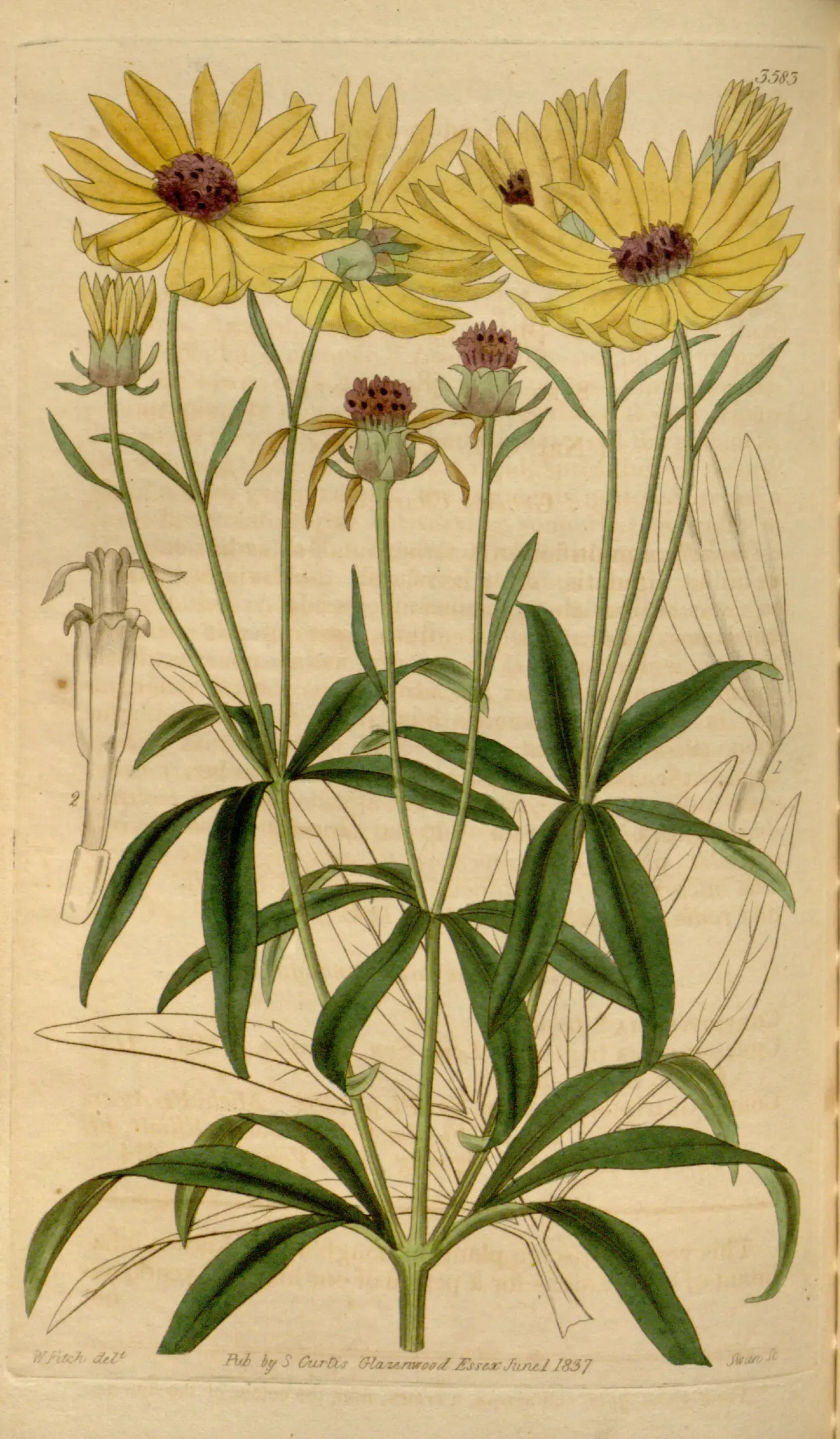
Native to much of the USA
Western Iowa to extreme eastern Kansas and New Mexico, east to Pennsylvania and Georgia
- Light Partial shade Sun tolerance
- Moisture Moist Moisture preference
- Zones 4–9 Cold to heat range
- Bloom Jul–Sep Flowering time
- Height up to 9 ft to 2.7 m
- Life cycle Perennial Annual to perennial
In the garden
A woodland wildflower for partial shade and evenly moist soil. Its yellow flowers peak in August. At up to 9 ft, it needs room in shade gardens and woodland edges. Hardy in USDA zones 4–9.
Growing conditions
Light
Full sun Partial shade Full shade
Moisture
Dry Moist Wet
Hardiness zones
Find your zone:
When it blooms
The Tall coreopsis's yellow flowers bloom July to September, peaking in August. This late-summer display draws bees and flower flies.
Tall coreopsis blooms yellowFoliage
Pollinators & wildlife
- Bees Common Eastern Bumble Bee
also Western Honey Bee, Eastern Carpenter Bee, Brown-belted Bumble Bee +31 more
Two-spotted Bumble Bee, American Bumble Bee, Ligated Furrow Bee, Bicolored Striped Sweat Bee, Pure Green Sweat bee, Southern Carpenter Bee, Agapostemon texanus, Rusty-patched Bumble Bee, Dark-veined Longhorn Bee, Southern Plains Bumble Bee, Rugose-chested Sweat Bee, Silver-tailed Petalcutter, Petulant Leafcutter Bee, Agile Longhorn Bee, Megachile brevis, Ceratina dupla, Experienced Sweat Bee, Dwarf Cellophane-cuckoo Bee, Thistle Longhorn-Cuckoo, Obliterated Nomad, Colorado Calliopsis Bee, Coelioxys brevis, Lunate Longhorn-cuckoo Bee, Pseudopanurgus labrosiformis, Lasioglossum coreopsis, Svastra obliqua, Augochlora feronia, Two-spotted Miner Bee, Lasioglossum tegulare, Triepeolus concavus, Pseudopanurgus solidaginis - Flower flies Margined Calligrapher
also Eastern Calligrapher, Common Drone Fly, Transverse-banded Flower Fly +13 more
Thick-legged Hover Fly, Tufted Globetail, Orange-legged Drone Fly, Black-haired Psyllid-killer, Bombylius atriceps, Aster Bee Fly, Sphaerophoria cylindricus, Flea Bee-fly, Eastern Orange-tailed Leafwalker, Hemipenthes sinuosus, grasshopper bee fly, Poecilanthrax alcyon, Scaly Bee Fly - Butterflies Monarch
also Eastern Tiger Swallowtail, Pearl Crescent, Common Buckeye +5 more
Orange Sulphur, Eastern Tailed-Blue, Variegated Fritillary, Danaus plexippus plexippus, Anosia plexippus - Also visited by
- Beetles:
Asian Lady Beetle, Goldenrod Soldier Beetle +3 more
northern corn rootworm, Chauliognathus pennsylvanicus, Chlorophorus glaucus - Wasps: Fraternal Potter Wasp, Hidalgo Mason Wasp
- Moths: Forage Looper Moth, Cotton Bollworm Moth
- Birds: Henslow's Sparrow
- Beetles:
Butterflies that use this plant
Documented host and nectar records. Each links to a planting guide for that butterfly.
- Common buckeyenectar
- Eastern tailed-bluenectar
- Eastern tiger swallowtailnectar
- Monarch butterflynectar
- Orange sulphurnectar
- Pearl crescentnectar
- Variegated fritillarynectar
Full plant details
Where it grows
- Habitat
- WoodlandThe wild plant community it grows in.
- Native range
- Much of the USAUnited States (24): AL, AR, DC, GA, IA, IL, IN, KS, KY, LA, MD, MI, MO, MS, NC, OH, OK, PA, SC, TN, TX, VA, WI, WV. Where it grows wild on its own, by state and province.
- Native distribution
- Western Iowa to extreme eastern Kansas and New Mexico, east to Pennsylvania and GeorgiaThe same native range, usually more exact than the state list, and often noting where it has spread beyond it.
Growing conditions
- Light
- Partial shadeHow much sun it takes, from full sun to full shade.
- Moisture
- MoistThe soil dampness it prefers, from dry to wet.
- Hardiness zones
- USDA 4–9 · Canadian 5–7The cold-to-heat climate range it survives.
- Soil
- Moist to dry sandsThe soils it grows in naturally.
Growth & form
- Height
- up to 9 ft (to 2.7 m)Typical mature height.
- Life cycle
- PerennialWhether it lives a single season (annual), two (biennial), or returns for years (perennial).
Flowers, foliage & fruit
- Type
- WildflowerWhat kind of plant it is.
- Bloom
- Jul–SepWhen it flowers.
- Flower color
- YellowThe bloom color, or colors.
- Fruit/Seeds
- Achene; ripens Aug–OctThe seed or fruit it sets after flowering.
- Toxicity
- None knownWhether any part is poisonous to people or pets.