prairie wildflower
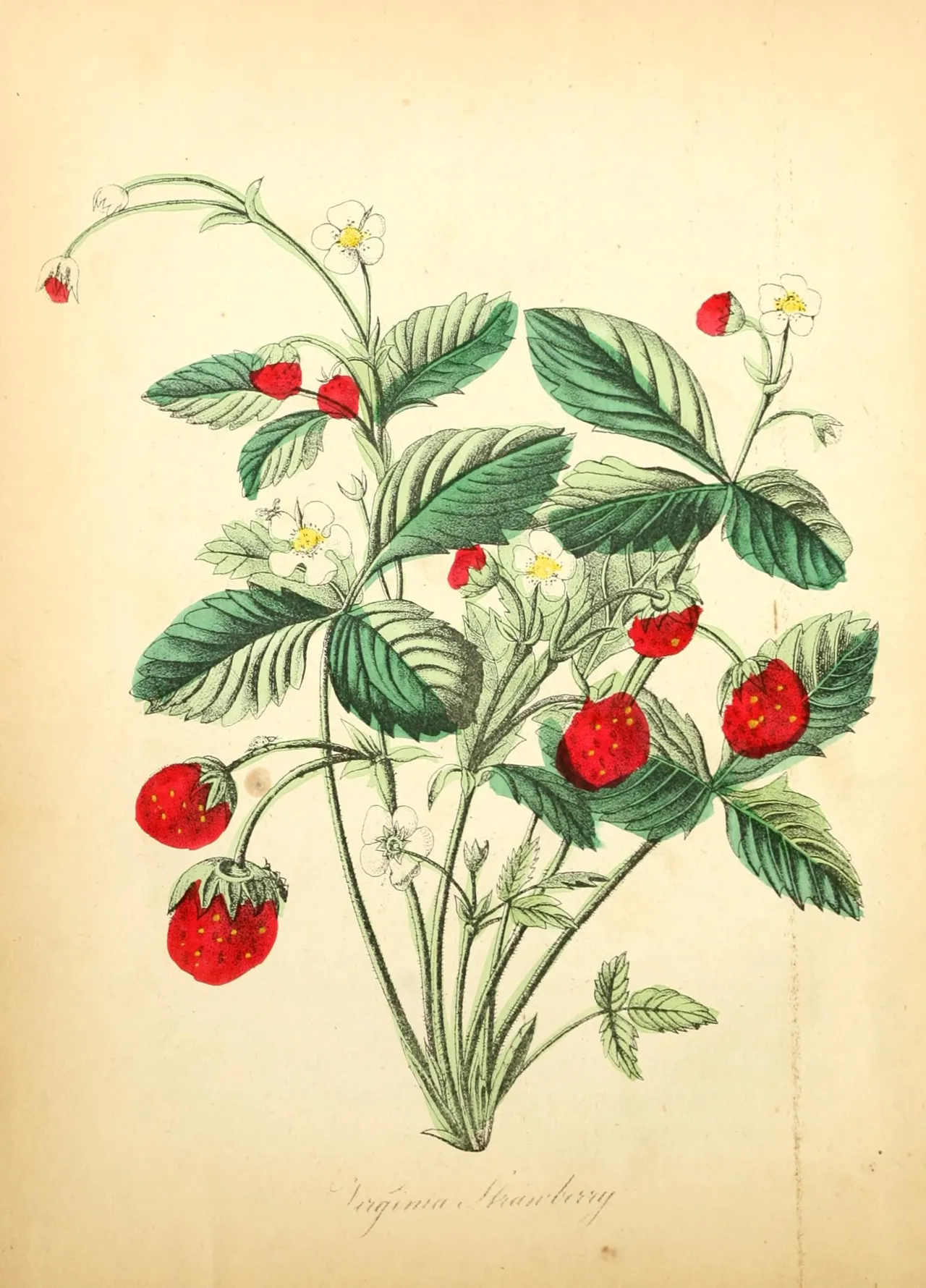
Virginia strawberry
Fragaria virginiana
Also known as Wild Strawberry
 1 of 2
Native to much of the USA and southern Canada
Newfoundland and eastern Quebec to Manitoba, south to Georgia and Oklahoma
- Light Full sun to part shade Sun tolerance
- Moisture Dry Moisture preference
- Zones 1–9 Cold to heat range
- Bloom Apr–Jun Flowering time
- Height up to 4 in to 10 cm
- Life cycle Perennial Annual to perennial
In the garden
A prairie wildflower for full sun to part shade and lean, dry soil. At up to 4 in, it tucks into meadows and sunny borders. Hardy in USDA zones 1–9.
Growing conditions
Light
Full sun Partial shade Full shade
Moisture
Dry Moist Wet
Hardiness zones
Find your zone:
Pollinators & wildlife
- Bees Common Eastern Bumble Bee
also Western Honey Bee, Brown-belted Bumble Bee, Two-spotted Bumble Bee +89 more
Ligated Furrow Bee, Tricolored Bumble Bee, Pure Green Sweat bee, Two-form Bumble Bee, Half-black Bumble Bee, Orange-legged Furrow Bee, Tripartite Sweat Bee, Golden Sweat Bee, Confusing Furrow Bee, Spurred Ceratina, Blue Orchard Bee, Hawthorn Mining Bee, Horn-faced Mason Bee, Carlin's Mining Bee, Silky Striped Sweat Bee, Spotted Nomad Bee, Ceratina acantha, Rugose-chested Sweat Bee, Cresson's Mining Bee, Colorado Mason, Viereck's Sweat Bee, Allegheny Mining Bee, Gracile Nomad, Ceratina dupla, Hylaeus affinis, Triepeolus simplex, Snowy Mining Bee, Experienced Sweat Bee, Osmia pumila, Grinnell's Small-Mason, Lasioglossum cinctipes, Incomplete Sweat Bee, Maine Blueberry Bee, Lupine Miner Bee, Illinois Sweat Bee, Tiny Small carpenter, Black-tipped Miner Bee, Forbes' Mining Bee, Cresson's Nomad Bee, Olympia Sweat Bee, Bright Miner, Coneflower Masked Bee, Nevada Sweat Bee, Tooth-bellied Mason Bee, Osmia simillima, W-labrum Miner, Robust Small-Mason, Neat Mason, Willow Flower Miner Bee, Sixteen-spotted Cuckoo Carder Bee, Ruidoso Sweat Bee, Illinois Cuckoo Nomad Bee, Knerer's Sweat Bee, Osmia tristella, Osmia juxta, Band-footed Sweat Bee, Milwaukee Mining Bee, Nomada (Nomada) sp. 4, Nomada (Nomada) sp. 2, Peaceful Sweat Bee, Narrow-legged Miner Bee, Rose Miner Bee, Topaz Miner Bee, Titus's Sweat Bee, Lasioglossum zonulum, Singular Miner Bee, Osmia dolerosa, Lasioglossum sp.F17, Nomada sp.M2, Panurginus sp.M1, Andrena sp.F7, Lasioglossum sp.F5, Lasioglossum succinipenne, Mock-orange Scissor Bee, Lasioglossum semicaeruleum, Ceratina neomexicana, Nason's Mining Bee, Mesilla Masked Bee, Federal Cuckoo Carder Bee, Pseudopanurgus labrosiformis, Forbes's Sweat Bee, Colletes productus, Florida Masked Bee, Osmia illinoensis, Coelioxys brevis, Short-horned Yellow-face Bee, Lasioglossum tegulare, Tetragona dissecta, Augochlorella persimilis - Butterflies Pearl Crescent
also Mourning Cloak, American Lady, Eastern Tailed-Blue +40 more
Clouded Sulphur, Common Ringlet, Silvery Blue, Hobomok Skipper, Northern Azure, Northern Cloudywing, American Copper, Margined White, Common Sootywing, Dreamy Duskywing, American Silver-bordered Fritillary, Arctic Skipper, Mustard White, Falcate Orangetip, Harris's Checkerspot, Amblyscirtes hegon, Sheridan's Hairstreak, Olympia Marble, Northern Grizzled Skipper, Epidemia dorcas florus, Plebejus glandon, Plebejus saepiolus, Coenonympha tullia, Julia Orangetip, Incisalia eryphon, Callophrys lanoraieensis, Hoary Elfin, Western Tailed-Blue, Greenish Blue, Coenonympha california california, Incisalia niphon, West Virginia White, Columbine Duskywing, Large Marble, Juvenal's Duskywing, Mastor vialis, Clossiana toddi ammiralis, Thecla edwardsi, Elkalyce comyntas, Elkalyce amyntula - Flower flies Margined Calligrapher
also Eastern Calligrapher, Transverse-banded Flower Fly, Narrow-headed Marsh Fly +38 more
Thick-legged Hover Fly, Greater Bee Fly, Black-shouldered Drone Fly, Large-tailed Aphideater, Variable Duskyface Fly, Western Calligrapher, Tufted Globetail, Forked Globetail, Common Flower Fly, Black-footed Globetail, Broad-banded Aphideater, Pygmy Bee Fly, Fourspot Sedgesitter, Golden-haired Wood Fly, Yellow-legged Bog Fly, Orange-banded Spineleg, Beautiful Patterneye, Conophorus sackenii, Sphaerophoria novaeanglia, Inky Blacklet, Conophorus columbiensis, Parhelophilus obsoletus, Two-lined Swamp Fly, Eurimyia stipatus, Four-spotted Pipiza, Cheilosia nigrofasciata, Bigelow's Blacklet, Witch's Deltawing, Chrysotoxum fasciatum, Orange-spotted Drone Fly, Epistrophe emarginata, Sun Fly, Paragus bicolor, Sphaerophoria cylindricus, Bombylius pulchellus, Pictipennis species group, Shiny Thickleg, Hemipenthes morioides - Also visited by
- Beetles:
Spotted Pink Lady Beetle, Acmaeodera tubulus +7 more
Judolia montivagans, Red Aquatic Leaf Beetle, Mournful Long-horned Beetle, Mordellistena comata, Mordella triloba, Podabrus brunnicollis, Chlorophorus glaucus - Moths:
Eight-spotted Forester Moth, Celery Looper Moth +4 more
Common Carpet Moth, Variable Reddish and California Pyrausta Moths, White-spotted Sable, Dargida albilinea
- Beetles:
Butterflies that use this plant
Documented host and nectar records. Each links to a planting guide for that butterfly.
- American coppernectar
- American ladynectar
- Clouded sulphurnectar
- Common ringletnectar
- Coral hairstreaknectar
- Eastern pine elfinnectar
- Eastern tailed-bluenectar
- Edwards' hairstreaknectar
- Mourning cloaknectar
- Pearl crescentnectar
- Silver-bordered fritillarynectar
- Silvery bluenectar
Full plant details
Where it grows
- Habitat
- PrairieThe wild plant community it grows in.
- Native range
- Much of the USA and southern CanadaUnited States (35): AL, AR, CT, DC, DE, GA, IA, IL, IN, KS, KY, MA, MD, ME, MI, MN, MO, MS, NC, ND, NE, NH, NJ, NY, OH, OK, PA, RI, SC, SD, TN, VA, VT, WI, WV. Canada (7): MB, NB, NL, NS, ON, PE, QC. Where it grows wild on its own, by state and province.
- Native distribution
- Newfoundland and eastern Quebec to Manitoba, south to Georgia and OklahomaThe same native range, usually more exact than the state list, and often noting where it has spread beyond it.
Growing conditions
- Light
- Full sun to part shadeHow much sun it takes, from full sun to full shade.
- Moisture
- DryThe soil dampness it prefers, from dry to wet.
- Hardiness zones
- USDA 1–9 · Canadian 0–8The cold-to-heat climate range it survives.
- Soil
- Variable. Tolerant of moderately acid soilThe soils it grows in naturally.
- Soil texture
- Light to heavy (sandy to clay)The soil grade it prefers, from sand to clay.
- Soil pH
- Mildly acid to mildly alkalineThe acidity to alkalinity it tolerates (7 is neutral).
Growth & form
- Height
- up to 4 in (to 10 cm)Typical mature height.
- Life cycle
- PerennialWhether it lives a single season (annual), two (biennial), or returns for years (perennial).
Flowers, foliage & fruit
- Type
- WildflowerWhat kind of plant it is.
- Bloom
- Apr–JunWhen it flowers.
- Flower color
- WhiteThe bloom color, or colors.
- Fruit/Seeds
- Accessory ,The seed or fruit it sets after flowering.
- Toxicity
- None knownWhether any part is poisonous to people or pets.