woodland wildflower
Balsam ragwort
Packera paupercula
Also known as Balsam Groundsel, Northern Ragwort
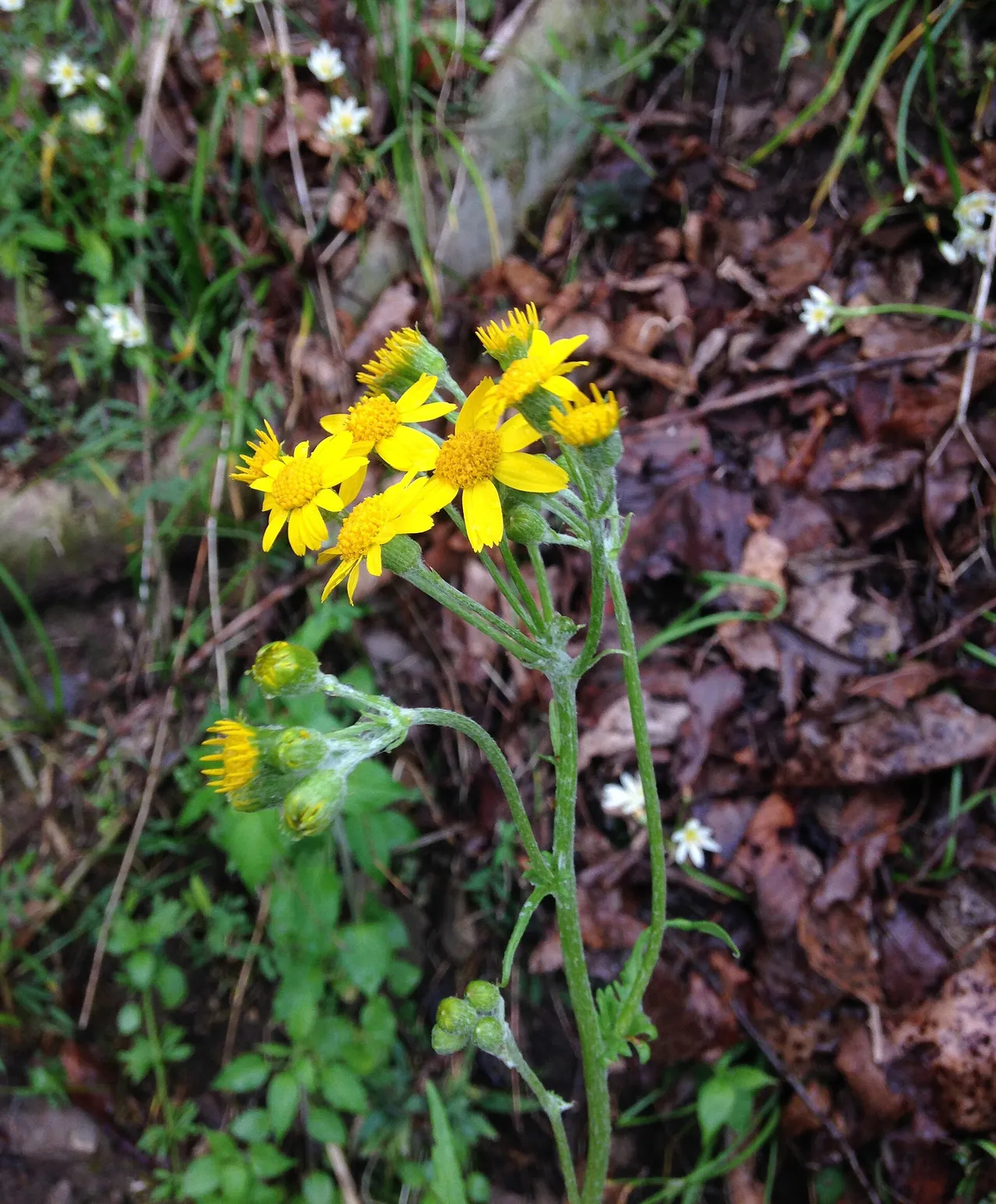
Native to much of the USA and Canada
Nova Scotia to Alberta, south to Maryland, North Carolina mountains, South Dakota and Idaho
- Light Partial shade Sun tolerance
- Moisture Moisture preference
- Zones 1–9 Cold to heat range
- Bloom May–Aug Flowering time
- Height up to 2 ft to 0.6 m
- Life cycle Perennial Annual to perennial
In the garden
A woodland wildflower for partial shade. At up to 2 ft, it suits shade gardens and woodland edges. Hardy in USDA zones 1–9.
Growing conditions
Light
Full sun Partial shade Full shade
Moisture
Dry Moist Wet
Hardiness zones
Find your zone:
Pollinators & wildlife
- Butterflies Monarch
also Pearl Crescent, American Lady, Canadian Tiger Swallowtail +3 more
Milbert's Tortoiseshell, Incisalia niphon, Mastor vialis - Bees Ligated Furrow Bee
also Two-form Bumble Bee, Golden Sweat Bee, Indiscriminate Cuckoo Bumble Bee +2 more
Bufflehead Mason Bee, Andrena cressonii cressonii - Flower flies Common Drone Fly also Narrow-headed Marsh Fly, Tufted Globetail
- Also visited by
- Moths: Eight-spotted Forester Moth
Butterflies that use this plant
Documented host and nectar records. Each links to a planting guide for that butterfly.
- American ladynectar
- Canadian tiger swallowtailnectar
- Eastern pine elfinnectar
- Eastern tiger swallowtailnectar
- Milbert's tortoiseshellnectar
- Monarch butterflynectar
- Pearl crescentnectar
Full plant details
Where it grows
- Habitat
- WoodlandThe wild plant community it grows in.
- Native range
- Much of the USA and CanadaUnited States (32): CO, CT, DE, IA, ID, IL, IN, KY, MA, MD, ME, MI, MN, MO, MT, NC, ND, NH, NJ, NY, OH, PA, RI, SD, TN, UT, VA, VT, WA, WI, WV, WY. Canada (12): AB, BC, MB, NB, NL, NS, NT, NU, ON, PE, QC, SK. Where it grows wild on its own, by state and province.
- Native distribution
- Nova Scotia to Alberta, south to Maryland, North Carolina mountains, South Dakota and IdahoThe same native range, usually more exact than the state list, and often noting where it has spread beyond it.
Growing conditions
- Light
- Partial shadeHow much sun it takes, from full sun to full shade.
- Hardiness zones
- USDA 1–9 · Canadian 0–8The cold-to-heat climate range it survives.
- Soil
- Neutral or basic gravelsThe soils it grows in naturally.
Growth & form
- Height
- up to 2 ft (to 0.6 m)Typical mature height.
- Life cycle
- PerennialWhether it lives a single season (annual), two (biennial), or returns for years (perennial).
Flowers, foliage & fruit
- Type
- WildflowerWhat kind of plant it is.
- Bloom
- May–AugWhen it flowers.
- Flower color
- YellowThe bloom color, or colors.
- Toxicity
- Poisonous if eatenWhether any part is poisonous to people or pets.