prairie wildflower
California poppy
Eschscholzia californica
Also known as California Gold Poppy
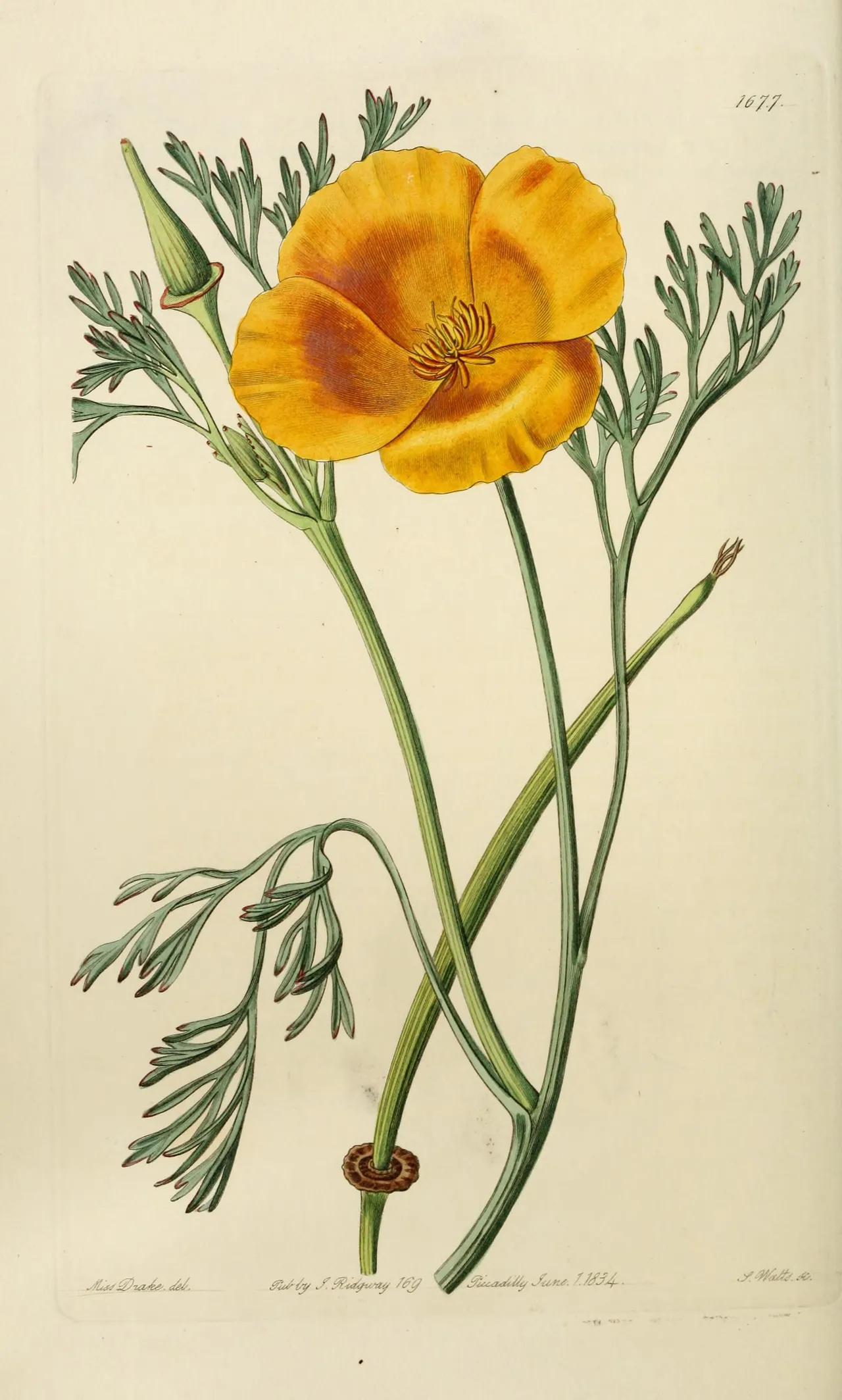 1 of 2
Native to California, Nevada, New Mexico, Oregon, Texas, and Washington
Most of California west of the mountains, western Mojave Desert and coastal Oregon also Washington and Nevada and northern Mexico; escaped freely elsewhere. The native range of the Eschscholzia californica subsp. mexicana includes New Mexico and western Texas.
- Light Full sun Sun tolerance
- Moisture Dry Moisture preference
- Zones 4–11 Cold to heat range
- Bloom Feb–Oct Flowering time
- Height up to 2 ft to 0.6 m
- Life cycle Annual or perennial Annual to perennial
In the garden
A prairie wildflower for full sun and lean, dry soil. At up to 2 ft, it suits meadows and sunny borders. Hardy in USDA zones 4–11.
Growing conditions
Light
Full sun Partial shade Full shade
Moisture
Dry Moist Wet
Hardiness zones
Find your zone:
Pollinators & wildlife
- Bees Brown-belted Bumble Bee
also Western Honey Bee, Two-spotted Bumble Bee, American Bumble Bee +84 more
Yellow-faced Bumble Bee, Ligated Furrow Bee, Tricolored Bumble Bee, Black-tailed Bumble Bee, Bicolored Striped Sweat Bee, Bombus fervidus, Red-belted Bumble Bee, Perplexing Bumble Bee, Fuzzy-Horned Bumble Bee, Two-form Bumble Bee, Half-black Bumble Bee, Orange-legged Furrow Bee, Yellow-fronted Bumble Bee, Tripartite Sweat Bee, Agapostemon texanus, California Bumble Bee, Golden Sweat Bee, Rusty-patched Bumble Bee, Modest Masked Bee, Confusing Furrow Bee, Western Leafcutter Bee, Urbane Digger Bee, Indiscriminate Cuckoo Bumble Bee, Crotch's Bumble Bee, Wide-striped Sweat Bee, Tansy Mustard Sweat Bee, Western Bumble Bee, Van Dyke's Bumble Bee, Lucorum-group Bumble Bees, Cryptic Bumble Bee, Morrison's Bumble Bee, Ceratina acantha, Red-tailed Micro-Shortface, California Poppy Fairy Bee, Phacelia Shortface, All-dark Miner, Calliopsis puellae, Desert Dandelion Fairy Bee, Tiny Small carpenter, Olympia Sweat Bee, Buff-tailed Bumble Bee, Andrena fracta, Piper's Miner Bee, Calliopsis obscurella, Box-headed Furrow Bee, Red-tailed Bumble Bee, Yellow-legged Mining Bee, Ceratina timberlakei, Bombus melanopygus edwardsii, Buffish Mining Bee, Peridot Sweat Bee, Andrena angustella, Fog-belt Bumble Bee, Lasioglossum marginellum, Tree Bumble Bee, Anthophora dispar, Osmia mustelina, Forest Cuckoo Bumble bee, Lasioglossum zonulum, Ancylandrena atoposoma, Lasioglossum petrellum, Lasioglossum pavonotum, Xylocopa virginica virginica, Sonoran Bumble Bee, Blue-and-black Mining Bee, Three-striped Austral-Longhorn, Common Carder Bumble Bee, Micralictoides mojavensis, Conanthalictus new sp., Lasioglossum amicum, Dufourea pulchricornis, Megachile fucata, Fuch's Evening Bee, Shiny-breasted Sweat Bee, Osmia liogastra, Diadasia lutzi, Dufourea malacothricis, Ceratina apacheorum, Andrena capricornis, Golden-haired Miner Bee, Globemallow chimney bees, Eucera actuosa, Eucera aragalli, Valley Carpenter Bee - Flower flies Margined Calligrapher
also Eastern Calligrapher, Common Drone Fly, Oblique Streaktail +21 more
Thick-legged Hover Fly, Eurasian Drone Fly, Large-tailed Aphideater, Western Aphideater, Black-margined Flower Fly, Variable Duskyface Fly, Common Grass Skimmer, Western Calligrapher, Tufted Globetail, Forked Globetail, Common Flower Fly, Broad-banded Aphideater, Short-haired Leafwalker, Golden Copperback, Platycheirus albimanus Group, Migrant Hover Fly, Marmalade Hover Fly, Anthrax oedipus, Villa lateralis, Stripe-eyed Lagoon Fly, Tapered Drone Fly - Butterflies Monarch
also Gulf Fritillary, Common Buckeye, Fiery Skipper +16 more
Painted Lady, Common Ringlet, Gray Buckeye, Variable Checkerspot, Acmon Blue, Umber Skipper, Pale Swallowtail, California Pipevine Swallowtail, Eufala Skipper, Purplish Copper, Margined White, Mission Blue, Euchloe ausonides ausonides, Dymasia dymas, Eresia aveyrona mylitta, Canary Blue - Also visited by
- Beetles:
Seven-spotted Lady Beetle, Convergent Lady Beetle +2 more
Spotted Cucumber Beetle, Spotted Pink Lady Beetle - Moths:
California Pyrausta Moth, Neoterpes edwardsata +3 more
Chicory Flower Moth, Heliolonche pictipennis, Orgyia mixta - Wasps: Golden Paper Wasp, Polistes exclamans
- Hummingbirds: Anna's Hummingbird
- Birds: White-crowned Sparrow
- Beetles:
Butterflies that use this plant
Documented host and nectar records. Each links to a planting guide for that butterfly.
- Acmon bluenectar
- Common buckeyenectar
- Common ringletnectar
- Edwards' hairstreaknectar
- Fiery skippernectar
- Gulf fritillarynectar
- Monarch butterflynectar
- Painted ladynectar
- Pale swallowtailnectar
- Pipevine swallowtailnectar
Full plant details
Where it grows
- Habitat
- PrairieThe wild plant community it grows in.
- Native range
- California, Nevada, New Mexico, Oregon, Texas, and WashingtonUnited States (6): CA, NM, NV, OR, TX, WA. Where it grows wild on its own, by state and province.
- Native distribution
- Most of California west of the mountains, western Mojave Desert and coastal Oregon also Washington and Nevada and northern Mexico; escaped freely elsewhere. The native range of the Eschscholzia californica subsp. mexicana includes New Mexico and western Texas.The same native range, usually more exact than the state list, and often noting where it has spread beyond it.
Growing conditions
- Light
- Full sunHow much sun it takes, from full sun to full shade.
- Moisture
- DryThe soil dampness it prefers, from dry to wet.
- Hardiness zones
- USDA 4–11 · Canadian 2–9The cold-to-heat climate range it survives.
- Soil
- Nutrient-poor, well-drained soilsThe soils it grows in naturally.
- Soil texture
- Light to heavy (sandy to clay)The soil grade it prefers, from sand to clay.
- Soil pH
- 5.8–7.5The acidity to alkalinity it tolerates (7 is neutral).
- Soil quality
- LowHow rich a soil it needs. Many natives prefer lean soil and flop in rich beds.
- Water use
- LowHow thirsty it is, a rough guide to how often to water.
- Salinity tolerance
- NoneHow well it copes with salty soil, near roads or the coast.
- Lime (CaCO₃) tolerance
- MediumHow well it copes with chalky, lime-rich soil.
Growth & form
- Height
- up to 2 ft (to 0.6 m)Typical mature height.
- Spread
- ~1 ft (0.3 m)How wide one plant gets, a guide to spacing.
- Life cycle
- Annual or perennialWhether it lives a single season (annual), two (biennial), or returns for years (perennial).
- Growth rate
- ModerateA relative ranking versus other plants of the same type (USDA), not an absolute rate.
- Shape
- ErectIts overall silhouette.
- Root depth
- 10+ in (25+ cm)How far the roots reach, a guide to drought resilience and transplanting.
Flowers, foliage & fruit
- Type
- WildflowerWhat kind of plant it is.
- Bloom
- Feb–OctWhen it flowers.
- Flower color
- Orange, YellowThe bloom color, or colors.
- Toxicity
- Poisonous if eatenWhether any part is poisonous to people or pets.
Propagation & seed
- Cold stratification
- Not requiredWhether seed needs a cold, moist spell before it will germinate.
- Propagation
- Container, seedHow to start new plants.
- Seed
- ~0.3 million seeds per poundNotes on the seed and how to sow it.
- Seed spread rate
- ModerateHow readily it self-sows. Slow or none means well-behaved, not a spreader.
- Seedling vigor
- HighHow strongly young seedlings establish.
- Vegetative spread
- NoneWhether it creeps outward or stays put in a clump.